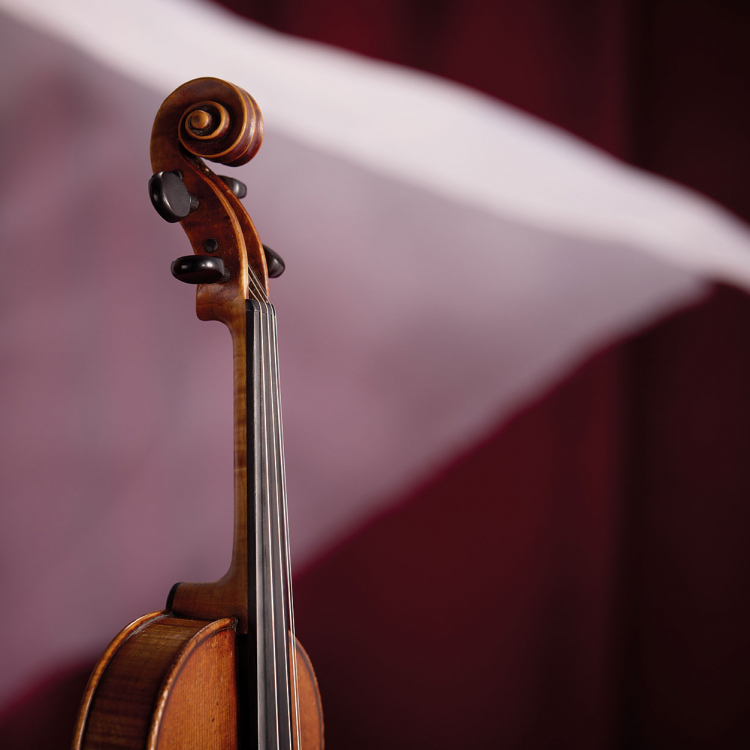
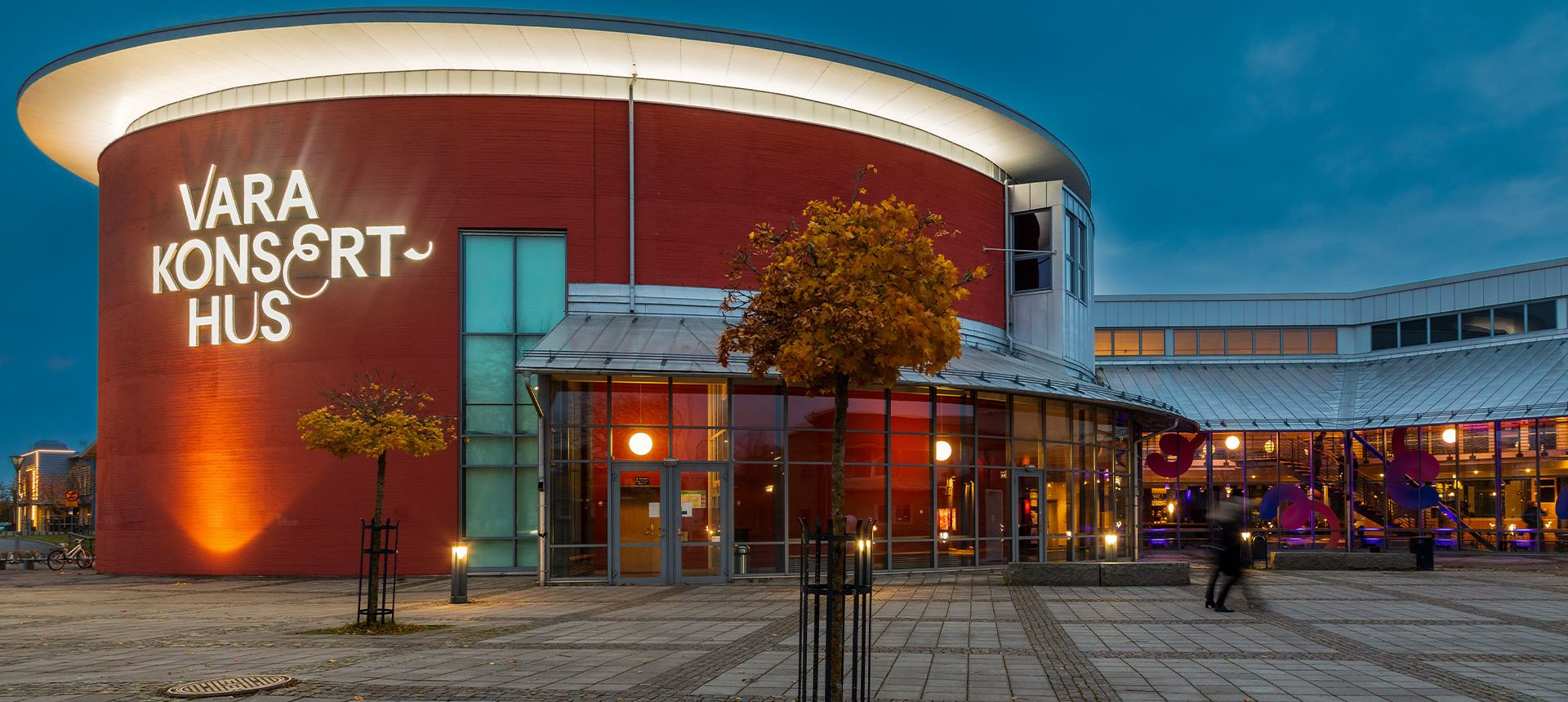
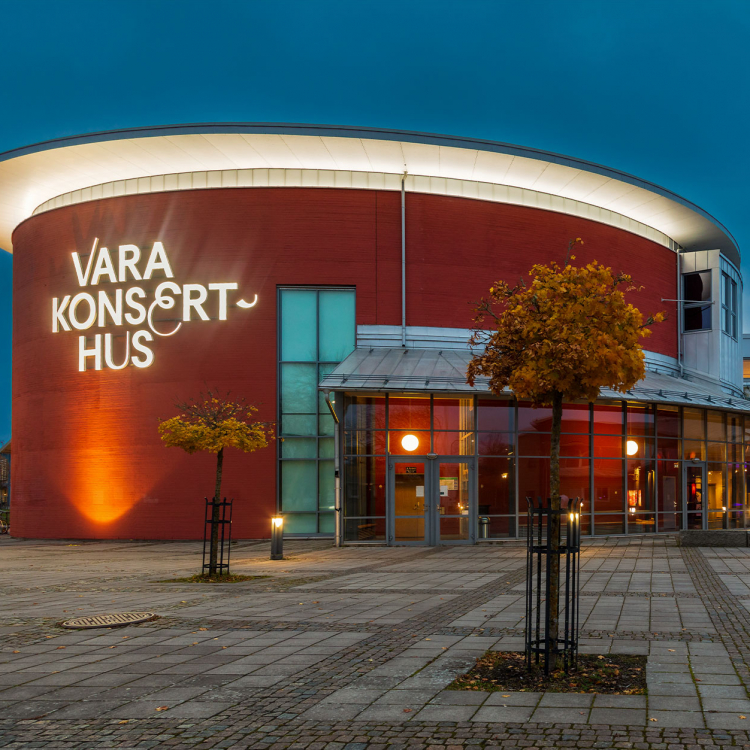
Gothenburg Symphony Orchestra plays in Vara Konserthus together with conductor Karina Canellakis and violinist Augustin Hadelich.
Programme
Richard Wagner’s last traditionally Romantic opera centers on the knight Lohengrin. The popular prelude to the first act—which the author Thomas Mann considered the “pinnacle of Romanticism”—is frequently performed as a standalone concert piece. Through various musical themes and motifs, we are drawn into the first act’s world of passion, mystery, and heroism. In Lohengrin’s Grail narrative, the myth of the holy vessel is said to symbolize human longing.
Bartók had written a violin concerto as early as 1907, though it remained unpublished during his lifetime. Thirty years later, the violinist Zoltán Székely asked him for a new concerto. At first, Bartók was reluctant; he had envisioned a large-scale set of variations instead. He had already begun work in May 1937, before pausing to compose the Sonata for Two Pianos and Percussion. He also interrupted his work in the autumn of 1938 to write Contrasts—for clarinet, violin, and piano—which had been commissioned by Benny Goodman. Bartók was a controversial figure at the time; he forbade the rebroadcasting of his radio concerts in Italy and Germany. In a private letter, he claimed that Hungary was drawing closer to the "gangster and murderer regimes" of those states. He planned to emigrate, "away from the vicinity of this tainted country."
Yet the music is devoid of any trace of despondency. Like the great classical masters Beethoven and Mozart, he was able to rise above the mundane—evident in the two outer movements, which possess a youthful vitality; the third movement is even set in 3/4 time and features variations with a folk-song character. Variations also define the exquisite middle movement: the first variation actually employs the timpani as a melodic instrument, while the next boasts a rich array of sonorities from the harp, woodwinds, and celesta, gradually giving way to an increasingly prominent role for the soloist. Ultimately, the music takes on an almost dance-like quality. As is often the case in troubled times, the music fulfilled a greater purpose: instilling resilience, hope, and the courage to live. By the time of the premiere in Amsterdam in 1939—featuring Székely and the Concertgebouw Orchestra—Bartók was already en route to the United States. The emigration took place in October 1940.
Intermission25 min
Shostakovich's last symphony is one of the rare orchestral works from his last years. It was first performed by his son Maxim Shostakovich in January 1972 and is in many respects a unique work. It was then almost 50 years since he initiated his first, ingenious symphony. But in many ways the two symphonies are close to each other: the virtuosic orchestral treatment, the flight, the boldness of the ideas, the unexpected associations with allusions to their own and others' works.
Most surprising is probably the clear quote from Rossini's Wilhelm Tell overture that appears in the first movement. Incidentally, there is also a twelve-tone series – yes, it recurs in all the movements. The second movement is a mourning march-like lament that contrasts with the scherzo. The predominantly slow finale offers several famous quotations, including the death motif from the second act of Wagner's Valkyrie. In the drums you hear rhythms from his own Leningrad Symphony.
The composer has made the following statement: "It is a great shame that the composers seem to be passing Chekhov over. One of my works is based on motifs by Chekhov, the fifteenth symphony. It is not a preliminary study to The Black Monk, but variations on a theme. Much in the fifteenth relates to The Black Monk, although it is a completely independent piece.” The Black Monk is a short story by Chekhov that Shostakovich had long-standing plans to write an opera about - in the end the plans resulted in this symphony instead.
Friday 20 November 2026: The event ends at approx. 21.00
Participants
The Gothenburg Symphony was formed in 1905 and today consists of 109 musicians. The orchestra's base is Gothenburg Concert Hall at Götaplatsen that has gathered music lovers since 1935. Since the 2019-2020 season, Barbara Hannigan is Principal guest conductor. We are also a proud partner of Barbara Hannigan's Equilibrium mentoring program focusing on young singers at the start of their careers. The title Principal Guest Conductor is shared by Pekka Kuusisto from 2025.
Wilhelm Stenhammar was the orchestra's chief conductor from 1907 to 1922. He gave the orchestra a strong Nordic profile and invited colleagues Carl Nielsen and Jean Sibelius to the orchestra. Under the direction of conductor Neeme Järvi from 1982-2004, the orchestra made a series of international tours as well as a hundred disc recordings and established themselves among Europe's leading orchestras. In 1996, the Swedish Riksdag appointed the Gothenburg Symphony as Sweden's National Orchestra.
In recent decades, the orchestra has had prominent chief conductors such as Santtu-Matias Rouvali, Mario Venzago and Gustavo Dudamel, following Kent Nagano as Principal Guest conductor. Anna-Karin Larsson is CEO and artistic director, Gustavo Dudamel honorary conductor and Neeme Järvi chief conductor emeritus. The orchestra's owner is the Västra Götaland Region.
The Gothenburg Symphony works regularly with conductors such as Herbert Blomstedt, Joana Carneiro, Jukka-Pekka Saraste, Christian Zacharias and Anja Bihlmaier.
Since 2019, Karina Canellakis has served as Chief Conductor of the Netherlands Radio Philharmonic Orchestra, and since 2021, as Principal Guest Conductor of the London Philharmonic Orchestra. She is internationally acclaimed for both symphonic and operatic performances.
The 26/27 season features her debut at the Bayerische Staatsoper with a new production of Massenet’s Werther, as well as return engagements with the Royal Concertgebouw Orchestra, Symphonieorchester des Bayerischen Rundfunks, Chicago Symphony, San Francisco Symphony, and Rundfunk-Sinfonieorchester Berlin. Highlights of the previous season included her debut with the Vienna Philharmonic, a European tour with the London Philharmonic, and debuts at the Hamburg State Opera and with the Orchestre de la Suisse Romande.
Karina Canellakis has established close collaborations with several of the world’s leading orchestras, such as the Bavarian Radio Symphony Orchestra, Orchestre de Paris, and the Vienna Symphony. She appears as a guest conductor with major American orchestras, including the New York Philharmonic, the symphony orchestras of Boston, Chicago, and San Francisco, the Los Angeles Philharmonic, and the Cleveland and Philadelphia orchestras. In the 2023–2024 season, she was Artist in Residence at the Musikverein in Vienna. Her 2025 album featuring Bartók’s Bluebeard’s Castle received glowing international reviews. She has also recorded Beethoven’s Piano Concerto No. 1 with Alice Sara Ott.
A native of New York, Karina Canellakis is also an accomplished violinist. She began her conducting career under the mentorship of Sir Simon Rattle while playing in the Berlin Philharmonic’s Karajan Academy. In 2016, she was awarded the Sir Georg Solti Conducting Award. This marks her debut with the Gothenburg Symphony Orchestra.
Augustin Hadelich, 42, is one of the foremost violinists of our time and one of the most sought-after soloists in the world. Last season, he performed with the Boston Symphony Orchestra as Artist in Residence, as well as with the Chicago Symphony, Cleveland Orchestra, and New York Philharmonic. In Europe, he appeared with the Royal Concertgebouw Orchestra, Gewandhausorchester Leipzig, Staatskapelle Dresden, Bamberg Symphony, DSO Berlin, Munich Philharmonic, NDR Elbphilharmonie Orchestra, and the Finnish Radio Symphony Orchestra, among others. He gave solo recitals in cities including New York, Boston, and San Francisco, as well as Warsaw, Copenhagen, Graz, Heidelberg, Cremona and Taipei.
In 2016, he was awarded a Grammy for his recording of Dutilleux’s violin concerto. As a Warner Classics artist, he released the album American Road Trip in 2024—a musical journey through the American landscape with pianist Orion Weiss—which won an OPUS KLASSIK award in 2025. Other notable recordings include Paganini’s 24 Caprices (2018), violin concertos by Brahms and Ligeti (2019), the Grammy-nominated Bohemian Tales (2020), and a Grammy-nominated recording of Bach’s complete sonatas and partitas (2021).
Augustin Hadelich rose to prominence after winning the gold medal at the International Violin Competition of Indianapolis in 2006. In 2021, he was appointed Professor of Violin at Yale. He plays a violin made by Giuseppe Guarneri del Gesù in 1744.


 031-726 53 00
 biljett@gso.se