Göteborgs Konserthus
Piano magic with Christian Zacharias
Baroque gems and French esprit as Christian Zacharias presents a solo programme for piano. The music of Haydn and Schubert contain playfulness, depth and lyrical beauty.
Concert length: 2 h incl. intermission
Stage: Great Hall
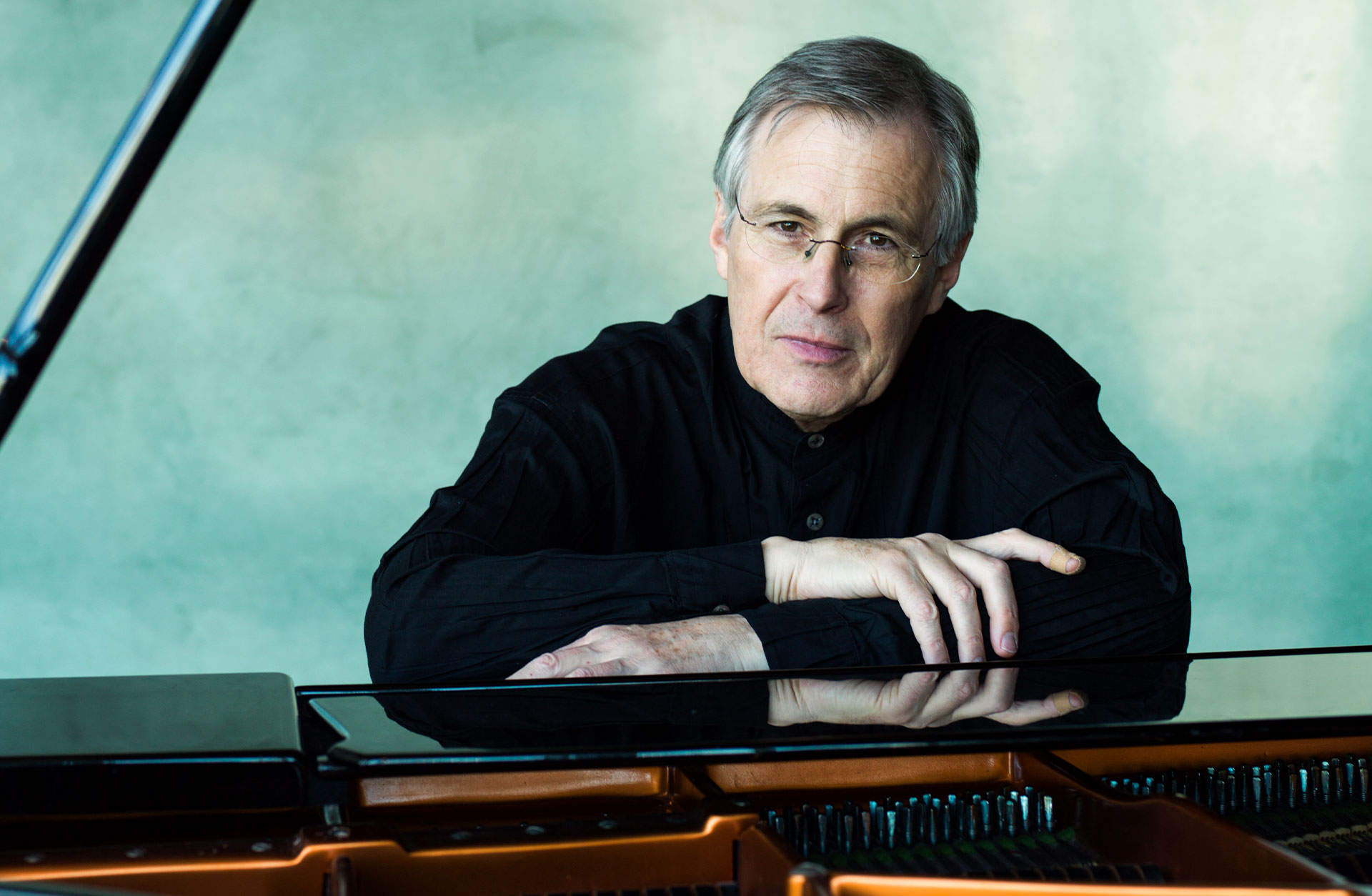
With intimacy and elegance, Christian Zacharias presents a solo concert. In this programme spanning over three centuries, we hear music characterised by playfulness, depth and lyrical beauty – from the finesses of Haydn and Schubert, to the French sounds of Couperin and Poulenc.
Christian Zacharias is particularly associated with Haydn’s piano sonatas, with interpretations that highlight their humour, elegance and structural definition. Schubert’s Moments Musicaux represents a more inward-oriented and lyrical romance, while Domenico Scarlatti’s Sonata in C Minor is a concentrated and expressive piece with sharp contrasts and rhythmic energy.
However, the French theme is clear throughout the concert, with Francis Poulenc’s personal, often melancholy piano music, and François Couperin’s decorated Baroque pieces.
A particular gem is Poulenc’s Improvisation No. 15, a peaceful and heartfelt homage to Édith Piaf, with simplicity and emotional precision at the centre.
Come closer
Have a seat in the Great Hall an hour before the concert and let the introduction open the door to the stories behind the works, facts about the composers and personal reflections. The introduction is included in your ticket, lasts about 30 minutes and has free seating in the hall.
Programme
Haydn Sonata in G 16 min
Schubert Moments musicaux 30 min
Haydn Sonata in C 18 min
Intermission25 min
François Couperin (1668-1733)
From Pièces de clavecin: Les moissonneurs, Les charmes, Les barricades mystérieuses
François Couperin was active at the French court, where he played the harpsichord for Louis XIV, among others. His music blends the elegance of the French Baroque with the refined melodic style and ornamentation of Italian music. In Couperin’s hands, French dance rhythms and intricately embellished melodies take on a personal and poetic expression.
Many of Couperin’s pieces bear evocative titles that can serve as keys to the listener’s own imagination. Les moissonneurs (The Harvesters) is lively and dance-like, while Les charmes (The Charms) is more sensual and seductive. Les barricades mystérieuses (The Mysterious Barricades) boasts one of the most enigmatic titles in music history; no one knows for certain what kind of barriers Couperin was referring to.
These three pieces showcase the capabilities of the harpsichord. Ornamentation, broken chords, and rhythmic figures are woven together into a shimmering soundscape. Melody and accompaniment often blend into one another, and what may initially appear light and elegant reveals a wealth of nuances. Couperin’s music encompasses the refined and the playful, the sensual and the enigmatic. It is music that delights and stirs the imagination.
Francis Poulenc’s piano music is quintessentially French in many ways: elegant, light, and rhythmically witty, yet also replete with unexpected harmonies and a unique blend of humor and melancholy. Poulenc was an accomplished pianist himself, and his short piano pieces often possess an improvisational, almost conversational quality.
The playful side of his work is evident in the three-movement early suite *Mouvements perpétuels*. The music is constantly in motion—perhaps like a stroll through a bustling Paris.
The Improvisations reveal other facets. Improvisation No. 13 holds a note of nostalgic tenderness, as if the city and the past are suddenly being viewed from afar. Improvisation No. 15, Hommage à Édith Piaf, connects with the French chanson tradition. With passionate intensity and emotional resonance, Poulenc creates a musical portrait not only of the singer but also of Paris itself—with its boulevards, cafés, voices, and songs.
A more personal side of Poulenc is expressed in Mélancolie, composed in 1940 during the German invasion of France. It was a traumatic period for the composer; like so many others, he was separated from his loved ones and cut off from his former life. The piano part speaks of longing, nostalgia, and a sorrow that slowly gives way to stillness.
Couperin Les charmes 4 min
Poulenc Improvisation No. 13 3 min
Scarlatti Sonata C minor 6 min
Poulenc Improvisation No. 15 "Hommage à Édith Piaf" 4 min
Couperin Les barricades mystérieuses 3 min
Poulenc Intermezzo No. 2 3 min
Poulenc Mélancolie 6 min
Wednesday 25 November 2026: The event ends at approx. 21.00
Participants
Pianist and conductor Christian Zacharias has served as chief conductor of the Lausanne Chamber Orchestra and principal guest conductor of the Gothenburg Symphony Orchestra. Since 2021, he has been the principal guest conductor of the Orquesta Ciudad de Granada. He regularly collaborates with the Boston Symphony Orchestra, the Basel Chamber Orchestra, the Konzerthausorchester Berlin, the Orchestre National de Lyon, and the Bamberg Symphony. Christian Zacharias is also a dedicated chamber musician. As an opera conductor, he has led productions of La clemenza di Tito, The Marriage of Figaro, The Merry Wives of Windsor, and The Tales of Hoffmann. His many critically acclaimed recordings include the complete piano concertos of Mozart, the symphonies of Schumann, and symphonies by C.P.E. Bach. In 2022 and 2023, two solo albums featuring sonatas by Haydn and partitas and suites by Bach were released (MDG).
In general, the Classical-Romantic repertoire—particularly the works of Schumann, Brahms, Bruckner, Mozart, Haydn, and Beethoven—forms a key musical focus for him. He often complements his programs with modern works by composers such as Schoenberg, Britten, or Bacewicz. As a pianist, he also gives solo recitals and lectures. He last appeared with the Gothenburg Symphony Orchestra in 2023.


 031-726 53 00
 biljett@gso.se