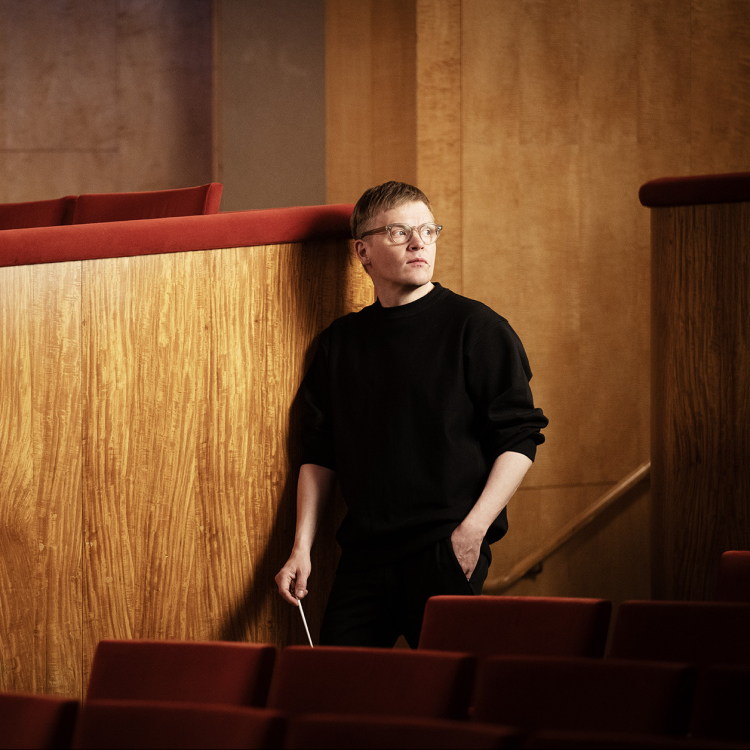
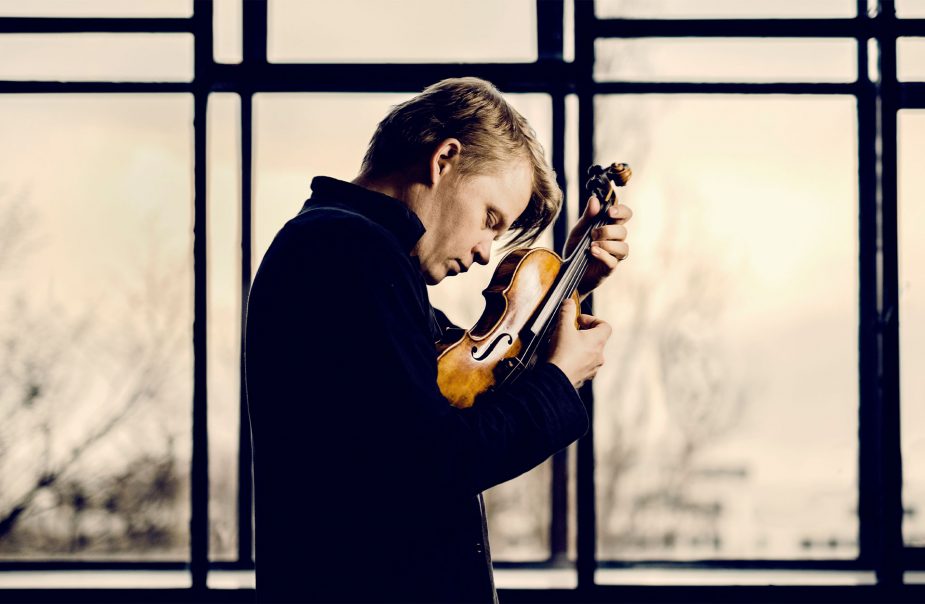
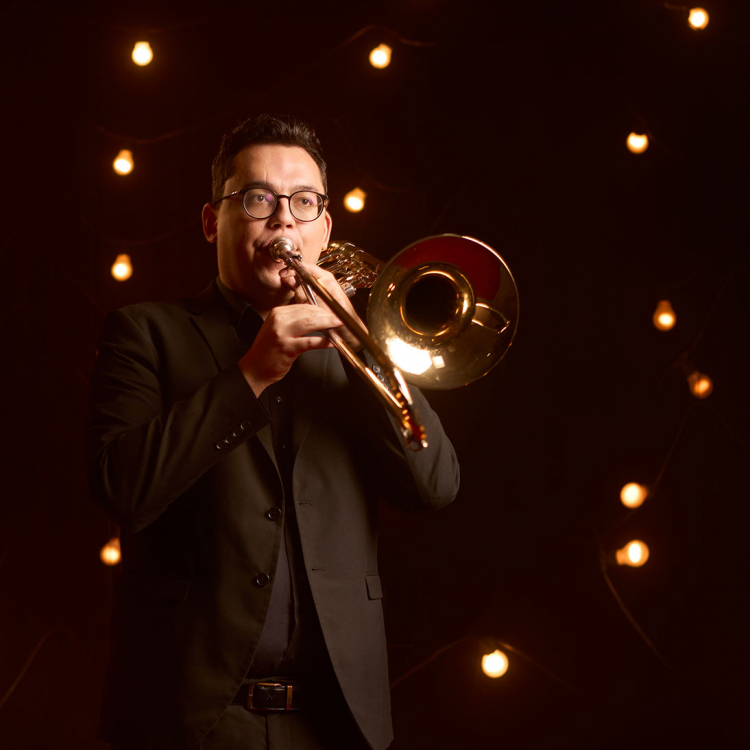
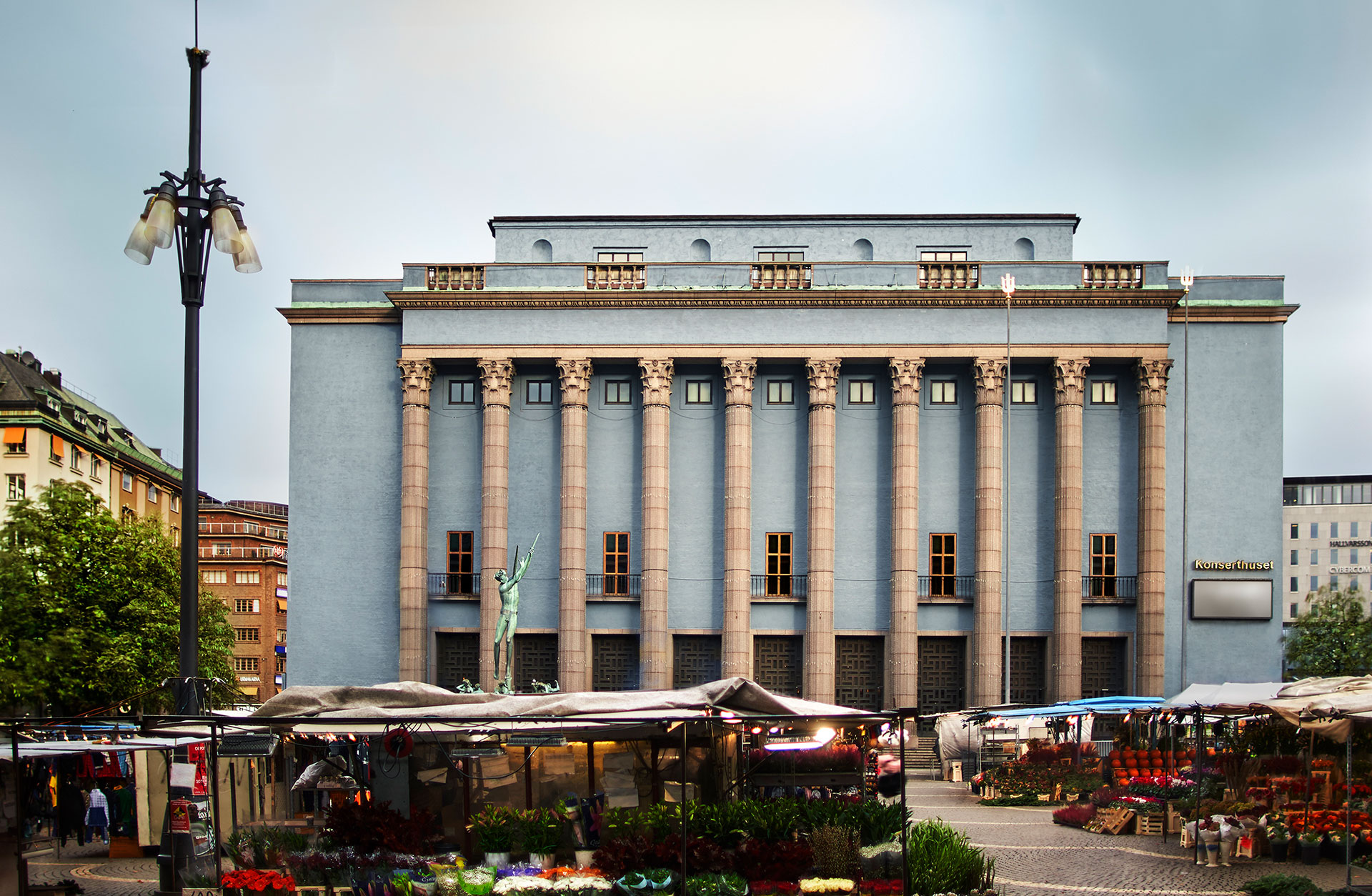
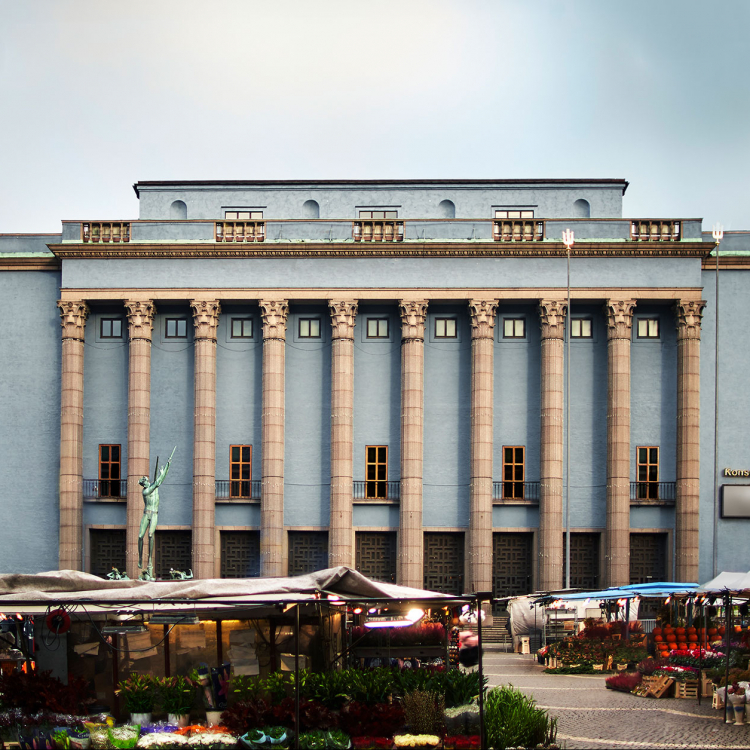
Gothenburg Symphony Orchestra on tour to Stockholms Konserthus together with principal conductor Pekka Kuusisto and singer Katarina Barruk.
Programme
Sibelius Symphony No 5
Compared to the Fourth Symphony, Sibelius's Fifth Symphony is colorful and vibrant, heroic and accessible. But equally it required more work than the brooding and introverted four. No other work caused him so much trouble.
"Walked in the cold spring sun. Had a violent impression of Symphony No. 5. The new one!" "Saw today (April 21, 1915) ten before eleven 16 swans. One of the greatest impressions of my life! ... The sound of the same woodwind type as the cranes, but without tremolo. The swans are closer to the trumpet although the sarrusophone sound is clear. Nature mystery and life's woe! The fifth symphony's final theme."
The first movement consists of two parts. The first of these begins with a true pastoral idyll, with signal horn motifs and responding woodwinds. Throughout this part the experience of nature is strong, but in the second part of the movement the music takes on a more scherzo-like character. In the slow movement, the idyllic returns, this time with a graceful, almost rococo elegance. "In the background wander the ever-changing cloud formations of the clarinets, bassoons and horns." The finale's main theme shines through an impressionistic shimmer of strings, which contrasts with the swan theme of the trumpets. And then the doomed, severely isolated chords that end this architectural masterpiece.
STIG JACOBSSON
Intermission
Barruk Intro from Ruhttuo
Kidane Be Still
Written towards the end of 2020, ‘Be Still’ is a reflective piece on the year gone by. In a year where lockdowns became a thing, the idea of time became more apparent to me as everyday markers, such as meeting with friends and family, travelling or attending concerts vanished.
Whilst writing ‘Be Still’ the opening lines of TS Eliot's Burnt Norton, the first of his Four Quartets, came to mind:
“Time present and time past/ Are both perhaps present in time future/And time
Future contained in time past/ If all time is eternally present/ All time is unredeemable”.
And as I look back at the year and attempt to fix in my mind events, they slither away
from my grasp – like clouds passing by in the sky.
Daniel Kidane
Barruk / Trad Miärralándda
Glass from String quartet No 3, "Mishima"
Philip Glass is often mentioned in the same breath as Steve Reich and Terry Riley. Glass' minimalism, however, can be said to represent a completely different direction than that taken by Reich or Riley, but in history books we often find them on the same page. Today, Glass is probably best known for his film music, where several of his soundtracks have been nominated for Oscars, such as the cello music for The Hours.
String Quartet No. 3 was written for Paul Schrader's acclaimed film Mishisma – a Life in Four Chapters in 1985. The controversial Japanese author Yukio Mishima developed his own form of nationalism and cultural conservatism.
Barruk Niäguoh
Hannah Kendall Weroon Weroon
Hanna Kendall (f 1984)
Weeron Weeron, for solo cuffed violin
Hannah Kendall is from London and composed this solo piece for Pekka Kuusisto. It was premiered in Helsinki in 2022. The title means "My God, my God" and comes from Martin Carter's poem of the same name, written in 1954 as part of his collection Poems of Resistance from British Guyana. All the strings of the violin are tied together with aluminum dreadlock cuffs; accessories that distort the sound of the instrument, making the pitch unstable, unpredictable and changing from performance to performance. A new Creole-style instrument is formed.
Barruk Sånger från Sådna Jahttá
Tüür Action from Action - Passion - Illusion
Estonian composer Erkki-Sven Tüür began his career in a rock band influenced by Frank Zappa, Yes and Genesis. He is the creator of eight symphonies, several instrumental concertos, many chamber music pieces and an opera. During his career, Tüür has tested most compositional techniques to demonstrate and combine musical opposites - tonality and atonality, repeating rhythms and complex rhythms, meditative calm and theatrical explosiveness.
Action-Passion-Illusion is a three-part work for string orchestra from 1994.
Barruk Ij gåssieke
Bach / Reger O Mensch, bewein dein Sünde groß
Johann Sebastian Bach (1685-1750)
O Mensch, bewein dein Sünde groß (transcript by Max Reger)
The chorale "O man, weep for your great sin" is found in the final version of the St. Matthew Passion. Bach took the melody itself from an older hymn and added text by the hymn writer Sebald Heyden. In both orchestra and choir, Bach exposes man and his shortcomings. Where we have transgressed our powers, we have shown not strength, but weakness. Where we hurt our neighbor, we also hurt ourselves. In a chorale further on, forgiveness awaits: "I do not deny my sin, but your grace and mercy are much greater."
Like Bach, the composer Max Reger was based in Leipzig. Here he has taken Bach's hymn and transformed it into slow strings, as humble as human voices.
Barruk / Nordvik Dállie
Thursday 26 March 2026: The event ends at approx. 21.00
Participants
Gothenburg Symphony Orchestra
The Gothenburg Symphony was formed in 1905 and today consists of 109 musicians. The orchestra's base is Gothenburg Concert Hall at Götaplatsen that has gathered music lovers since 1935. Since the 2019-2020 season, Barbara Hannigan is Principal guest conductor. We are also a proud partner of Barbara Hannigan's Equilibrium mentoring program focusing on young singers at the start of their careers. The title Principal Guest Conductor is shared by Pekka Kuusisto from 2025.
Wilhelm Stenhammar was the orchestra's chief conductor from 1907 to 1922. He gave the orchestra a strong Nordic profile and invited colleagues Carl Nielsen and Jean Sibelius to the orchestra. Under the direction of conductor Neeme Järvi from 1982-2004, the orchestra made a series of international tours as well as a hundred disc recordings and established themselves among Europe's leading orchestras. In 1996, the Swedish Riksdag appointed the Gothenburg Symphony as Sweden's National Orchestra.
In recent decades, the orchestra has had prominent chief conductors such as Santtu-Matias Rouvali, Mario Venzago and Gustavo Dudamel, following Kent Nagano as Principal Guest conductor. Anna-Karin Larsson is CEO and artistic director, Gustavo Dudamel honorary conductor and Neeme Järvi chief conductor emeritus. The orchestra's owner is the Västra Götaland Region.
The Gothenburg Symphony works regularly with conductors such as Herbert Blomstedt, Joana Carneiro, Jukka-Pekka Saraste, Christian Zacharias and Anja Bihlmaier.
Pekka Kuusisto conductor, violin
Violinist Pekka Kuusisto is known for his artistic freedom and innovative approach to repertoire. He is the artistic director of the Norwegian Chamber Orchestra and, since 2023, principal guest conductor and artistic partner of the Helsinki Philharmonic. Season 2025-2026 he joined as Principal Guest Conductor of the Gothenburg Symphony Orchestra. He has also been appointed as chief conductor of the Tokyo Metropolitan Symphony Orchestra from 2028.
In season 2024-2025 Kuusisto appeared with Helsinki Philharmonic and Gothenburg Symphony Orchestra as soloist and conductor, play-conducted the Norwegian Chamber Orchestra, Die Deutsche Kammerphilharmonie Bremen, Swedish Chamber Orchestra, Danish National Symphony Orchestra and the Scottish Chamber Orchestra. He conducted the Swedish Radio Symphony Orchestra, Lahti Sinfonia and Ostrobothninan Symphony as well as appeared soloist with Detroit Symphony Orchestra, the NSO Dublin, Brussels Philharmonic, Orchestre National de Lyon with André de Ridder, the NDR Elbphilharmonie Orchestra, Los Angeles Philharmonic and Boston Symphony Orchestra. Kuusisto continues his collaboration with Gabriel Kahane as Council following successful tours in the US and Australia.
Kuusisto gets involved across the entire artistic spectrum. He has collaborated with musicians such as Hauschka & Kosminen, Dutch neurologist Erik Scherder, electro pioneer Brian Crabtree, jazz trumpeter Arve Henriksen, juggler Jay Gilligan, accordionist Dermot Dunne and folk artist Sam Amidon.
In 2024, Kuusisto was featured in two releases on Sony – Bryce Dessner’s album SOLOS where he performed composer’s Ornament and Crime for solo violin, and on Anna Clyne’s and The Knights album Shorthand performing Prince of Clouds for two violins. In 2023, Kuusisto released an album for BIS as conductor in Jaakko Kuusisto's symphony, and one for Alba as violinist with Malin Broman and the Ostrobothnian Chamber Orchestra with works by Tarrodi, Byström, Larsson and Zinovjev. Composers who have written violin concertos for Kuusisto include Nico Muhly, Sebastian Fagerlund and Bryce Dessner.
Pekka Kuusisto plays an Antonio Stradivarius from 1695 on generous loan from Anders Sveaas Charitable Trust.
Katarina Barruk vocals
Katarina Barruk is one of the Nordic countries' most highly regarded Sámi artists. She grew up in Lusspie (Storuman) and Gajhrege (Gardfjäll). She delivers a powerful yet deeply down-to-earth blend of pop music, traditional yoik and improvisational elements.
She has toured Europe for the past ten years and has performed at venues including the Øya Festival, Iceland Airwaves, Reeperbahn and WOMEX. Since 2023, she has performed several times with the Norwegian Chamber Orchestra and the Helsinki Philharmonic Orchestra.
Her second album Ruhttuo (2022) with producers Arnljot Nordvik and Christo Stangness cemented her reputation for not taking the beaten track, but instead forging her own path.



 031-726 53 00
  biljett@gso.se