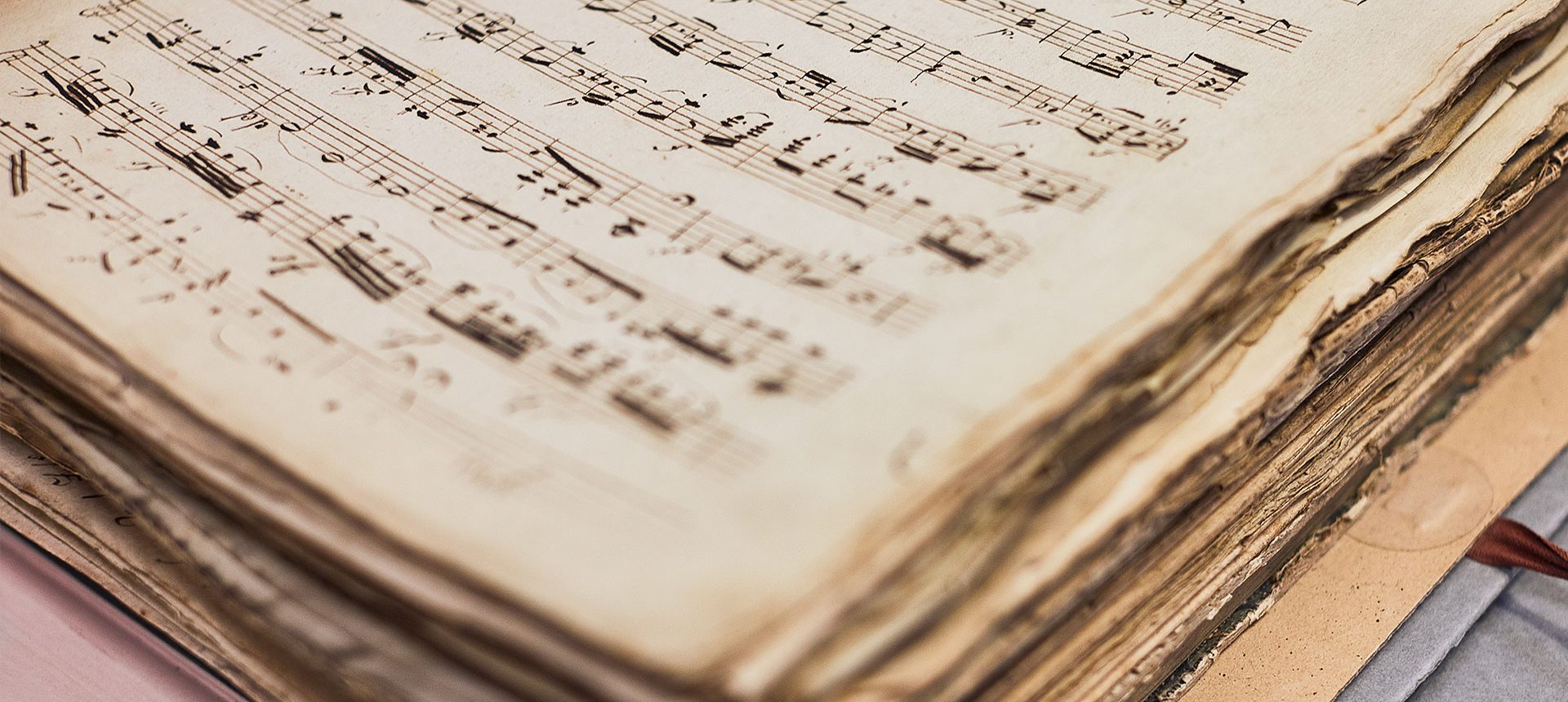
Here you can find almost anything about all the concerts Gothenburg Symphony has played over the years, both in the Concert Hall and on tour.
Search for conductors, soloists and other artists that has played together with us. Or search for composers and music that we have played. And filter on specific seasons. Guesting orchestras and ensembles are also included in the archive.
The result is presented by season.
Mårten Larsson was born in Örebro and trained at the Royal Academy of Music under Alf Nilsson. He has been a leading oboist in Sweden for many years and is solo oboist in the Gothenburg Symphony Orchestra. He has also been a member of the Stockholm Sinfonietta. Mårten Larsson teaches at the Gothenburg Academy of Music and Drama and has released albums with music by Johan Helmich Roman, JS Bach and Keith Jarrett, among others.
Claes Gunnarsson has toured all over the world as a soloist, chamber musician, orchestral musician and teacher. He made an early and acclaimed debut as soloist in Dvorák's Cello Concerto with the Gothenburg Symphony Orchestra. Shortly afterwards he was appointed principal cellist of the orchestra, a position he has held since 1999.
As soloist, Claes has appeared in some of the world's most prestigious concert halls, including Wigmore Hall, Queen Elizabeth Hall, St. Petersburg Philharmonie, Shanghai Symphony Hall, Seoul Arts Center and Singapore Symphony Hall. He has also appeared at leading international festivals such as La Folle Journée in Nantes, Music@Menlo in California, Mecklenburg-Vorpommern, Affinis in Japan, Yuri Temirkanov's Winter Festival in St. Petersburg and the Qingdao International Cello Festival. Conductors he has collaborated with include Neeme Järvi, Kent Nagano, Santtu-Matias Rouvali, Alexander Lazarev, Christian Zacharias and Christopher Warren-Green.
As a chamber musician, Claes has collaborated with prominent musicians such as Leonidas Kavakos, Nikolaj Znaider, Christian Zacharias and Hélène Grimaud. Of particular significance is his nearly 25-year collaboration with violinist Sara Trobäck and pianist Per Lundberg in the piano trio Trio Poseidon. The trio has toured extensively both nationally and internationally and made a critically acclaimed recording of Beethoven's Triple Concerto and Brahms' Double Concerto together with the Gothenburg Symphony Orchestra and Neeme Järvi for Chandos Records.
For Chandos Records, he has also recorded Weinberg's Cello Fantasy and Cello Concerto together with the Gothenburg Symphony Orchestra and Thord Svedlund. The recording of the cello concerto was awarded the Diapason d'Or award. He is also represented on BIS Records with the premiere recording of Albert Schnelzer's cello concerto.
Claes is regularly invited as a guest solo cellist with, among others, the Oslo Philharmonic, the BBC Symphony Orchestra and the London Symphony Orchestra. In parallel with his concert performances, he is active as a teacher at the Academy of Drama and Music at the University of Gothenburg.
Claes plays a cello built in 1707 by David Tecchler, generously on loan from the Järnåker Foundation.
Cellist Johan Stern is principal conductor of the Gothenburg Symphony Orchestra and teaches cello, chamber music and orchestral playing at the Academy of Music and Performing Arts. He studied at the Royal Academy of Music in Stockholm and at the Juilliard School in New York. As a member of Gageego!, the Gothenburg Ensemble for New Music, he has premiered several solo works by our leading Nordic composers. Johan Stern has participated in a number of international festivals and as a soloist and chamber musician has performed with figures such as Bobby McFerrin, Edward Gardner, Petri Sakari, Kristjan Järvi, Daniel Müller-Schott and Levon Chilingirian. During his studies at Juilliard, he had the privilege of collaborating with several internationally renowned musical figures, including cellist Yo-Yo Ma and composers Elliott Carter and John Cage.
Jun Sasaki is co-principal cello in Gothenburg Symphony since 2014. He was born in London and studied at the Yehudi Menuhin School and the Royal College of Music with Thomas Carroll before moving to Oslo to study at Norges Musikhögskola with Truls Mørk.
A prizewinner at the Royal Overseas League (UK) and Antonio Janigro (Croatia) competitions, his cello playing has led to appearances on TV and radio, and has taken him to festivals and venues across Europe and beyond - as soloist performing in venues such as the Cadogan Hall, Queen Elizabeth Hall and the Wigmore Hall, and at festivals such as the Schleswig-Holstein (Germany), Edinburgh Fringe (Scotland), and Ultima (Norway).
With a passion for chamber music, Jun has performed with artists such as Leif Ove Andsnes , Barbara Hannigan, Pekka Kuusisto, Corina Belcea and his teacher Truls Mørk. Jun is a member of Ensemble Caplet, as well as member of the musician community of Norwegian Chamber Orchestra.
The trumpeter Per Ivarsson has been principal trumpet in the Gothenburg Symphony Orchestra since 2011. He was recruited to the Malmö Symphony Orchestra even before he graduated from the Academy of Music in Karlsruhe, where he studied for six years. Per Ivarsson was born and raised in Malmö and started playing the trumpet when he was six years old. He has studied with Björn Lovén, Reinhold Friedrich and Håkan Hardenberger. Per Ivarsson is also a devoted chamber musician. With the Gothenburg Symphony Orchestra, Per Ivarsson has, among many other things, been a soloist in Jolivet's Heptade for trumpet and percussion and in Jolivet's second trumpet concerto. He has also made several recordings for GSOplay.
Claes Gunnarsson has toured all over the world as a soloist, chamber musician, orchestral musician and teacher. He made an early and acclaimed debut as soloist in Dvorák's Cello Concerto with the Gothenburg Symphony Orchestra. Shortly afterwards he was appointed principal cellist of the orchestra, a position he has held since 1999.
As soloist, Claes has appeared in some of the world's most prestigious concert halls, including Wigmore Hall, Queen Elizabeth Hall, St. Petersburg Philharmonie, Shanghai Symphony Hall, Seoul Arts Center and Singapore Symphony Hall. He has also appeared at leading international festivals such as La Folle Journée in Nantes, Music@Menlo in California, Mecklenburg-Vorpommern, Affinis in Japan, Yuri Temirkanov's Winter Festival in St. Petersburg and the Qingdao International Cello Festival. Conductors he has collaborated with include Neeme Järvi, Kent Nagano, Santtu-Matias Rouvali, Alexander Lazarev, Christian Zacharias and Christopher Warren-Green.
As a chamber musician, Claes has collaborated with prominent musicians such as Leonidas Kavakos, Nikolaj Znaider, Christian Zacharias and Hélène Grimaud. Of particular significance is his nearly 25-year collaboration with violinist Sara Trobäck and pianist Per Lundberg in the piano trio Trio Poseidon. The trio has toured extensively both nationally and internationally and made a critically acclaimed recording of Beethoven's Triple Concerto and Brahms' Double Concerto together with the Gothenburg Symphony Orchestra and Neeme Järvi for Chandos Records.
For Chandos Records, he has also recorded Weinberg's Cello Fantasy and Cello Concerto together with the Gothenburg Symphony Orchestra and Thord Svedlund. The recording of the cello concerto was awarded the Diapason d'Or award. He is also represented on BIS Records with the premiere recording of Albert Schnelzer's cello concerto.
Claes is regularly invited as a guest solo cellist with, among others, the Oslo Philharmonic, the BBC Symphony Orchestra and the London Symphony Orchestra. In parallel with his concert performances, he is active as a teacher at the Academy of Drama and Music at the University of Gothenburg.
Claes plays a cello built in 1707 by David Tecchler, generously on loan from the Järnåker Foundation.
Cellist Johan Stern is principal conductor of the Gothenburg Symphony Orchestra and teaches cello, chamber music and orchestral playing at the Academy of Music and Performing Arts. He studied at the Royal Academy of Music in Stockholm and at the Juilliard School in New York. As a member of Gageego!, the Gothenburg Ensemble for New Music, he has premiered several solo works by our leading Nordic composers. Johan Stern has participated in a number of international festivals and as a soloist and chamber musician has performed with figures such as Bobby McFerrin, Edward Gardner, Petri Sakari, Kristjan Järvi, Daniel Müller-Schott and Levon Chilingirian. During his studies at Juilliard, he had the privilege of collaborating with several internationally renowned musical figures, including cellist Yo-Yo Ma and composers Elliott Carter and John Cage.
Jun Sasaki is co-principal cello in Gothenburg Symphony since 2014. He was born in London and studied at the Yehudi Menuhin School and the Royal College of Music with Thomas Carroll before moving to Oslo to study at Norges Musikhögskola with Truls Mørk.
A prizewinner at the Royal Overseas League (UK) and Antonio Janigro (Croatia) competitions, his cello playing has led to appearances on TV and radio, and has taken him to festivals and venues across Europe and beyond - as soloist performing in venues such as the Cadogan Hall, Queen Elizabeth Hall and the Wigmore Hall, and at festivals such as the Schleswig-Holstein (Germany), Edinburgh Fringe (Scotland), and Ultima (Norway).
With a passion for chamber music, Jun has performed with artists such as Leif Ove Andsnes , Barbara Hannigan, Pekka Kuusisto, Corina Belcea and his teacher Truls Mørk. Jun is a member of Ensemble Caplet, as well as member of the musician community of Norwegian Chamber Orchestra.
Mårten Larsson was born in Örebro and trained at the Royal Academy of Music under Alf Nilsson. He has been a leading oboist in Sweden for many years and is solo oboist in the Gothenburg Symphony Orchestra. He has also been a member of the Stockholm Sinfonietta. Mårten Larsson teaches at the Gothenburg Academy of Music and Drama and has released albums with music by Johan Helmich Roman, JS Bach and Keith Jarrett, among others.
The trumpeter Per Ivarsson has been principal trumpet in the Gothenburg Symphony Orchestra since 2011. He was recruited to the Malmö Symphony Orchestra even before he graduated from the Academy of Music in Karlsruhe, where he studied for six years. Per Ivarsson was born and raised in Malmö and started playing the trumpet when he was six years old. He has studied with Björn Lovén, Reinhold Friedrich and Håkan Hardenberger. Per Ivarsson is also a devoted chamber musician. With the Gothenburg Symphony Orchestra, Per Ivarsson has, among many other things, been a soloist in Jolivet's Heptade for trumpet and percussion and in Jolivet's second trumpet concerto. He has also made several recordings for GSOplay.
The rhapsody was a perfect tool for provincial exploration - genuine or newly composed folk songs were arranged and assembled into a kind of more elaborate suite. Not even the elegant Ravel, known for clarity and refined orchestral effects, could resist the temptation. His favourite Chabrier had already composed the successful rhapsody Espana in 1883, and he himself had been attracted by Spanish tones in Habanera (1895) for two pianos - which was orchestrated and incorporated into Rapsodie espagnole - and Alborada del gracioso (1905). So the foundation was already laid when he wrote his first major orchestral work Rapsodie espagnole in 1908.
The work flows with sensual orchestral sounds, enchanting natural impressions and fiery dances. "Night Prelude" is followed by a malaguena, a dance from Malaga, and the mentioned habanera, which takes its name from the capital of Cuba. Ravel's mastery in painting with the orchestra is particularly prominent in the concluding Feria, "festival". Here the melody part plays virtuoso between strings and winds while cellos, basses and bassoons run a relay race, all the while percussion with triangle, tambourine and castanets deliver their hits with powerful support from the brass. A more effective orchestral finale is hard to find.
The Gothenburg Symphony was formed in 1905 and today consists of 109 musicians. The orchestra's base is Gothenburg Concert Hall at Götaplatsen that has gathered music lovers since 1935. Since the 2019-2020 season, Barbara Hannigan is Principal guest conductor. We are also a proud partner of Barbara Hannigan's Equilibrium mentoring program focusing on young singers at the start of their careers. The title Principal Guest Conductor is shared by Pekka Kuusisto from 2025.
Wilhelm Stenhammar was the orchestra's chief conductor from 1907 to 1922. He gave the orchestra a strong Nordic profile and invited colleagues Carl Nielsen and Jean Sibelius to the orchestra. Under the direction of conductor Neeme Järvi from 1982-2004, the orchestra made a series of international tours as well as a hundred disc recordings and established themselves among Europe's leading orchestras. In 1996, the Swedish Riksdag appointed the Gothenburg Symphony as Sweden's National Orchestra.
In recent decades, the orchestra has had prominent chief conductors such as Santtu-Matias Rouvali, Mario Venzago and Gustavo Dudamel, following Kent Nagano as Principal Guest conductor. Anna-Karin Larsson is CEO and artistic director, Gustavo Dudamel honorary conductor and Neeme Järvi chief conductor emeritus. The orchestra's owner is the Västra Götaland Region.
The Gothenburg Symphony works regularly with conductors such as Herbert Blomstedt, Joana Carneiro, Jukka-Pekka Saraste, Christian Zacharias and Anja Bihlmaier.
The rhapsody was a perfect tool for provincial exploration - genuine or newly composed folk songs were arranged and assembled into a kind of more elaborate suite. Not even the elegant Ravel, known for clarity and refined orchestral effects, could resist the temptation. His favourite Chabrier had already composed the successful rhapsody Espana in 1883, and he himself had been attracted by Spanish tones in Habanera (1895) for two pianos - which was orchestrated and incorporated into Rapsodie espagnole - and Alborada del gracioso (1905). So the foundation was already laid when he wrote his first major orchestral work Rapsodie espagnole in 1908.
The work flows with sensual orchestral sounds, enchanting natural impressions and fiery dances. "Night Prelude" is followed by a malaguena, a dance from Malaga, and the mentioned habanera, which takes its name from the capital of Cuba. Ravel's mastery in painting with the orchestra is particularly prominent in the concluding Feria, "festival". Here the melody part plays virtuoso between strings and winds while cellos, basses and bassoons run a relay race, all the while percussion with triangle, tambourine and castanets deliver their hits with powerful support from the brass. A more effective orchestral finale is hard to find.
The Gothenburg Symphony was formed in 1905 and today consists of 109 musicians. The orchestra's base is Gothenburg Concert Hall at Götaplatsen that has gathered music lovers since 1935. Since the 2019-2020 season, Barbara Hannigan is Principal guest conductor. We are also a proud partner of Barbara Hannigan's Equilibrium mentoring program focusing on young singers at the start of their careers. The title Principal Guest Conductor is shared by Pekka Kuusisto from 2025.
Wilhelm Stenhammar was the orchestra's chief conductor from 1907 to 1922. He gave the orchestra a strong Nordic profile and invited colleagues Carl Nielsen and Jean Sibelius to the orchestra. Under the direction of conductor Neeme Järvi from 1982-2004, the orchestra made a series of international tours as well as a hundred disc recordings and established themselves among Europe's leading orchestras. In 1996, the Swedish Riksdag appointed the Gothenburg Symphony as Sweden's National Orchestra.
In recent decades, the orchestra has had prominent chief conductors such as Santtu-Matias Rouvali, Mario Venzago and Gustavo Dudamel, following Kent Nagano as Principal Guest conductor. Anna-Karin Larsson is CEO and artistic director, Gustavo Dudamel honorary conductor and Neeme Järvi chief conductor emeritus. The orchestra's owner is the Västra Götaland Region.
The Gothenburg Symphony works regularly with conductors such as Herbert Blomstedt, Joana Carneiro, Jukka-Pekka Saraste, Christian Zacharias and Anja Bihlmaier.