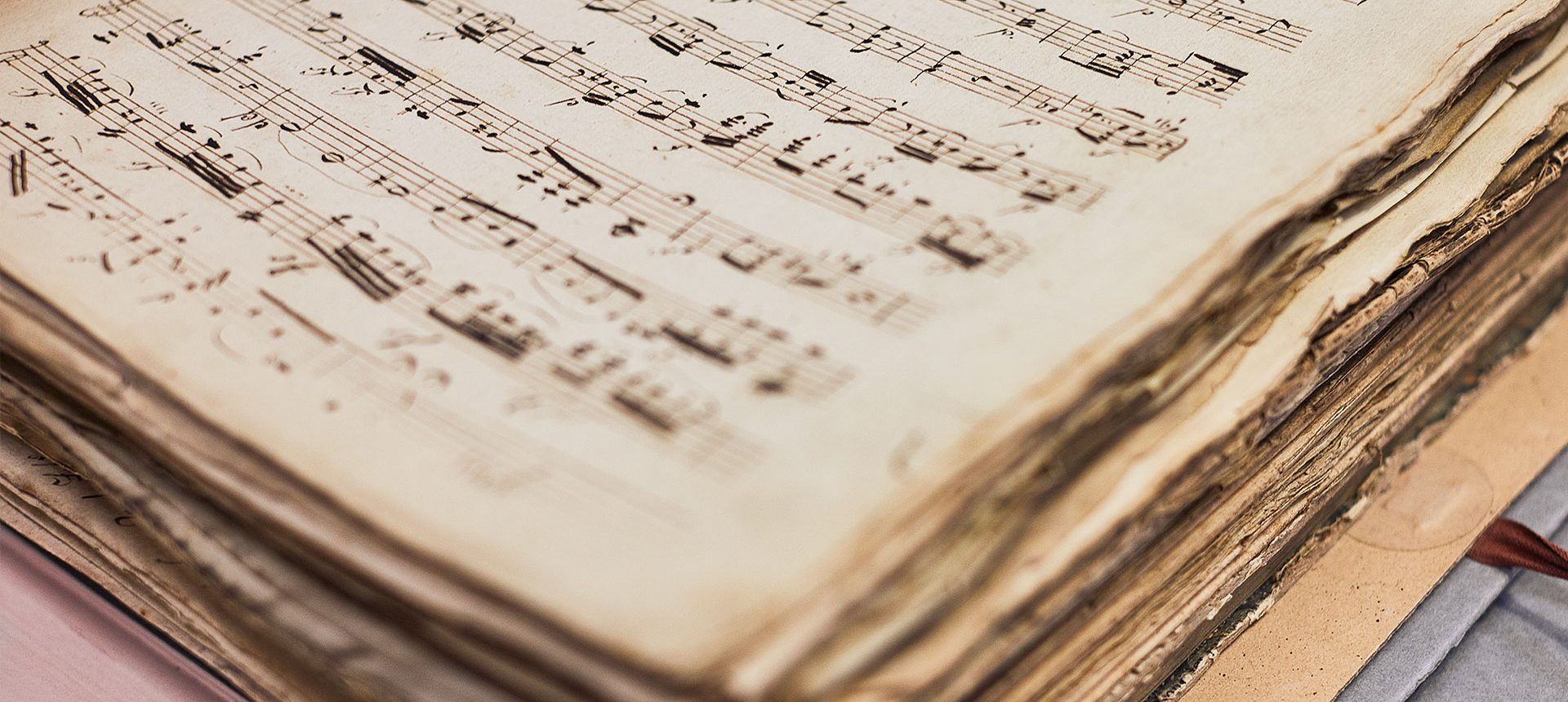
Here you can find almost anything about all the concerts Gothenburg Symphony has played over the years, both in the Concert Hall and on tour.
Search for conductors, soloists and other artists that has played together with us. Or search for composers and music that we have played. And filter on specific seasons. Guesting orchestras and ensembles are also included in the archive.
The result is presented by season.
The Gothenburg Symphony was formed in 1905 and today consists of 109 musicians. The orchestra's base is Gothenburg Concert Hall at Götaplatsen that has gathered music lovers since 1935. Since the 2019-2020 season, Barbara Hannigan is Principal guest conductor. We are also a proud partner of Barbara Hannigan's Equilibrium mentoring program focusing on young singers at the start of their careers. The title Principal Guest Conductor is shared by Pekka Kuusisto from 2025.
Wilhelm Stenhammar was the orchestra's chief conductor from 1907 to 1922. He gave the orchestra a strong Nordic profile and invited colleagues Carl Nielsen and Jean Sibelius to the orchestra. Under the direction of conductor Neeme Järvi from 1982-2004, the orchestra made a series of international tours as well as a hundred disc recordings and established themselves among Europe's leading orchestras. In 1996, the Swedish Riksdag appointed the Gothenburg Symphony as Sweden's National Orchestra.
In recent decades, the orchestra has had prominent chief conductors such as Santtu-Matias Rouvali, Mario Venzago and Gustavo Dudamel, following Kent Nagano as Principal Guest conductor. Anna-Karin Larsson is CEO and artistic director, Gustavo Dudamel honorary conductor and Neeme Järvi chief conductor emeritus. The orchestra's owner is the Västra Götaland Region.
The Gothenburg Symphony works regularly with conductors such as Herbert Blomstedt, Joana Carneiro, Jukka-Pekka Saraste, Christian Zacharias and Anja Bihlmaier.
Pianist and conductor Christian Zacharias has served as chief conductor of the Lausanne Chamber Orchestra and principal guest conductor of the Gothenburg Symphony Orchestra. Since 2021, he has been the principal guest conductor of the Orquesta Ciudad de Granada. He regularly collaborates with the Boston Symphony Orchestra, the Basel Chamber Orchestra, the Konzerthausorchester Berlin, the Orchestre National de Lyon, and the Bamberg Symphony. Christian Zacharias is also a dedicated chamber musician. As an opera conductor, he has led productions of La clemenza di Tito, The Marriage of Figaro, The Merry Wives of Windsor, and The Tales of Hoffmann. His many critically acclaimed recordings include the complete piano concertos of Mozart, the symphonies of Schumann, and symphonies by C.P.E. Bach. In 2022 and 2023, two solo albums featuring sonatas by Haydn and partitas and suites by Bach were released (MDG).
In general, the Classical-Romantic repertoire—particularly the works of Schumann, Brahms, Bruckner, Mozart, Haydn, and Beethoven—forms a key musical focus for him. He often complements his programs with modern works by composers such as Schoenberg, Britten, or Bacewicz. As a pianist, he also gives solo recitals and lectures. He last appeared with the Gothenburg Symphony Orchestra in 2023.
The glory days of the Viennese waltz at the end of the 19th century were pure madness - completely comparable to today's unrestrained club dancing. Swirling around giant ballrooms with thousands of other couples, over and over again, was the great pleasure and enjoyment of the time. The young loved to be swept up in these communal excesses while the opposing side argued that it was harmful and immoral to spin around in this way. But the Viennese waltz could not be stopped - the Strauss family and their successors spread the courage to the rest of Europe, Russia and the USA.
Ravel was born early enough to know the ravages of the Viennese waltz. This familiarity probably inspired him when he began the orchestral piece intended for Diaghilev's Russian ballet. However, he refused. The "choreographic poem" that was finished in 1920 only became a ballet in 1929 when the dancer Ida Rubinstein staged it. The work's working name was Vienna, a city Ravel knew well by the way, but in the end was given an even more stripped-down and concentrated title: La valse, the waltz.
Like the Strauss waltzes, La valse has a slow opening, after which it finds its rhythm and melody and dances away in good old three-bar. But where Strauss keep the music under soft reins and gently slow down at the end to let off their travelers, Ravel does the opposite: the waltz completely explodes, swells over all borders and explodes both tempo and melody. Ravel simply captures the essence of the Viennese waltz - the rapture and total indulgence. An emotional discharge, or for the theorist: music that comments on itself. The ironic Ravel did not deny himself - what is wrong with satisfying different tastes at the same time?
Participants
The Gothenburg Symphony was formed in 1905 and today consists of 109 musicians. The orchestra's base is Gothenburg Concert Hall at Götaplatsen that has gathered music lovers since 1935. Since the 2019-2020 season, Barbara Hannigan is Principal guest conductor. We are also a proud partner of Barbara Hannigan's Equilibrium mentoring program focusing on young singers at the start of their careers. The title Principal Guest Conductor is shared by Pekka Kuusisto from 2025.
Wilhelm Stenhammar was the orchestra's chief conductor from 1907 to 1922. He gave the orchestra a strong Nordic profile and invited colleagues Carl Nielsen and Jean Sibelius to the orchestra. Under the direction of conductor Neeme Järvi from 1982-2004, the orchestra made a series of international tours as well as a hundred disc recordings and established themselves among Europe's leading orchestras. In 1996, the Swedish Riksdag appointed the Gothenburg Symphony as Sweden's National Orchestra.
In recent decades, the orchestra has had prominent chief conductors such as Santtu-Matias Rouvali, Mario Venzago and Gustavo Dudamel, following Kent Nagano as Principal Guest conductor. Anna-Karin Larsson is CEO and artistic director, Gustavo Dudamel honorary conductor and Neeme Järvi chief conductor emeritus. The orchestra's owner is the Västra Götaland Region.
The Gothenburg Symphony works regularly with conductors such as Herbert Blomstedt, Joana Carneiro, Jukka-Pekka Saraste, Christian Zacharias and Anja Bihlmaier.
The choir was founded in 1917 by cousins Elsa and Wilhelm Stenhammar. Elsa Stenhammar was one of the driving forces in turn-of-the-century choir life in Gothenburg and became the choir's first rehearser. On December 8, 1917, the choir debuted in Beethoven's Choir Fantasy with Wilhelm Stenhammar as soloist at the grand piano. As the country's oldest symphonic choir, they were able to celebrate their 100th anniversary in 2017 with a big celebratory concert where Mozart and Brahms as well as Stenhammar, Elfrida Andrée and Björn & Benny were on the program.
The Gothenburg Symphony Choir is a non-profit association that is linked to the Gothenburg Symphony. The choir participates in concerts and performances under both the orchestra's and its own auspices. The music is mixed and the repertoire extensive. The Gothenburg Symphony Choir has participated in concerts in, among other places, the Royal Albert Hall and Canterbury Cathedral in England, as well as participated with the Gothenburg Symphony in the annual music festival in the Canary Islands and on a tour to China.
1954-11-07 19:00 Stora salen
Göteborgs Symfoniker
Programme
Beethoven really had to struggle with his music. He worked meticulously on every detail, and the work is still extant in his sketchbooks. Even the seemingly obvious opening of the Fifth Symphony, the knocking on the door of fate that immediately seizes the listener and which seems to be such an unshakable thought, undergoes a series of transformations in the sketches that are difficult to understand in retrospect.
The energetic scherzo transition in the finale has undergone countless phases of development. The sketches also show that Beethoven originally did not at all envision a finale in a triumphant major, but in a minor key. Beethoven's Fifth is certainly worthy of all the admiring attention it receives. It is the result of the tribulations of a hard-working genius.
The Gothenburg Symphony was formed in 1905 and today consists of 109 musicians. The orchestra's base is Gothenburg Concert Hall at Götaplatsen that has gathered music lovers since 1935. Since the 2019-2020 season, Barbara Hannigan is Principal guest conductor. We are also a proud partner of Barbara Hannigan's Equilibrium mentoring program focusing on young singers at the start of their careers. The title Principal Guest Conductor is shared by Pekka Kuusisto from 2025.
Wilhelm Stenhammar was the orchestra's chief conductor from 1907 to 1922. He gave the orchestra a strong Nordic profile and invited colleagues Carl Nielsen and Jean Sibelius to the orchestra. Under the direction of conductor Neeme Järvi from 1982-2004, the orchestra made a series of international tours as well as a hundred disc recordings and established themselves among Europe's leading orchestras. In 1996, the Swedish Riksdag appointed the Gothenburg Symphony as Sweden's National Orchestra.
In recent decades, the orchestra has had prominent chief conductors such as Santtu-Matias Rouvali, Mario Venzago and Gustavo Dudamel, following Kent Nagano as Principal Guest conductor. Anna-Karin Larsson is CEO and artistic director, Gustavo Dudamel honorary conductor and Neeme Järvi chief conductor emeritus. The orchestra's owner is the Västra Götaland Region.
The Gothenburg Symphony works regularly with conductors such as Herbert Blomstedt, Joana Carneiro, Jukka-Pekka Saraste, Christian Zacharias and Anja Bihlmaier.