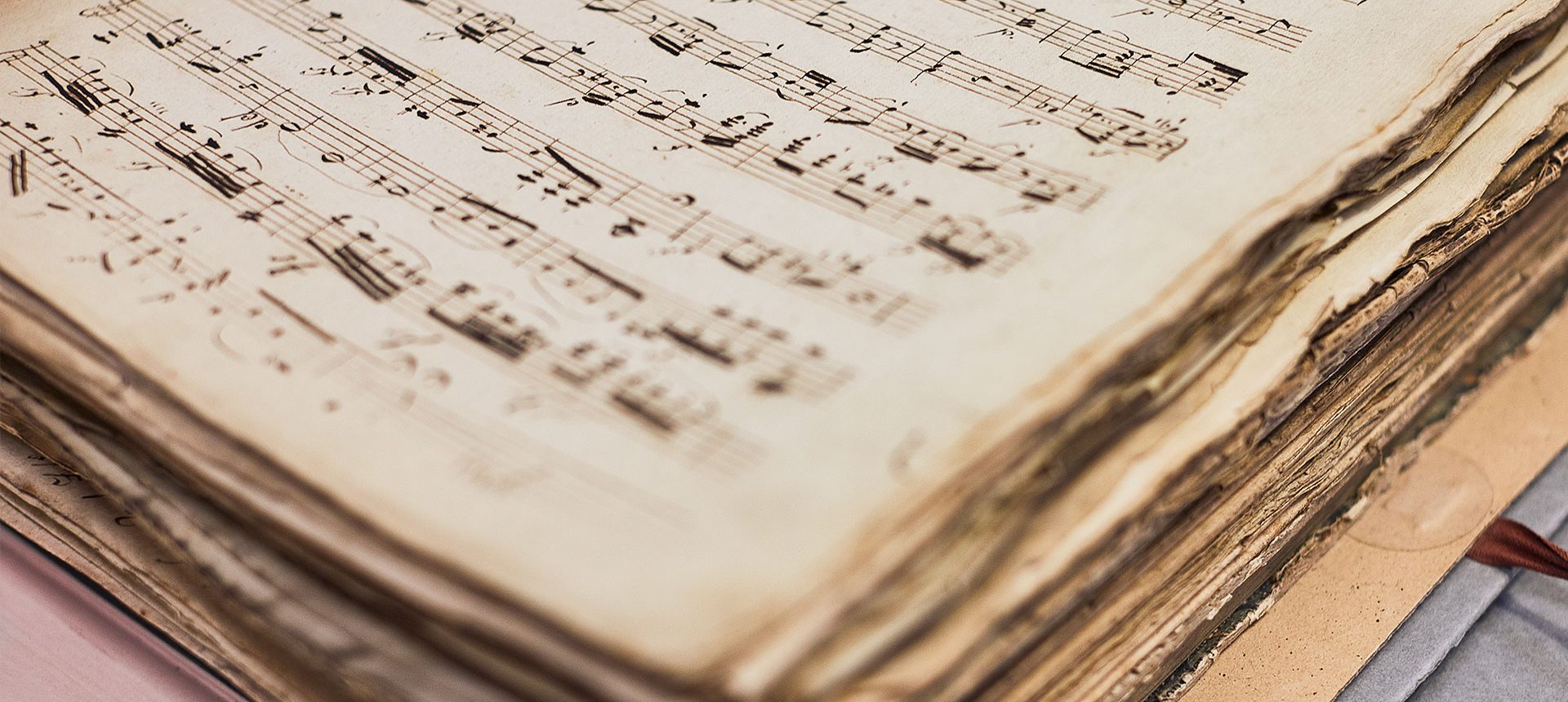
Here you can find almost anything about all the concerts Gothenburg Symphony has played over the years, both in the Concert Hall and on tour.
Search for conductors, soloists and other artists that has played together with us. Or search for composers and music that we have played. And filter on specific seasons. Guesting orchestras and ensembles are also included in the archive.
The result is presented by season.
The Gothenburg Symphony was formed in 1905 and today consists of 109 musicians. The orchestra's base is Gothenburg Concert Hall at Götaplatsen that has gathered music lovers since 1935. Since the 2019-2020 season, Barbara Hannigan is Principal guest conductor. We are also a proud partner of Barbara Hannigan's Equilibrium mentoring program focusing on young singers at the start of their careers. The title Principal Guest Conductor is shared by Pekka Kuusisto from 2025.
Wilhelm Stenhammar was the orchestra's chief conductor from 1907 to 1922. He gave the orchestra a strong Nordic profile and invited colleagues Carl Nielsen and Jean Sibelius to the orchestra. Under the direction of conductor Neeme Järvi from 1982-2004, the orchestra made a series of international tours as well as a hundred disc recordings and established themselves among Europe's leading orchestras. In 1996, the Swedish Riksdag appointed the Gothenburg Symphony as Sweden's National Orchestra.
In recent decades, the orchestra has had prominent chief conductors such as Santtu-Matias Rouvali, Mario Venzago and Gustavo Dudamel, following Kent Nagano as Principal Guest conductor. Anna-Karin Larsson is CEO and artistic director, Gustavo Dudamel honorary conductor and Neeme Järvi chief conductor emeritus. The orchestra's owner is the Västra Götaland Region.
The Gothenburg Symphony works regularly with conductors such as Herbert Blomstedt, Joana Carneiro, Jukka-Pekka Saraste, Christian Zacharias and Anja Bihlmaier.
Kent Nagano is considered one of today’s outstanding conductors for both operatic and orchestral repertoire. He will be the next Chief conductor and Artistic Director of the Orquesta y Coro Nacionales de España (OCNE) in Madrid starting in September 2026 and is the newly appointed Principal Artistic Partner of Filarmonica Toscanini. In addition, he is committed together with Jan Vogler as Artistic Director of the Ring project “The Wagner Cycles” of Dresdner Musikfestspiele with Dresdner Festspielorchester and Concerto Köln alongside Jan Vogler. He has been Honorary Conductor of the Deutsches Symphonie-Orchester Berlin since 2006, Concerto Köln since 2019, the Orchestre symphonique de Montréal since 2021 and the Philharmonisches Staatsorchester Hamburg since 2023 and is as patron of the Herrenchiemsee Festival.
As a much sought-after guest conductor, Kent Nagano regularly works with leading international orchestras worldwide, 2025-2026 season highlights included several projects with the Deutsches Symphonie-Orchester Berlin, the Munich Philharmonic Orchestra, Maggio Musicale, the Tonhalle Orchestra Zurich, Opera de Paris, and the Philharmonia Orchestra amongst others.
Clarinetist and conductor Martin Fröst is known for pushing musical boundaries. An artist who is constantly seeking new ways to challenge and reshape the classical music arena, his repertoire includes standard works as well as a number of contemporary works. In 2014, Fröst was the first clarinetist to be awarded the Léonie Sonning Music Prize, joining a prestigious list of previous recipients including Igor Stravinsky, Leonard Bernstein and Sir Simon Rattle. The International Classical Music Awards named him their Artist of the Year Award 2022 for his innovative global career, his impressive discography and his philanthropy. He has been the musical director of the Swedish Chamber Orchestra in Örebro since 2019.
Fröst was Artist in Residence at the NDR Elbphilharmonie Orchestra in season 2025-2026. He has performed with the world's greatest orchestras, including the Royal Concertgebouw Orchestra, the New York and Los Angeles Philharmonic Orchestras, the Leipzig Gewandhaus Orchestra, the Munich Philharmonic, the London Symphony Orchestra, the Philharmonia Orchestra, the NDR Elbphilharmonie Orchestra and the Frankfurt Radio Symphony Orchestra. He regularly collaborates with prominent international artists, including Yuja Wang, Janine Jansen, Leif Ove Andsnes, Roland Pöntinen and Antoine Tamestit, and performs at international events such as the Verbier Festival in Switzerland, the BBC Proms in London and Mostly Mozart in New York.
The Gothenburg Symphony was formed in 1905 and today consists of 109 musicians. The orchestra's base is Gothenburg Concert Hall at Götaplatsen that has gathered music lovers since 1935. Since the 2019-2020 season, Barbara Hannigan is Principal guest conductor. We are also a proud partner of Barbara Hannigan's Equilibrium mentoring program focusing on young singers at the start of their careers. The title Principal Guest Conductor is shared by Pekka Kuusisto from 2025.
Wilhelm Stenhammar was the orchestra's chief conductor from 1907 to 1922. He gave the orchestra a strong Nordic profile and invited colleagues Carl Nielsen and Jean Sibelius to the orchestra. Under the direction of conductor Neeme Järvi from 1982-2004, the orchestra made a series of international tours as well as a hundred disc recordings and established themselves among Europe's leading orchestras. In 1996, the Swedish Riksdag appointed the Gothenburg Symphony as Sweden's National Orchestra.
In recent decades, the orchestra has had prominent chief conductors such as Santtu-Matias Rouvali, Mario Venzago and Gustavo Dudamel, following Kent Nagano as Principal Guest conductor. Anna-Karin Larsson is CEO and artistic director, Gustavo Dudamel honorary conductor and Neeme Järvi chief conductor emeritus. The orchestra's owner is the Västra Götaland Region.
The Gothenburg Symphony works regularly with conductors such as Herbert Blomstedt, Joana Carneiro, Jukka-Pekka Saraste, Christian Zacharias and Anja Bihlmaier.
Kent Nagano is considered one of today’s outstanding conductors for both operatic and orchestral repertoire. He will be the next Chief conductor and Artistic Director of the Orquesta y Coro Nacionales de España (OCNE) in Madrid starting in September 2026 and is the newly appointed Principal Artistic Partner of Filarmonica Toscanini. In addition, he is committed together with Jan Vogler as Artistic Director of the Ring project “The Wagner Cycles” of Dresdner Musikfestspiele with Dresdner Festspielorchester and Concerto Köln alongside Jan Vogler. He has been Honorary Conductor of the Deutsches Symphonie-Orchester Berlin since 2006, Concerto Köln since 2019, the Orchestre symphonique de Montréal since 2021 and the Philharmonisches Staatsorchester Hamburg since 2023 and is as patron of the Herrenchiemsee Festival.
As a much sought-after guest conductor, Kent Nagano regularly works with leading international orchestras worldwide, 2025-2026 season highlights included several projects with the Deutsches Symphonie-Orchester Berlin, the Munich Philharmonic Orchestra, Maggio Musicale, the Tonhalle Orchestra Zurich, Opera de Paris, and the Philharmonia Orchestra amongst others.
Clarinetist and conductor Martin Fröst is known for pushing musical boundaries. An artist who is constantly seeking new ways to challenge and reshape the classical music arena, his repertoire includes standard works as well as a number of contemporary works. In 2014, Fröst was the first clarinetist to be awarded the Léonie Sonning Music Prize, joining a prestigious list of previous recipients including Igor Stravinsky, Leonard Bernstein and Sir Simon Rattle. The International Classical Music Awards named him their Artist of the Year Award 2022 for his innovative global career, his impressive discography and his philanthropy. He has been the musical director of the Swedish Chamber Orchestra in Örebro since 2019.
Fröst was Artist in Residence at the NDR Elbphilharmonie Orchestra in season 2025-2026. He has performed with the world's greatest orchestras, including the Royal Concertgebouw Orchestra, the New York and Los Angeles Philharmonic Orchestras, the Leipzig Gewandhaus Orchestra, the Munich Philharmonic, the London Symphony Orchestra, the Philharmonia Orchestra, the NDR Elbphilharmonie Orchestra and the Frankfurt Radio Symphony Orchestra. He regularly collaborates with prominent international artists, including Yuja Wang, Janine Jansen, Leif Ove Andsnes, Roland Pöntinen and Antoine Tamestit, and performs at international events such as the Verbier Festival in Switzerland, the BBC Proms in London and Mostly Mozart in New York.
Initially, Sibelius believed this first symphony would be programmatic: a symphony telling of his homeland’s geology and the triumph of Christianity over paganism. But seven years after the success of his choral-orchestral work based Finnish folklore Kullervo, friends and critics were urging Sibelius to think in more rigorous symphonic terms. Finland, they argued, needed art that was more international than parochial – a symphony that stood its ground on musical terms alone. Such thinking would give the First Symphony its musical weight irrespective of political context.
In his student days in Vienna and Berlin, Sibelius’s teachers had stressed the importance of working through musical themes – lathing them continuously until they were fit for purpose. Ultimately, Sibelius took that advice to a level that couldn’t have been anticipated. Already in this symphony, the composer was handling his material in a distinctive way. Its misty opening on a solitary clarinet doesn’t just prepare us for the shock of the movement’s fast-paced Allegro; it infiltrates the work’s musical ideas like nutrients in their soil. The shape of the clarinet’s theme can be detected in numerous fragments right up to the final bars. The fourth movement launches with a transfigured version of it on thrusting strings.
That gesture speaks of another conceptual difference in Sibelius’s symphonic designs: his response to the colours and capabilities of instruments. In a departure from traditional Germanic symphonic argument (which would make sense on a piano), Sibelius allowed the particular colour of instruments and instrumental groups to shape the path of his music. The symphony’s opening clarinet solo presents one example. The long-held pedal notes in the slow Andante, and the pizzicatos of the Scherzo, two more. These led the critic Ernest Newman to conclude that ‘every page breathes of another manner of thought, another way of living, even another landscape.’
That ‘other way of living’ can be rationalized. The use of recitation – a note repeating itself, like something half-sung – has its roots in Finland’s runic singing tradition. Others have heard something distinctly Russian in the clarinet solo, in the fur-wrapped melancholy of the slow movement and in the feverish way in which the final Allegro molto erupts. It’s in this movement that we hear Sibelius at his most unique. The organic treatment of themes continues. But as part of that process, the movement appears to reconcile the symphony’s poles of energy and stasis in a way only Sibelius could have conceived: by tricking us into assuming the music is operating at one distinct velocity when it’s actually locked into another.
Andrew Mellor, from Sibelius: Symphony 1 & En Saga; Rouvali & Göteborgs Symfoniker (Alpha, 2019)
Participants
The Gothenburg Symphony was formed in 1905 and today consists of 109 musicians. The orchestra's base is Gothenburg Concert Hall at Götaplatsen that has gathered music lovers since 1935. Since the 2019-2020 season, Barbara Hannigan is Principal guest conductor. We are also a proud partner of Barbara Hannigan's Equilibrium mentoring program focusing on young singers at the start of their careers. The title Principal Guest Conductor is shared by Pekka Kuusisto from 2025.
Wilhelm Stenhammar was the orchestra's chief conductor from 1907 to 1922. He gave the orchestra a strong Nordic profile and invited colleagues Carl Nielsen and Jean Sibelius to the orchestra. Under the direction of conductor Neeme Järvi from 1982-2004, the orchestra made a series of international tours as well as a hundred disc recordings and established themselves among Europe's leading orchestras. In 1996, the Swedish Riksdag appointed the Gothenburg Symphony as Sweden's National Orchestra.
In recent decades, the orchestra has had prominent chief conductors such as Santtu-Matias Rouvali, Mario Venzago and Gustavo Dudamel, following Kent Nagano as Principal Guest conductor. Anna-Karin Larsson is CEO and artistic director, Gustavo Dudamel honorary conductor and Neeme Järvi chief conductor emeritus. The orchestra's owner is the Västra Götaland Region.
The Gothenburg Symphony works regularly with conductors such as Herbert Blomstedt, Joana Carneiro, Jukka-Pekka Saraste, Christian Zacharias and Anja Bihlmaier.
Kent Nagano is considered one of today’s outstanding conductors for both operatic and orchestral repertoire. He will be the next Chief conductor and Artistic Director of the Orquesta y Coro Nacionales de España (OCNE) in Madrid starting in September 2026 and is the newly appointed Principal Artistic Partner of Filarmonica Toscanini. In addition, he is committed together with Jan Vogler as Artistic Director of the Ring project “The Wagner Cycles” of Dresdner Musikfestspiele with Dresdner Festspielorchester and Concerto Köln alongside Jan Vogler. He has been Honorary Conductor of the Deutsches Symphonie-Orchester Berlin since 2006, Concerto Köln since 2019, the Orchestre symphonique de Montréal since 2021 and the Philharmonisches Staatsorchester Hamburg since 2023 and is as patron of the Herrenchiemsee Festival.
As a much sought-after guest conductor, Kent Nagano regularly works with leading international orchestras worldwide, 2025-2026 season highlights included several projects with the Deutsches Symphonie-Orchester Berlin, the Munich Philharmonic Orchestra, Maggio Musicale, the Tonhalle Orchestra Zurich, Opera de Paris, and the Philharmonia Orchestra amongst others.
Clarinetist and conductor Martin Fröst is known for pushing musical boundaries. An artist who is constantly seeking new ways to challenge and reshape the classical music arena, his repertoire includes standard works as well as a number of contemporary works. In 2014, Fröst was the first clarinetist to be awarded the Léonie Sonning Music Prize, joining a prestigious list of previous recipients including Igor Stravinsky, Leonard Bernstein and Sir Simon Rattle. The International Classical Music Awards named him their Artist of the Year Award 2022 for his innovative global career, his impressive discography and his philanthropy. He has been the musical director of the Swedish Chamber Orchestra in Örebro since 2019.
Fröst was Artist in Residence at the NDR Elbphilharmonie Orchestra in season 2025-2026. He has performed with the world's greatest orchestras, including the Royal Concertgebouw Orchestra, the New York and Los Angeles Philharmonic Orchestras, the Leipzig Gewandhaus Orchestra, the Munich Philharmonic, the London Symphony Orchestra, the Philharmonia Orchestra, the NDR Elbphilharmonie Orchestra and the Frankfurt Radio Symphony Orchestra. He regularly collaborates with prominent international artists, including Yuja Wang, Janine Jansen, Leif Ove Andsnes, Roland Pöntinen and Antoine Tamestit, and performs at international events such as the Verbier Festival in Switzerland, the BBC Proms in London and Mostly Mozart in New York.
Initially, Sibelius believed this first symphony would be programmatic: a symphony telling of his homeland’s geology and the triumph of Christianity over paganism. But seven years after the success of his choral-orchestral work based Finnish folklore Kullervo, friends and critics were urging Sibelius to think in more rigorous symphonic terms. Finland, they argued, needed art that was more international than parochial – a symphony that stood its ground on musical terms alone. Such thinking would give the First Symphony its musical weight irrespective of political context.
In his student days in Vienna and Berlin, Sibelius’s teachers had stressed the importance of working through musical themes – lathing them continuously until they were fit for purpose. Ultimately, Sibelius took that advice to a level that couldn’t have been anticipated. Already in this symphony, the composer was handling his material in a distinctive way. Its misty opening on a solitary clarinet doesn’t just prepare us for the shock of the movement’s fast-paced Allegro; it infiltrates the work’s musical ideas like nutrients in their soil. The shape of the clarinet’s theme can be detected in numerous fragments right up to the final bars. The fourth movement launches with a transfigured version of it on thrusting strings.
That gesture speaks of another conceptual difference in Sibelius’s symphonic designs: his response to the colours and capabilities of instruments. In a departure from traditional Germanic symphonic argument (which would make sense on a piano), Sibelius allowed the particular colour of instruments and instrumental groups to shape the path of his music. The symphony’s opening clarinet solo presents one example. The long-held pedal notes in the slow Andante, and the pizzicatos of the Scherzo, two more. These led the critic Ernest Newman to conclude that ‘every page breathes of another manner of thought, another way of living, even another landscape.’
That ‘other way of living’ can be rationalized. The use of recitation – a note repeating itself, like something half-sung – has its roots in Finland’s runic singing tradition. Others have heard something distinctly Russian in the clarinet solo, in the fur-wrapped melancholy of the slow movement and in the feverish way in which the final Allegro molto erupts. It’s in this movement that we hear Sibelius at his most unique. The organic treatment of themes continues. But as part of that process, the movement appears to reconcile the symphony’s poles of energy and stasis in a way only Sibelius could have conceived: by tricking us into assuming the music is operating at one distinct velocity when it’s actually locked into another.
Andrew Mellor, from Sibelius: Symphony 1 & En Saga; Rouvali & Göteborgs Symfoniker (Alpha, 2019)
Participants
The Gothenburg Symphony was formed in 1905 and today consists of 109 musicians. The orchestra's base is Gothenburg Concert Hall at Götaplatsen that has gathered music lovers since 1935. Since the 2019-2020 season, Barbara Hannigan is Principal guest conductor. We are also a proud partner of Barbara Hannigan's Equilibrium mentoring program focusing on young singers at the start of their careers. The title Principal Guest Conductor is shared by Pekka Kuusisto from 2025.
Wilhelm Stenhammar was the orchestra's chief conductor from 1907 to 1922. He gave the orchestra a strong Nordic profile and invited colleagues Carl Nielsen and Jean Sibelius to the orchestra. Under the direction of conductor Neeme Järvi from 1982-2004, the orchestra made a series of international tours as well as a hundred disc recordings and established themselves among Europe's leading orchestras. In 1996, the Swedish Riksdag appointed the Gothenburg Symphony as Sweden's National Orchestra.
In recent decades, the orchestra has had prominent chief conductors such as Santtu-Matias Rouvali, Mario Venzago and Gustavo Dudamel, following Kent Nagano as Principal Guest conductor. Anna-Karin Larsson is CEO and artistic director, Gustavo Dudamel honorary conductor and Neeme Järvi chief conductor emeritus. The orchestra's owner is the Västra Götaland Region.
The Gothenburg Symphony works regularly with conductors such as Herbert Blomstedt, Joana Carneiro, Jukka-Pekka Saraste, Christian Zacharias and Anja Bihlmaier.
Kent Nagano is considered one of today’s outstanding conductors for both operatic and orchestral repertoire. He will be the next Chief conductor and Artistic Director of the Orquesta y Coro Nacionales de España (OCNE) in Madrid starting in September 2026 and is the newly appointed Principal Artistic Partner of Filarmonica Toscanini. In addition, he is committed together with Jan Vogler as Artistic Director of the Ring project “The Wagner Cycles” of Dresdner Musikfestspiele with Dresdner Festspielorchester and Concerto Köln alongside Jan Vogler. He has been Honorary Conductor of the Deutsches Symphonie-Orchester Berlin since 2006, Concerto Köln since 2019, the Orchestre symphonique de Montréal since 2021 and the Philharmonisches Staatsorchester Hamburg since 2023 and is as patron of the Herrenchiemsee Festival.
As a much sought-after guest conductor, Kent Nagano regularly works with leading international orchestras worldwide, 2025-2026 season highlights included several projects with the Deutsches Symphonie-Orchester Berlin, the Munich Philharmonic Orchestra, Maggio Musicale, the Tonhalle Orchestra Zurich, Opera de Paris, and the Philharmonia Orchestra amongst others.
Clarinetist and conductor Martin Fröst is known for pushing musical boundaries. An artist who is constantly seeking new ways to challenge and reshape the classical music arena, his repertoire includes standard works as well as a number of contemporary works. In 2014, Fröst was the first clarinetist to be awarded the Léonie Sonning Music Prize, joining a prestigious list of previous recipients including Igor Stravinsky, Leonard Bernstein and Sir Simon Rattle. The International Classical Music Awards named him their Artist of the Year Award 2022 for his innovative global career, his impressive discography and his philanthropy. He has been the musical director of the Swedish Chamber Orchestra in Örebro since 2019.
Fröst was Artist in Residence at the NDR Elbphilharmonie Orchestra in season 2025-2026. He has performed with the world's greatest orchestras, including the Royal Concertgebouw Orchestra, the New York and Los Angeles Philharmonic Orchestras, the Leipzig Gewandhaus Orchestra, the Munich Philharmonic, the London Symphony Orchestra, the Philharmonia Orchestra, the NDR Elbphilharmonie Orchestra and the Frankfurt Radio Symphony Orchestra. He regularly collaborates with prominent international artists, including Yuja Wang, Janine Jansen, Leif Ove Andsnes, Roland Pöntinen and Antoine Tamestit, and performs at international events such as the Verbier Festival in Switzerland, the BBC Proms in London and Mostly Mozart in New York.
The Gothenburg Symphony was formed in 1905 and today consists of 109 musicians. The orchestra's base is Gothenburg Concert Hall at Götaplatsen that has gathered music lovers since 1935. Since the 2019-2020 season, Barbara Hannigan is Principal guest conductor. We are also a proud partner of Barbara Hannigan's Equilibrium mentoring program focusing on young singers at the start of their careers. The title Principal Guest Conductor is shared by Pekka Kuusisto from 2025.
Wilhelm Stenhammar was the orchestra's chief conductor from 1907 to 1922. He gave the orchestra a strong Nordic profile and invited colleagues Carl Nielsen and Jean Sibelius to the orchestra. Under the direction of conductor Neeme Järvi from 1982-2004, the orchestra made a series of international tours as well as a hundred disc recordings and established themselves among Europe's leading orchestras. In 1996, the Swedish Riksdag appointed the Gothenburg Symphony as Sweden's National Orchestra.
In recent decades, the orchestra has had prominent chief conductors such as Santtu-Matias Rouvali, Mario Venzago and Gustavo Dudamel, following Kent Nagano as Principal Guest conductor. Anna-Karin Larsson is CEO and artistic director, Gustavo Dudamel honorary conductor and Neeme Järvi chief conductor emeritus. The orchestra's owner is the Västra Götaland Region.
The Gothenburg Symphony works regularly with conductors such as Herbert Blomstedt, Joana Carneiro, Jukka-Pekka Saraste, Christian Zacharias and Anja Bihlmaier.
Clarinetist and conductor Martin Fröst is known for pushing musical boundaries. An artist who is constantly seeking new ways to challenge and reshape the classical music arena, his repertoire includes standard works as well as a number of contemporary works. In 2014, Fröst was the first clarinetist to be awarded the Léonie Sonning Music Prize, joining a prestigious list of previous recipients including Igor Stravinsky, Leonard Bernstein and Sir Simon Rattle. The International Classical Music Awards named him their Artist of the Year Award 2022 for his innovative global career, his impressive discography and his philanthropy. He has been the musical director of the Swedish Chamber Orchestra in Örebro since 2019.
Fröst was Artist in Residence at the NDR Elbphilharmonie Orchestra in season 2025-2026. He has performed with the world's greatest orchestras, including the Royal Concertgebouw Orchestra, the New York and Los Angeles Philharmonic Orchestras, the Leipzig Gewandhaus Orchestra, the Munich Philharmonic, the London Symphony Orchestra, the Philharmonia Orchestra, the NDR Elbphilharmonie Orchestra and the Frankfurt Radio Symphony Orchestra. He regularly collaborates with prominent international artists, including Yuja Wang, Janine Jansen, Leif Ove Andsnes, Roland Pöntinen and Antoine Tamestit, and performs at international events such as the Verbier Festival in Switzerland, the BBC Proms in London and Mostly Mozart in New York.
The Gothenburg Symphony was formed in 1905 and today consists of 109 musicians. The orchestra's base is Gothenburg Concert Hall at Götaplatsen that has gathered music lovers since 1935. Since the 2019-2020 season, Barbara Hannigan is Principal guest conductor. We are also a proud partner of Barbara Hannigan's Equilibrium mentoring program focusing on young singers at the start of their careers. The title Principal Guest Conductor is shared by Pekka Kuusisto from 2025.
Wilhelm Stenhammar was the orchestra's chief conductor from 1907 to 1922. He gave the orchestra a strong Nordic profile and invited colleagues Carl Nielsen and Jean Sibelius to the orchestra. Under the direction of conductor Neeme Järvi from 1982-2004, the orchestra made a series of international tours as well as a hundred disc recordings and established themselves among Europe's leading orchestras. In 1996, the Swedish Riksdag appointed the Gothenburg Symphony as Sweden's National Orchestra.
In recent decades, the orchestra has had prominent chief conductors such as Santtu-Matias Rouvali, Mario Venzago and Gustavo Dudamel, following Kent Nagano as Principal Guest conductor. Anna-Karin Larsson is CEO and artistic director, Gustavo Dudamel honorary conductor and Neeme Järvi chief conductor emeritus. The orchestra's owner is the Västra Götaland Region.
The Gothenburg Symphony works regularly with conductors such as Herbert Blomstedt, Joana Carneiro, Jukka-Pekka Saraste, Christian Zacharias and Anja Bihlmaier.
Clarinetist and conductor Martin Fröst is known for pushing musical boundaries. An artist who is constantly seeking new ways to challenge and reshape the classical music arena, his repertoire includes standard works as well as a number of contemporary works. In 2014, Fröst was the first clarinetist to be awarded the Léonie Sonning Music Prize, joining a prestigious list of previous recipients including Igor Stravinsky, Leonard Bernstein and Sir Simon Rattle. The International Classical Music Awards named him their Artist of the Year Award 2022 for his innovative global career, his impressive discography and his philanthropy. He has been the musical director of the Swedish Chamber Orchestra in Örebro since 2019.
Fröst was Artist in Residence at the NDR Elbphilharmonie Orchestra in season 2025-2026. He has performed with the world's greatest orchestras, including the Royal Concertgebouw Orchestra, the New York and Los Angeles Philharmonic Orchestras, the Leipzig Gewandhaus Orchestra, the Munich Philharmonic, the London Symphony Orchestra, the Philharmonia Orchestra, the NDR Elbphilharmonie Orchestra and the Frankfurt Radio Symphony Orchestra. He regularly collaborates with prominent international artists, including Yuja Wang, Janine Jansen, Leif Ove Andsnes, Roland Pöntinen and Antoine Tamestit, and performs at international events such as the Verbier Festival in Switzerland, the BBC Proms in London and Mostly Mozart in New York.
The Gothenburg Symphony was formed in 1905 and today consists of 109 musicians. The orchestra's base is Gothenburg Concert Hall at Götaplatsen that has gathered music lovers since 1935. Since the 2019-2020 season, Barbara Hannigan is Principal guest conductor. We are also a proud partner of Barbara Hannigan's Equilibrium mentoring program focusing on young singers at the start of their careers. The title Principal Guest Conductor is shared by Pekka Kuusisto from 2025.
Wilhelm Stenhammar was the orchestra's chief conductor from 1907 to 1922. He gave the orchestra a strong Nordic profile and invited colleagues Carl Nielsen and Jean Sibelius to the orchestra. Under the direction of conductor Neeme Järvi from 1982-2004, the orchestra made a series of international tours as well as a hundred disc recordings and established themselves among Europe's leading orchestras. In 1996, the Swedish Riksdag appointed the Gothenburg Symphony as Sweden's National Orchestra.
In recent decades, the orchestra has had prominent chief conductors such as Santtu-Matias Rouvali, Mario Venzago and Gustavo Dudamel, following Kent Nagano as Principal Guest conductor. Anna-Karin Larsson is CEO and artistic director, Gustavo Dudamel honorary conductor and Neeme Järvi chief conductor emeritus. The orchestra's owner is the Västra Götaland Region.
The Gothenburg Symphony works regularly with conductors such as Herbert Blomstedt, Joana Carneiro, Jukka-Pekka Saraste, Christian Zacharias and Anja Bihlmaier.
Clarinetist and conductor Martin Fröst is known for pushing musical boundaries. An artist who is constantly seeking new ways to challenge and reshape the classical music arena, his repertoire includes standard works as well as a number of contemporary works. In 2014, Fröst was the first clarinetist to be awarded the Léonie Sonning Music Prize, joining a prestigious list of previous recipients including Igor Stravinsky, Leonard Bernstein and Sir Simon Rattle. The International Classical Music Awards named him their Artist of the Year Award 2022 for his innovative global career, his impressive discography and his philanthropy. He has been the musical director of the Swedish Chamber Orchestra in Örebro since 2019.
Fröst was Artist in Residence at the NDR Elbphilharmonie Orchestra in season 2025-2026. He has performed with the world's greatest orchestras, including the Royal Concertgebouw Orchestra, the New York and Los Angeles Philharmonic Orchestras, the Leipzig Gewandhaus Orchestra, the Munich Philharmonic, the London Symphony Orchestra, the Philharmonia Orchestra, the NDR Elbphilharmonie Orchestra and the Frankfurt Radio Symphony Orchestra. He regularly collaborates with prominent international artists, including Yuja Wang, Janine Jansen, Leif Ove Andsnes, Roland Pöntinen and Antoine Tamestit, and performs at international events such as the Verbier Festival in Switzerland, the BBC Proms in London and Mostly Mozart in New York.
The Gothenburg Symphony was formed in 1905 and today consists of 109 musicians. The orchestra's base is Gothenburg Concert Hall at Götaplatsen that has gathered music lovers since 1935. Since the 2019-2020 season, Barbara Hannigan is Principal guest conductor. We are also a proud partner of Barbara Hannigan's Equilibrium mentoring program focusing on young singers at the start of their careers. The title Principal Guest Conductor is shared by Pekka Kuusisto from 2025.
Wilhelm Stenhammar was the orchestra's chief conductor from 1907 to 1922. He gave the orchestra a strong Nordic profile and invited colleagues Carl Nielsen and Jean Sibelius to the orchestra. Under the direction of conductor Neeme Järvi from 1982-2004, the orchestra made a series of international tours as well as a hundred disc recordings and established themselves among Europe's leading orchestras. In 1996, the Swedish Riksdag appointed the Gothenburg Symphony as Sweden's National Orchestra.
In recent decades, the orchestra has had prominent chief conductors such as Santtu-Matias Rouvali, Mario Venzago and Gustavo Dudamel, following Kent Nagano as Principal Guest conductor. Anna-Karin Larsson is CEO and artistic director, Gustavo Dudamel honorary conductor and Neeme Järvi chief conductor emeritus. The orchestra's owner is the Västra Götaland Region.
The Gothenburg Symphony works regularly with conductors such as Herbert Blomstedt, Joana Carneiro, Jukka-Pekka Saraste, Christian Zacharias and Anja Bihlmaier.
The Gothenburg Symphony was formed in 1905 and today consists of 109 musicians. The orchestra's base is Gothenburg Concert Hall at Götaplatsen that has gathered music lovers since 1935. Since the 2019-2020 season, Barbara Hannigan is Principal guest conductor. We are also a proud partner of Barbara Hannigan's Equilibrium mentoring program focusing on young singers at the start of their careers. The title Principal Guest Conductor is shared by Pekka Kuusisto from 2025.
Wilhelm Stenhammar was the orchestra's chief conductor from 1907 to 1922. He gave the orchestra a strong Nordic profile and invited colleagues Carl Nielsen and Jean Sibelius to the orchestra. Under the direction of conductor Neeme Järvi from 1982-2004, the orchestra made a series of international tours as well as a hundred disc recordings and established themselves among Europe's leading orchestras. In 1996, the Swedish Riksdag appointed the Gothenburg Symphony as Sweden's National Orchestra.
In recent decades, the orchestra has had prominent chief conductors such as Santtu-Matias Rouvali, Mario Venzago and Gustavo Dudamel, following Kent Nagano as Principal Guest conductor. Anna-Karin Larsson is CEO and artistic director, Gustavo Dudamel honorary conductor and Neeme Järvi chief conductor emeritus. The orchestra's owner is the Västra Götaland Region.
The Gothenburg Symphony works regularly with conductors such as Herbert Blomstedt, Joana Carneiro, Jukka-Pekka Saraste, Christian Zacharias and Anja Bihlmaier.
The Estonian-born conductor Neeme Järvi is the Gothenburg Symphony Orchestra's Principal Conductor Emeritus. He conducts many of the world's most prominent orchestras and works with soloists of the highest class. During his long career, he has made over 450 disc recordings. Under Neeme Järvi's direction from 1982-2004, the Gothenburg Symphony made a series of international tours and made around a hundred disc recordings and established itself among Europe's leading orchestras.
Neeme Järvi became chief conductor of the Residentie Orkest in 2005, artistic director of the Estonian National Symphony Orchestra in 2009 and music director of the New Jersey Symphony Orchestra in 2005. He has also been artistic director of the Orchester de la Suisse Romande. He holds the titles of Music Director Emeritus of the Detroit Symphony Orchestra and Conductor Laureate of the Royal Scottish National Orchestra.
Throughout his career, Neeme Järvi has been honored with international honors and awards. In Estonia, these include an honorary doctorate at the Estonian Academy of Music in Tallinn, and the Order of the National Coat of Arms from the President of the Republic of Estonia. He has also received the Commander of the Order of the North Star from King Karl XVI Gustaf.
He most recently guested with the Gothenburg Symphony Orchestra in 2024 at the Hasselblad Concert, which was also recorded for GSOplay and Swedish Radio.
The Gothenburg Symphony was formed in 1905 and today consists of 109 musicians. The orchestra's base is Gothenburg Concert Hall at Götaplatsen that has gathered music lovers since 1935. Since the 2019-2020 season, Barbara Hannigan is Principal guest conductor. We are also a proud partner of Barbara Hannigan's Equilibrium mentoring program focusing on young singers at the start of their careers. The title Principal Guest Conductor is shared by Pekka Kuusisto from 2025.
Wilhelm Stenhammar was the orchestra's chief conductor from 1907 to 1922. He gave the orchestra a strong Nordic profile and invited colleagues Carl Nielsen and Jean Sibelius to the orchestra. Under the direction of conductor Neeme Järvi from 1982-2004, the orchestra made a series of international tours as well as a hundred disc recordings and established themselves among Europe's leading orchestras. In 1996, the Swedish Riksdag appointed the Gothenburg Symphony as Sweden's National Orchestra.
In recent decades, the orchestra has had prominent chief conductors such as Santtu-Matias Rouvali, Mario Venzago and Gustavo Dudamel, following Kent Nagano as Principal Guest conductor. Anna-Karin Larsson is CEO and artistic director, Gustavo Dudamel honorary conductor and Neeme Järvi chief conductor emeritus. The orchestra's owner is the Västra Götaland Region.
The Gothenburg Symphony works regularly with conductors such as Herbert Blomstedt, Joana Carneiro, Jukka-Pekka Saraste, Christian Zacharias and Anja Bihlmaier.
The Estonian-born conductor Neeme Järvi is the Gothenburg Symphony Orchestra's Principal Conductor Emeritus. He conducts many of the world's most prominent orchestras and works with soloists of the highest class. During his long career, he has made over 450 disc recordings. Under Neeme Järvi's direction from 1982-2004, the Gothenburg Symphony made a series of international tours and made around a hundred disc recordings and established itself among Europe's leading orchestras.
Neeme Järvi became chief conductor of the Residentie Orkest in 2005, artistic director of the Estonian National Symphony Orchestra in 2009 and music director of the New Jersey Symphony Orchestra in 2005. He has also been artistic director of the Orchester de la Suisse Romande. He holds the titles of Music Director Emeritus of the Detroit Symphony Orchestra and Conductor Laureate of the Royal Scottish National Orchestra.
Throughout his career, Neeme Järvi has been honored with international honors and awards. In Estonia, these include an honorary doctorate at the Estonian Academy of Music in Tallinn, and the Order of the National Coat of Arms from the President of the Republic of Estonia. He has also received the Commander of the Order of the North Star from King Karl XVI Gustaf.
He most recently guested with the Gothenburg Symphony Orchestra in 2024 at the Hasselblad Concert, which was also recorded for GSOplay and Swedish Radio.
The Gothenburg Symphony was formed in 1905 and today consists of 109 musicians. The orchestra's base is Gothenburg Concert Hall at Götaplatsen that has gathered music lovers since 1935. Since the 2019-2020 season, Barbara Hannigan is Principal guest conductor. We are also a proud partner of Barbara Hannigan's Equilibrium mentoring program focusing on young singers at the start of their careers. The title Principal Guest Conductor is shared by Pekka Kuusisto from 2025.
Wilhelm Stenhammar was the orchestra's chief conductor from 1907 to 1922. He gave the orchestra a strong Nordic profile and invited colleagues Carl Nielsen and Jean Sibelius to the orchestra. Under the direction of conductor Neeme Järvi from 1982-2004, the orchestra made a series of international tours as well as a hundred disc recordings and established themselves among Europe's leading orchestras. In 1996, the Swedish Riksdag appointed the Gothenburg Symphony as Sweden's National Orchestra.
In recent decades, the orchestra has had prominent chief conductors such as Santtu-Matias Rouvali, Mario Venzago and Gustavo Dudamel, following Kent Nagano as Principal Guest conductor. Anna-Karin Larsson is CEO and artistic director, Gustavo Dudamel honorary conductor and Neeme Järvi chief conductor emeritus. The orchestra's owner is the Västra Götaland Region.
The Gothenburg Symphony works regularly with conductors such as Herbert Blomstedt, Joana Carneiro, Jukka-Pekka Saraste, Christian Zacharias and Anja Bihlmaier.
The Estonian-born conductor Neeme Järvi is the Gothenburg Symphony Orchestra's Principal Conductor Emeritus. He conducts many of the world's most prominent orchestras and works with soloists of the highest class. During his long career, he has made over 450 disc recordings. Under Neeme Järvi's direction from 1982-2004, the Gothenburg Symphony made a series of international tours and made around a hundred disc recordings and established itself among Europe's leading orchestras.
Neeme Järvi became chief conductor of the Residentie Orkest in 2005, artistic director of the Estonian National Symphony Orchestra in 2009 and music director of the New Jersey Symphony Orchestra in 2005. He has also been artistic director of the Orchester de la Suisse Romande. He holds the titles of Music Director Emeritus of the Detroit Symphony Orchestra and Conductor Laureate of the Royal Scottish National Orchestra.
Throughout his career, Neeme Järvi has been honored with international honors and awards. In Estonia, these include an honorary doctorate at the Estonian Academy of Music in Tallinn, and the Order of the National Coat of Arms from the President of the Republic of Estonia. He has also received the Commander of the Order of the North Star from King Karl XVI Gustaf.
He most recently guested with the Gothenburg Symphony Orchestra in 2024 at the Hasselblad Concert, which was also recorded for GSOplay and Swedish Radio.
Denmark's national composer began work on his third symphony in 1910. He was in an explosive creative phase, possibly triggered by a marriage in crisis, with underlying frustration and guilt. The symphony is one of his most life-affirming works.
Around the same time, Nielsen developed close ties to Gothenburg. Here he conducted several times and found an artistic soulmate in the Symphony Orchestra's chief conductor Wilhelm Stenhammar. The two shared both aesthetics and ideals: music that speaks directly, organically and freely – unbound by the heavy veils of romanticism.
Sinfonia Espansiva begins forcefully with several unison orchestral thrusts, as if Nielsen wants to open the gates to a new room, where pent-up energy can swirl freely. The music with a driving motoric quality, especially in the strings – constantly in motion, constantly on the move – is reflected in the concluding fourth movement, but is then less heroic and more dance-like and playful. Drive and melody that constantly expands, that is what Nielsen might think of as the meaning of his invented word espansiva. The slow second movement is the heart of the work – a lyrical idyll where two voices, soprano and baritone, emerge in wordless dialogue. What do the voices want to convey to each other? Probably love and happiness.
Participants
The Gothenburg Symphony was formed in 1905 and today consists of 109 musicians. The orchestra's base is Gothenburg Concert Hall at Götaplatsen that has gathered music lovers since 1935. Since the 2019-2020 season, Barbara Hannigan is Principal guest conductor. We are also a proud partner of Barbara Hannigan's Equilibrium mentoring program focusing on young singers at the start of their careers. The title Principal Guest Conductor is shared by Pekka Kuusisto from 2025.
Wilhelm Stenhammar was the orchestra's chief conductor from 1907 to 1922. He gave the orchestra a strong Nordic profile and invited colleagues Carl Nielsen and Jean Sibelius to the orchestra. Under the direction of conductor Neeme Järvi from 1982-2004, the orchestra made a series of international tours as well as a hundred disc recordings and established themselves among Europe's leading orchestras. In 1996, the Swedish Riksdag appointed the Gothenburg Symphony as Sweden's National Orchestra.
In recent decades, the orchestra has had prominent chief conductors such as Santtu-Matias Rouvali, Mario Venzago and Gustavo Dudamel, following Kent Nagano as Principal Guest conductor. Anna-Karin Larsson is CEO and artistic director, Gustavo Dudamel honorary conductor and Neeme Järvi chief conductor emeritus. The orchestra's owner is the Västra Götaland Region.
The Gothenburg Symphony works regularly with conductors such as Herbert Blomstedt, Joana Carneiro, Jukka-Pekka Saraste, Christian Zacharias and Anja Bihlmaier.
The Gothenburg Symphony was formed in 1905 and today consists of 109 musicians. The orchestra's base is Gothenburg Concert Hall at Götaplatsen that has gathered music lovers since 1935. Since the 2019-2020 season, Barbara Hannigan is Principal guest conductor. We are also a proud partner of Barbara Hannigan's Equilibrium mentoring program focusing on young singers at the start of their careers. The title Principal Guest Conductor is shared by Pekka Kuusisto from 2025.
Wilhelm Stenhammar was the orchestra's chief conductor from 1907 to 1922. He gave the orchestra a strong Nordic profile and invited colleagues Carl Nielsen and Jean Sibelius to the orchestra. Under the direction of conductor Neeme Järvi from 1982-2004, the orchestra made a series of international tours as well as a hundred disc recordings and established themselves among Europe's leading orchestras. In 1996, the Swedish Riksdag appointed the Gothenburg Symphony as Sweden's National Orchestra.
In recent decades, the orchestra has had prominent chief conductors such as Santtu-Matias Rouvali, Mario Venzago and Gustavo Dudamel, following Kent Nagano as Principal Guest conductor. Anna-Karin Larsson is CEO and artistic director, Gustavo Dudamel honorary conductor and Neeme Järvi chief conductor emeritus. The orchestra's owner is the Västra Götaland Region.
The Gothenburg Symphony works regularly with conductors such as Herbert Blomstedt, Joana Carneiro, Jukka-Pekka Saraste, Christian Zacharias and Anja Bihlmaier.
The Gothenburg Symphony was formed in 1905 and today consists of 109 musicians. The orchestra's base is Gothenburg Concert Hall at Götaplatsen that has gathered music lovers since 1935. Since the 2019-2020 season, Barbara Hannigan is Principal guest conductor. We are also a proud partner of Barbara Hannigan's Equilibrium mentoring program focusing on young singers at the start of their careers. The title Principal Guest Conductor is shared by Pekka Kuusisto from 2025.
Wilhelm Stenhammar was the orchestra's chief conductor from 1907 to 1922. He gave the orchestra a strong Nordic profile and invited colleagues Carl Nielsen and Jean Sibelius to the orchestra. Under the direction of conductor Neeme Järvi from 1982-2004, the orchestra made a series of international tours as well as a hundred disc recordings and established themselves among Europe's leading orchestras. In 1996, the Swedish Riksdag appointed the Gothenburg Symphony as Sweden's National Orchestra.
In recent decades, the orchestra has had prominent chief conductors such as Santtu-Matias Rouvali, Mario Venzago and Gustavo Dudamel, following Kent Nagano as Principal Guest conductor. Anna-Karin Larsson is CEO and artistic director, Gustavo Dudamel honorary conductor and Neeme Järvi chief conductor emeritus. The orchestra's owner is the Västra Götaland Region.
The Gothenburg Symphony works regularly with conductors such as Herbert Blomstedt, Joana Carneiro, Jukka-Pekka Saraste, Christian Zacharias and Anja Bihlmaier.
The Gothenburg Symphony was formed in 1905 and today consists of 109 musicians. The orchestra's base is Gothenburg Concert Hall at Götaplatsen that has gathered music lovers since 1935. Since the 2019-2020 season, Barbara Hannigan is Principal guest conductor. We are also a proud partner of Barbara Hannigan's Equilibrium mentoring program focusing on young singers at the start of their careers. The title Principal Guest Conductor is shared by Pekka Kuusisto from 2025.
Wilhelm Stenhammar was the orchestra's chief conductor from 1907 to 1922. He gave the orchestra a strong Nordic profile and invited colleagues Carl Nielsen and Jean Sibelius to the orchestra. Under the direction of conductor Neeme Järvi from 1982-2004, the orchestra made a series of international tours as well as a hundred disc recordings and established themselves among Europe's leading orchestras. In 1996, the Swedish Riksdag appointed the Gothenburg Symphony as Sweden's National Orchestra.
In recent decades, the orchestra has had prominent chief conductors such as Santtu-Matias Rouvali, Mario Venzago and Gustavo Dudamel, following Kent Nagano as Principal Guest conductor. Anna-Karin Larsson is CEO and artistic director, Gustavo Dudamel honorary conductor and Neeme Järvi chief conductor emeritus. The orchestra's owner is the Västra Götaland Region.
The Gothenburg Symphony works regularly with conductors such as Herbert Blomstedt, Joana Carneiro, Jukka-Pekka Saraste, Christian Zacharias and Anja Bihlmaier.