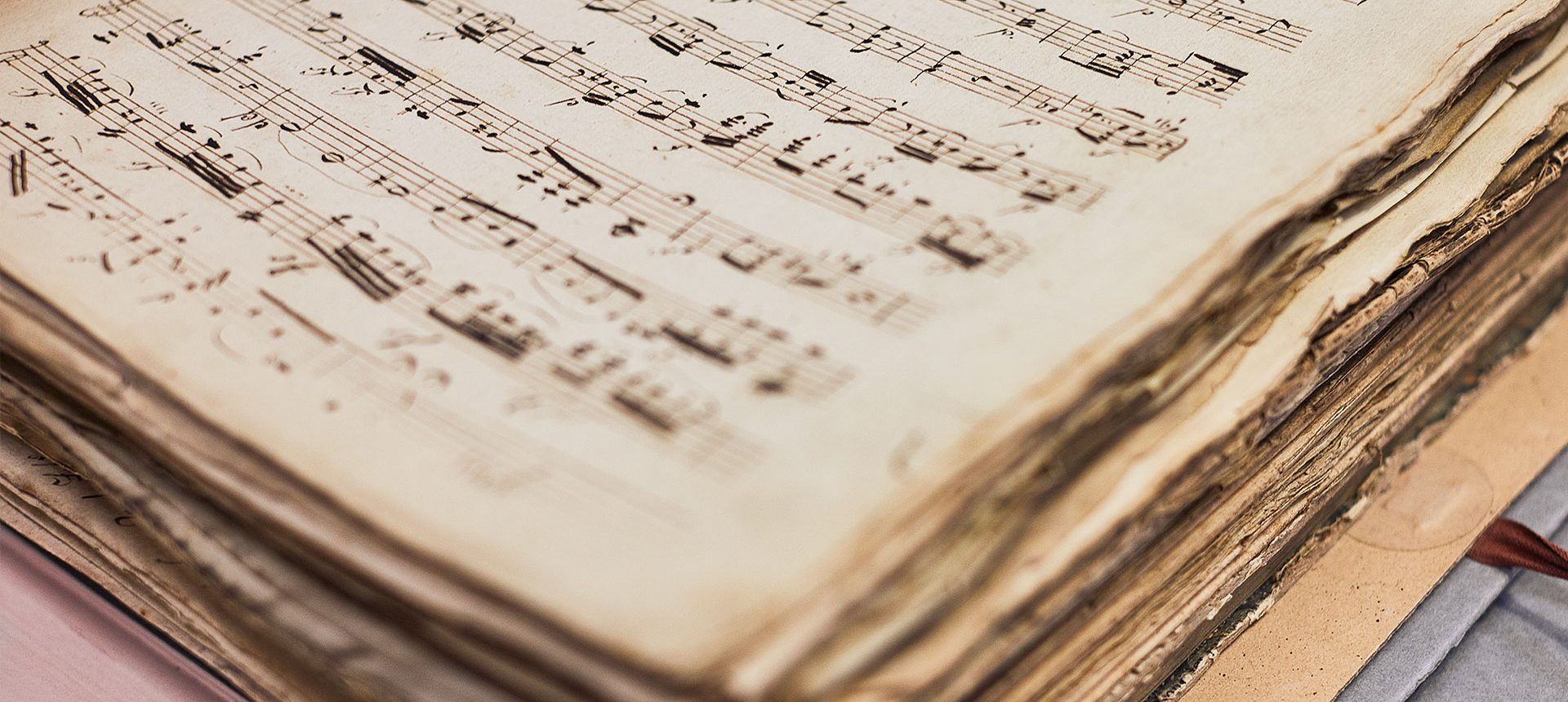
Here you can find almost anything about all the concerts Gothenburg Symphony has played over the years, both in the Concert Hall and on tour.
Search for conductors, soloists and other artists that has played together with us. Or search for composers and music that we have played. And filter on specific seasons. Guesting orchestras and ensembles are also included in the archive.
The result is presented by season.
The Gothenburg Symphony was formed in 1905 and today consists of 109 musicians. The orchestra's base is Gothenburg Concert Hall at Götaplatsen that has gathered music lovers since 1935. Since the 2019-2020 season, Barbara Hannigan is Principal guest conductor. We are also a proud partner of Barbara Hannigan's Equilibrium mentoring program focusing on young singers at the start of their careers. The title Principal Guest Conductor is shared by Pekka Kuusisto from 2025.
Wilhelm Stenhammar was the orchestra's chief conductor from 1907 to 1922. He gave the orchestra a strong Nordic profile and invited colleagues Carl Nielsen and Jean Sibelius to the orchestra. Under the direction of conductor Neeme Järvi from 1982-2004, the orchestra made a series of international tours as well as a hundred disc recordings and established themselves among Europe's leading orchestras. In 1996, the Swedish Riksdag appointed the Gothenburg Symphony as Sweden's National Orchestra.
In recent decades, the orchestra has had prominent chief conductors such as Santtu-Matias Rouvali, Mario Venzago and Gustavo Dudamel, following Kent Nagano as Principal Guest conductor. Anna-Karin Larsson is CEO and artistic director, Gustavo Dudamel honorary conductor and Neeme Järvi chief conductor emeritus. The orchestra's owner is the Västra Götaland Region.
The Gothenburg Symphony works regularly with conductors such as Herbert Blomstedt, Joana Carneiro, Jukka-Pekka Saraste, Christian Zacharias and Anja Bihlmaier.
Herbert Blomstedt, born in 1927, continues to be one of the world's most sought-after conductors. He has been a regular and much appreciated guest conductor with the Gothenburg Symphony since 1954 and is also named an honorary symphony conductor. His work as a conductor is inextricably linked to his religious and human ethos, and his interpretations combine great fidelity to the score and analytical precision. In the more than sixty years of his career, he has acquired the unrestricted respect of the musical world.
Born in the USA to Swedish parents and educated in Uppsala, New York, Darmstadt and Basel, Herbert Blomstedt made his debut as a conductor in 1954 with the Stockholm Philharmonic Orchestra and was subsequently chief conductor of the Oslo Philharmonic, the Swedish and Danish Radio symphony orchestras and the Staatskapelle Dresden. During his career, Herbert Blomstedt has been chief conductor of the Gewandhaus Orchestra in Leipzig, the NDR Orchestra in Hamburg and the San Francisco Symphony Orchestra. He has appeared with all the major orchestras, including the Berlin Philharmonic, the Boston and Chicago Symphony Orchestras, the Concertgebouw Orchestra, the New York Philharmonic, the Bavarian Radio Symphony Orchestra and the Vienna Philharmonic. Herbert Blomstedt's discography includes hundreds of recordings. Among his later releases are Stenhammar's Serenade and Symphony No. 2 with the Gothenburg Symphony (BIS).
Herbert Blomstedt holds several Honorary Doctorates and is an elected member of the Royal Swedish Music Academy. He continues to be at the helm of all leading international orchestras with enormous presence, verve and artistic drive.
The Gothenburg Symphony was formed in 1905 and today consists of 109 musicians. The orchestra's base is Gothenburg Concert Hall at Götaplatsen that has gathered music lovers since 1935. Since the 2019-2020 season, Barbara Hannigan is Principal guest conductor. We are also a proud partner of Barbara Hannigan's Equilibrium mentoring program focusing on young singers at the start of their careers. The title Principal Guest Conductor is shared by Pekka Kuusisto from 2025.
Wilhelm Stenhammar was the orchestra's chief conductor from 1907 to 1922. He gave the orchestra a strong Nordic profile and invited colleagues Carl Nielsen and Jean Sibelius to the orchestra. Under the direction of conductor Neeme Järvi from 1982-2004, the orchestra made a series of international tours as well as a hundred disc recordings and established themselves among Europe's leading orchestras. In 1996, the Swedish Riksdag appointed the Gothenburg Symphony as Sweden's National Orchestra.
In recent decades, the orchestra has had prominent chief conductors such as Santtu-Matias Rouvali, Mario Venzago and Gustavo Dudamel, following Kent Nagano as Principal Guest conductor. Anna-Karin Larsson is CEO and artistic director, Gustavo Dudamel honorary conductor and Neeme Järvi chief conductor emeritus. The orchestra's owner is the Västra Götaland Region.
The Gothenburg Symphony works regularly with conductors such as Herbert Blomstedt, Joana Carneiro, Jukka-Pekka Saraste, Christian Zacharias and Anja Bihlmaier.
Simon Kim Phipps founded the Västra Götaland Youth Orchestra in 2000 and was their leader up till 2025. He is artistic director of Läcköoperan since 2003 and conductor of the award-winning Swedish Chamber Orchestra, which he also founded.
Simon Kim Phipps was born in London and received his early musical training as a chorister at New College, Oxford. He took his B.A. as a Choral Scholar at King's College, Cambridge and went on to study singing at the Guildhall School in London. Conducting studies in Munich and Manchester followed and he made his professional debut at the Gothenburg Opera in 1985. The next ten years were largely devoted to opera with engagements at Sadlers Wells and English National Opera in London, Krefeld in Germany, and Malmö in Sweden. In 1994 Phipps moved to Sweden and has since then lived in Gothenburg. Simon Kim Phipps has conducted most of the professional orchestras in Sweden including the Gothenburg Symphony.
Igor Stravinsky (1882-1971)
Concerto in E flat "Dumbarton Oaks"
Tempo giusto
Allegretto
Con moto
Igor Stravinsky skrev denna lilla konsert under den kanske svåraste tiden i sitt liv. Han fick en beställning på musikstycke från ett societetspar i Washington DC som skulle fira 30-årig bröllopsdag. Stravinsky, hans fru och dotter hade alla blivit sjuka i tuberkulos och befann sig på sanatorium i Schweiz. Trots det svåra läget tog han mod till sig och skrev konserten medan han intensivt studerade Bach. Uppbyggnaden med de tre satserna Tempo giusto, Allegretto, Con moto liknar Brandenburgkonserterna.
Stravinsky berättar själv: “Jag spelade Bach regelbundet under kompositionsarbetet och var mycket fäst vid Brandenburgkonserterna. Men om första satsens öppningstema är ett medvetet lån från tredje Brandenburgkonserten kan jag inte avgöra. Vad jag däremot kan säga med säkerhet är att Bach skulle ha glatt sig mycket över att få låna mig något; det var precis sådant han själv tyckte om att göra. Konserten har tre korta satser med fugainslag i yttersatserna.”
Kort efter komponerandet avled både hustru och dotter i sjukdomen. Den svårt medtagne Stravinsky lät Nadia Boulanger dirigera premiären i Washington den 8 maj 1938.
Barbara Hannigan beskriver konserten som väldigt känslosam. Hon spelade in den på skiva 2024 med elever från Juilliard School tillsammans med en rad andra av Stravinskys kammarverk.
Jenny Svensson
The Gothenburg Symphony was formed in 1905 and today consists of 109 musicians. The orchestra's base is Gothenburg Concert Hall at Götaplatsen that has gathered music lovers since 1935. Since the 2019-2020 season, Barbara Hannigan is Principal guest conductor. We are also a proud partner of Barbara Hannigan's Equilibrium mentoring program focusing on young singers at the start of their careers. The title Principal Guest Conductor is shared by Pekka Kuusisto from 2025.
Wilhelm Stenhammar was the orchestra's chief conductor from 1907 to 1922. He gave the orchestra a strong Nordic profile and invited colleagues Carl Nielsen and Jean Sibelius to the orchestra. Under the direction of conductor Neeme Järvi from 1982-2004, the orchestra made a series of international tours as well as a hundred disc recordings and established themselves among Europe's leading orchestras. In 1996, the Swedish Riksdag appointed the Gothenburg Symphony as Sweden's National Orchestra.
In recent decades, the orchestra has had prominent chief conductors such as Santtu-Matias Rouvali, Mario Venzago and Gustavo Dudamel, following Kent Nagano as Principal Guest conductor. Anna-Karin Larsson is CEO and artistic director, Gustavo Dudamel honorary conductor and Neeme Järvi chief conductor emeritus. The orchestra's owner is the Västra Götaland Region.
The Gothenburg Symphony works regularly with conductors such as Herbert Blomstedt, Joana Carneiro, Jukka-Pekka Saraste, Christian Zacharias and Anja Bihlmaier.
Richard Wagner (1813-1883)
Prelude and Liebestod from Tristan and Isolde
The musical language of the opera Tristan und Isolde (1859) is sometimes considered the beginning of musical modernism. Tristan’s harmonic language, filled with linguering and unresolved dissonances, not only realizes the sexual tension between the opera’s two central characters, but also heralds the liberation from the limitations of tonality. The famous “Tristan chord” is an unresolved dissonance, an academic way of saying that it “leads to something”.
The prelude exemplifies Wagner’s forward-looking view of both harmony and the question of musical form. Here Wagner’s Leitmotif technique, i.e. central themes that correspond to characters and ideas, is also developed. Something that became completely self-evident in film music many decades later.
Isolde has just arrived and finds Tristan dead as the famous piece Liebestod (Love's Death) begins. She wants to sink into unconsciousness and finally consummate her love for Tristan by following him into death. The passage builds to a climax when "waves of refreshing winds" begin to envelop Isolde, and again when she imagines dying in "the mighty wave of the world's breath." She sinks everything as the wind floats and dissolves the chord from the prelude.
Participants
The Gothenburg Symphony was formed in 1905 and today consists of 109 musicians. The orchestra's base is Gothenburg Concert Hall at Götaplatsen that has gathered music lovers since 1935. Since the 2019-2020 season, Barbara Hannigan is Principal guest conductor. We are also a proud partner of Barbara Hannigan's Equilibrium mentoring program focusing on young singers at the start of their careers. The title Principal Guest Conductor is shared by Pekka Kuusisto from 2025.
Wilhelm Stenhammar was the orchestra's chief conductor from 1907 to 1922. He gave the orchestra a strong Nordic profile and invited colleagues Carl Nielsen and Jean Sibelius to the orchestra. Under the direction of conductor Neeme Järvi from 1982-2004, the orchestra made a series of international tours as well as a hundred disc recordings and established themselves among Europe's leading orchestras. In 1996, the Swedish Riksdag appointed the Gothenburg Symphony as Sweden's National Orchestra.
In recent decades, the orchestra has had prominent chief conductors such as Santtu-Matias Rouvali, Mario Venzago and Gustavo Dudamel, following Kent Nagano as Principal Guest conductor. Anna-Karin Larsson is CEO and artistic director, Gustavo Dudamel honorary conductor and Neeme Järvi chief conductor emeritus. The orchestra's owner is the Västra Götaland Region.
The Gothenburg Symphony works regularly with conductors such as Herbert Blomstedt, Joana Carneiro, Jukka-Pekka Saraste, Christian Zacharias and Anja Bihlmaier.
Anna-Maria Helsing was appointed Chief Conductor of the BBC Concert Orchestra in 2023, where she had previously been Principal Guest Conductor. Since January 2025, she has also been Chief Conductor of the Vaasa City Orchestra. From 2010 to 2013, Anna-Maria Helsing was Chief Conductor of the Oulu Symphony Orchestra. She is currently Artistic Director of the Rusk Chamber Music Festival in Jakobstad.
In the 2025-2026 season, Helsing returns to the Royal Swedish Opera in Stockholm to conduct Britta Byström's newly written Sami opera Jordens hjärta (Heart of the Earth). She will also make a return visit to Brno, Czech Republic with the BBC Concert Orchestra at the Moravian Autumn Festival. She will make her debut with the Vancouver Symphony Orchestra in Canada, with the Philharmonic of Southern Denmark and with the Wiesbaden State Orchestra in Germany. She returns to the Swedish Radio Symphony Orchestra in Stockholm, the Gothenburg Symphony Orchestra and the City Orchestras of Kuopio and Joensuu.
Denmark's national composer began work on his third symphony in 1910. He was in an explosive creative phase, possibly triggered by a marriage in crisis, with underlying frustration and guilt. The symphony is one of his most life-affirming works.
Around the same time, Nielsen developed close ties to Gothenburg. Here he conducted several times and found an artistic soulmate in the Symphony Orchestra's chief conductor Wilhelm Stenhammar. The two shared both aesthetics and ideals: music that speaks directly, organically and freely – unbound by the heavy veils of romanticism.
Sinfonia Espansiva begins forcefully with several unison orchestral thrusts, as if Nielsen wants to open the gates to a new room, where pent-up energy can swirl freely. The music with a driving motoric quality, especially in the strings – constantly in motion, constantly on the move – is reflected in the concluding fourth movement, but is then less heroic and more dance-like and playful. Drive and melody that constantly expands, that is what Nielsen might think of as the meaning of his invented word espansiva. The slow second movement is the heart of the work – a lyrical idyll where two voices, soprano and baritone, emerge in wordless dialogue. What do the voices want to convey to each other? Probably love and happiness.
The Gothenburg Symphony was formed in 1905 and today consists of 109 musicians. The orchestra's base is Gothenburg Concert Hall at Götaplatsen that has gathered music lovers since 1935. Since the 2019-2020 season, Barbara Hannigan is Principal guest conductor. We are also a proud partner of Barbara Hannigan's Equilibrium mentoring program focusing on young singers at the start of their careers. The title Principal Guest Conductor is shared by Pekka Kuusisto from 2025.
Wilhelm Stenhammar was the orchestra's chief conductor from 1907 to 1922. He gave the orchestra a strong Nordic profile and invited colleagues Carl Nielsen and Jean Sibelius to the orchestra. Under the direction of conductor Neeme Järvi from 1982-2004, the orchestra made a series of international tours as well as a hundred disc recordings and established themselves among Europe's leading orchestras. In 1996, the Swedish Riksdag appointed the Gothenburg Symphony as Sweden's National Orchestra.
In recent decades, the orchestra has had prominent chief conductors such as Santtu-Matias Rouvali, Mario Venzago and Gustavo Dudamel, following Kent Nagano as Principal Guest conductor. Anna-Karin Larsson is CEO and artistic director, Gustavo Dudamel honorary conductor and Neeme Järvi chief conductor emeritus. The orchestra's owner is the Västra Götaland Region.
The Gothenburg Symphony works regularly with conductors such as Herbert Blomstedt, Joana Carneiro, Jukka-Pekka Saraste, Christian Zacharias and Anja Bihlmaier.
Herbert Blomstedt, born in 1927, continues to be one of the world's most sought-after conductors. He has been a regular and much appreciated guest conductor with the Gothenburg Symphony since 1954 and is also named an honorary symphony conductor. His work as a conductor is inextricably linked to his religious and human ethos, and his interpretations combine great fidelity to the score and analytical precision. In the more than sixty years of his career, he has acquired the unrestricted respect of the musical world.
Born in the USA to Swedish parents and educated in Uppsala, New York, Darmstadt and Basel, Herbert Blomstedt made his debut as a conductor in 1954 with the Stockholm Philharmonic Orchestra and was subsequently chief conductor of the Oslo Philharmonic, the Swedish and Danish Radio symphony orchestras and the Staatskapelle Dresden. During his career, Herbert Blomstedt has been chief conductor of the Gewandhaus Orchestra in Leipzig, the NDR Orchestra in Hamburg and the San Francisco Symphony Orchestra. He has appeared with all the major orchestras, including the Berlin Philharmonic, the Boston and Chicago Symphony Orchestras, the Concertgebouw Orchestra, the New York Philharmonic, the Bavarian Radio Symphony Orchestra and the Vienna Philharmonic. Herbert Blomstedt's discography includes hundreds of recordings. Among his later releases are Stenhammar's Serenade and Symphony No. 2 with the Gothenburg Symphony (BIS).
Herbert Blomstedt holds several Honorary Doctorates and is an elected member of the Royal Swedish Music Academy. He continues to be at the helm of all leading international orchestras with enormous presence, verve and artistic drive.
The Gothenburg Symphony was formed in 1905 and today consists of 109 musicians. The orchestra's base is Gothenburg Concert Hall at Götaplatsen that has gathered music lovers since 1935. Since the 2019-2020 season, Barbara Hannigan is Principal guest conductor. We are also a proud partner of Barbara Hannigan's Equilibrium mentoring program focusing on young singers at the start of their careers. The title Principal Guest Conductor is shared by Pekka Kuusisto from 2025.
Wilhelm Stenhammar was the orchestra's chief conductor from 1907 to 1922. He gave the orchestra a strong Nordic profile and invited colleagues Carl Nielsen and Jean Sibelius to the orchestra. Under the direction of conductor Neeme Järvi from 1982-2004, the orchestra made a series of international tours as well as a hundred disc recordings and established themselves among Europe's leading orchestras. In 1996, the Swedish Riksdag appointed the Gothenburg Symphony as Sweden's National Orchestra.
In recent decades, the orchestra has had prominent chief conductors such as Santtu-Matias Rouvali, Mario Venzago and Gustavo Dudamel, following Kent Nagano as Principal Guest conductor. Anna-Karin Larsson is CEO and artistic director, Gustavo Dudamel honorary conductor and Neeme Järvi chief conductor emeritus. The orchestra's owner is the Västra Götaland Region.
The Gothenburg Symphony works regularly with conductors such as Herbert Blomstedt, Joana Carneiro, Jukka-Pekka Saraste, Christian Zacharias and Anja Bihlmaier.
Kent Nagano is considered one of today’s outstanding conductors for both operatic and orchestral repertoire. He will be the next Chief conductor and Artistic Director of the Orquesta y Coro Nacionales de España (OCNE) in Madrid starting in September 2026 and is the newly appointed Principal Artistic Partner of Filarmonica Toscanini. In addition, he is committed together with Jan Vogler as Artistic Director of the Ring project “The Wagner Cycles” of Dresdner Musikfestspiele with Dresdner Festspielorchester and Concerto Köln alongside Jan Vogler. He has been Honorary Conductor of the Deutsches Symphonie-Orchester Berlin since 2006, Concerto Köln since 2019, the Orchestre symphonique de Montréal since 2021 and the Philharmonisches Staatsorchester Hamburg since 2023 and is as patron of the Herrenchiemsee Festival.
As a much sought-after guest conductor, Kent Nagano regularly works with leading international orchestras worldwide, 2025-2026 season highlights included several projects with the Deutsches Symphonie-Orchester Berlin, the Munich Philharmonic Orchestra, Maggio Musicale, the Tonhalle Orchestra Zurich, Opera de Paris, and the Philharmonia Orchestra amongst others.
The Gothenburg Symphony was formed in 1905 and today consists of 109 musicians. The orchestra's base is Gothenburg Concert Hall at Götaplatsen that has gathered music lovers since 1935. Since the 2019-2020 season, Barbara Hannigan is Principal guest conductor. We are also a proud partner of Barbara Hannigan's Equilibrium mentoring program focusing on young singers at the start of their careers. The title Principal Guest Conductor is shared by Pekka Kuusisto from 2025.
Wilhelm Stenhammar was the orchestra's chief conductor from 1907 to 1922. He gave the orchestra a strong Nordic profile and invited colleagues Carl Nielsen and Jean Sibelius to the orchestra. Under the direction of conductor Neeme Järvi from 1982-2004, the orchestra made a series of international tours as well as a hundred disc recordings and established themselves among Europe's leading orchestras. In 1996, the Swedish Riksdag appointed the Gothenburg Symphony as Sweden's National Orchestra.
In recent decades, the orchestra has had prominent chief conductors such as Santtu-Matias Rouvali, Mario Venzago and Gustavo Dudamel, following Kent Nagano as Principal Guest conductor. Anna-Karin Larsson is CEO and artistic director, Gustavo Dudamel honorary conductor and Neeme Järvi chief conductor emeritus. The orchestra's owner is the Västra Götaland Region.
The Gothenburg Symphony works regularly with conductors such as Herbert Blomstedt, Joana Carneiro, Jukka-Pekka Saraste, Christian Zacharias and Anja Bihlmaier.
Pianist and conductor Christian Zacharias has served as chief conductor of the Lausanne Chamber Orchestra and principal guest conductor of the Gothenburg Symphony Orchestra. Since 2021, he has been the principal guest conductor of the Orquesta Ciudad de Granada. He regularly collaborates with the Boston Symphony Orchestra, the Basel Chamber Orchestra, the Konzerthausorchester Berlin, the Orchestre National de Lyon, and the Bamberg Symphony. Christian Zacharias is also a dedicated chamber musician. As an opera conductor, he has led productions of La clemenza di Tito, The Marriage of Figaro, The Merry Wives of Windsor, and The Tales of Hoffmann. His many critically acclaimed recordings include the complete piano concertos of Mozart, the symphonies of Schumann, and symphonies by C.P.E. Bach. In 2022 and 2023, two solo albums featuring sonatas by Haydn and partitas and suites by Bach were released (MDG).
In general, the Classical-Romantic repertoire—particularly the works of Schumann, Brahms, Bruckner, Mozart, Haydn, and Beethoven—forms a key musical focus for him. He often complements his programs with modern works by composers such as Schoenberg, Britten, or Bacewicz. As a pianist, he also gives solo recitals and lectures. He last appeared with the Gothenburg Symphony Orchestra in 2023.
Richard Wagner (1813-1883)
Prelude and Liebestod from Tristan and Isolde
The musical language of the opera Tristan und Isolde (1859) is sometimes considered the beginning of musical modernism. Tristan’s harmonic language, filled with linguering and unresolved dissonances, not only realizes the sexual tension between the opera’s two central characters, but also heralds the liberation from the limitations of tonality. The famous “Tristan chord” is an unresolved dissonance, an academic way of saying that it “leads to something”.
The prelude exemplifies Wagner’s forward-looking view of both harmony and the question of musical form. Here Wagner’s Leitmotif technique, i.e. central themes that correspond to characters and ideas, is also developed. Something that became completely self-evident in film music many decades later.
Isolde has just arrived and finds Tristan dead as the famous piece Liebestod (Love's Death) begins. She wants to sink into unconsciousness and finally consummate her love for Tristan by following him into death. The passage builds to a climax when "waves of refreshing winds" begin to envelop Isolde, and again when she imagines dying in "the mighty wave of the world's breath." She sinks everything as the wind floats and dissolves the chord from the prelude.
Participants
The Gothenburg Symphony was formed in 1905 and today consists of 109 musicians. The orchestra's base is Gothenburg Concert Hall at Götaplatsen that has gathered music lovers since 1935. Since the 2019-2020 season, Barbara Hannigan is Principal guest conductor. We are also a proud partner of Barbara Hannigan's Equilibrium mentoring program focusing on young singers at the start of their careers. The title Principal Guest Conductor is shared by Pekka Kuusisto from 2025.
Wilhelm Stenhammar was the orchestra's chief conductor from 1907 to 1922. He gave the orchestra a strong Nordic profile and invited colleagues Carl Nielsen and Jean Sibelius to the orchestra. Under the direction of conductor Neeme Järvi from 1982-2004, the orchestra made a series of international tours as well as a hundred disc recordings and established themselves among Europe's leading orchestras. In 1996, the Swedish Riksdag appointed the Gothenburg Symphony as Sweden's National Orchestra.
In recent decades, the orchestra has had prominent chief conductors such as Santtu-Matias Rouvali, Mario Venzago and Gustavo Dudamel, following Kent Nagano as Principal Guest conductor. Anna-Karin Larsson is CEO and artistic director, Gustavo Dudamel honorary conductor and Neeme Järvi chief conductor emeritus. The orchestra's owner is the Västra Götaland Region.
The Gothenburg Symphony works regularly with conductors such as Herbert Blomstedt, Joana Carneiro, Jukka-Pekka Saraste, Christian Zacharias and Anja Bihlmaier.
Anna-Maria Helsing was appointed Chief Conductor of the BBC Concert Orchestra in 2023, where she had previously been Principal Guest Conductor. Since January 2025, she has also been Chief Conductor of the Vaasa City Orchestra. From 2010 to 2013, Anna-Maria Helsing was Chief Conductor of the Oulu Symphony Orchestra. She is currently Artistic Director of the Rusk Chamber Music Festival in Jakobstad.
In the 2025-2026 season, Helsing returns to the Royal Swedish Opera in Stockholm to conduct Britta Byström's newly written Sami opera Jordens hjärta (Heart of the Earth). She will also make a return visit to Brno, Czech Republic with the BBC Concert Orchestra at the Moravian Autumn Festival. She will make her debut with the Vancouver Symphony Orchestra in Canada, with the Philharmonic of Southern Denmark and with the Wiesbaden State Orchestra in Germany. She returns to the Swedish Radio Symphony Orchestra in Stockholm, the Gothenburg Symphony Orchestra and the City Orchestras of Kuopio and Joensuu.