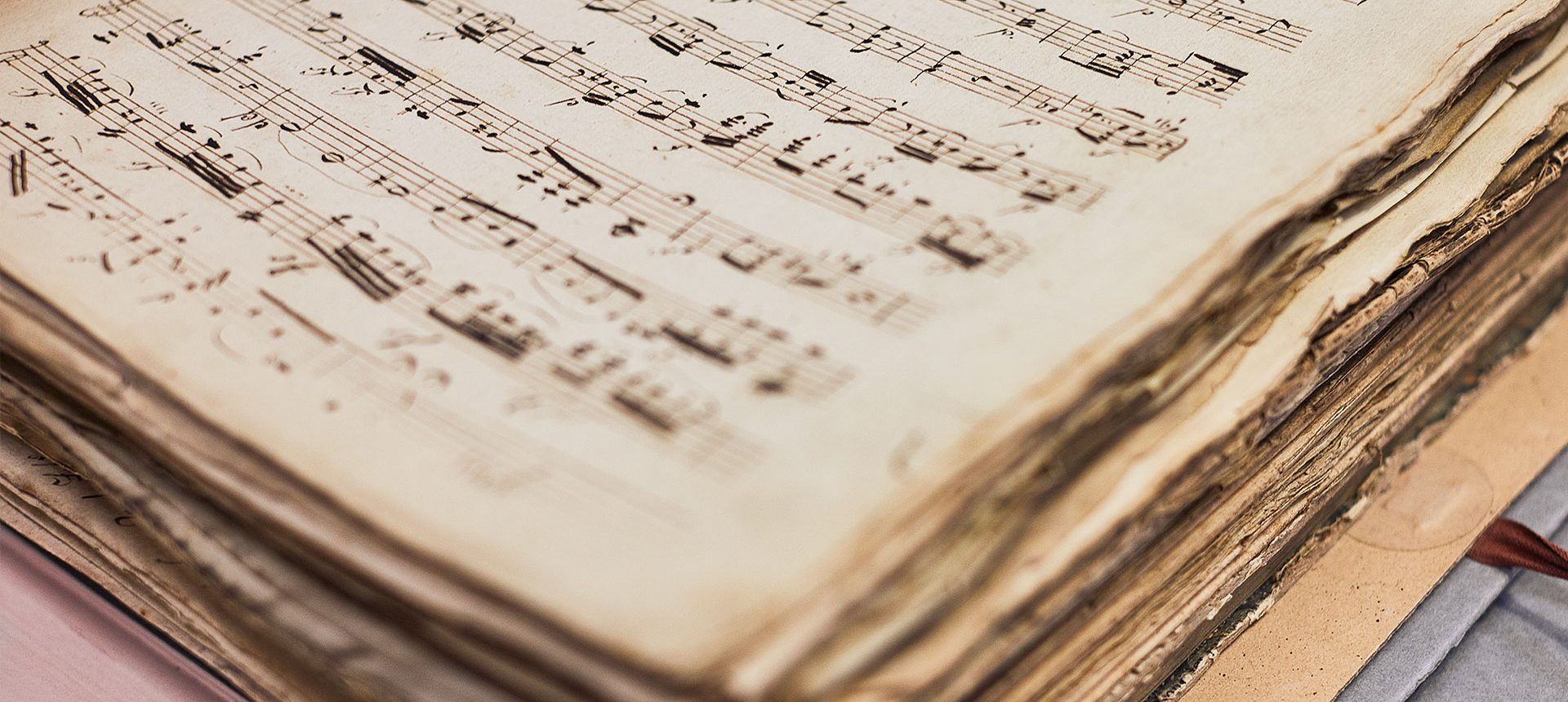
Here you can find almost anything about all the concerts Gothenburg Symphony has played over the years, both in the Concert Hall and on tour.
Search for conductors, soloists and other artists that has played together with us. Or search for composers and music that we have played. And filter on specific seasons. Guesting orchestras and ensembles are also included in the archive.
The result is presented by season.
Aaron Copland (1900-1990)
Appalachian Spring
Copland was a child of the new century, and would come to embody the new era's hopes for the American way of life - not least through the cowboy ballets Rodeo and Billy the Kid. His career was long and rich. He was one of Leonard Bernstein's favorite composers. In the 1920s, he had been a student of the legendary Nadia Boulanger in Paris, and then quickly came under the wing of the conductor Koussevitsky. It was for his Boston Symphony Orchestra that he early composed some of his most brilliant works. Although Copland composed in most genres, he has been most noted for his colorful, rhythmically vital and magnificent orchestral music.
The art of ballet particularly interested him and in 1943-1944 he composed Appalachian Spring for Martha Graham's ballet group. She premiered it in October 1944. The orchestral theater in the Library of Congress theater in Washington DC is very small, accommodating only an ensemble of 13 musicians, and for such an ensemble the ballet was also composed. But in the spring of 1945, the composer arranged a shortened version of the ballet for symphony orchestra, something that turned out to be his most performed work.
It was Martha Graham who chose the title for the ballet, and she took it from a poem by Hart Crane, which really had nothing to do with the plot. The ballet tells the story of a settler community in Pennsylvania at the turn of the last century. In the slow introduction, we get to know the main characters: the settler woman with a habit of moving in the wilderness, the preacher, the young foreman and his fiancée, as well as a group of four women in the preacher's entourage - all participating in the dance. A quiet prayer takes place and then a love duet. The preacher leads a new dance which reveals his Irish background, and several of the people take up their own dances until the preacher blesses the young couple with a new prayer - and here Copland has also included the old salvation tune The Gift to be Simple. The ballet ends with the young couple left alone and strengthened in their new house.
Stig Jacobsson
In 1874, a major memorial exhibition of works by the artist and architect Victor Hartmann was held in St. Petersburg. The composer Mussorgsky, one of his closest friends, was so deeply moved by the paintings that he went home and composed his piano suite Pictures at an Exhibition. Unfortunately, the music was not published until five years after the composer's death, and it did not achieve true popularity until Ravel orchestrated it in 1922.
The suite consists, in effect, of musical depictions of paintings—some of which still survive today. It begins with a "Promenade," a melody that recurs in various forms between the movements, guiding the viewer from one painting to the next. The Promenade has been interpreted as a portrait of the portly composer himself, waddling through the exhibition. "Gnomus" depicts a nutcracker—a toy figure that cracks nuts with its jaws. *The Old Castle* portrays a medieval Italian castle with a singing troubadour standing before it. In Tuileries, we encounter children and their nannies playing in the Parisian park. "Bydlo" is an old Polish cart with enormous wheels, drawn by oxen.
"Ballet of the Unhatched Chicks" is a small sketch for a ballet; *Samuel Goldenberg and Schmuyle* depicts two Polish Jews—one rich, the other poor. In the marketplace at Limoges, we encounter French women passionately trying to haggle. In *Catacombs*, the artist himself is depicted holding a lantern at the entrance to the Paris catacombs. Baba Yaga was a witch from Russian folklore who lived in a hut—here rendered as a table clock. The finale is *The Great Gate of Kiev*, an unrealized architectural project for a triumphal arch. The music builds into a monumental tribute to the deceased friend.
Hearing this grandiose music, one might easily get the impression that the artworks themselves were masterpieces. In reality, however, they consist of rather simple sketches and small paintings. It was memories and emotions that inspired Mussorgsky—he likely even had one of Hartmann’s paintings hanging on his own wall.
Stig Jacobsson
Pianist and conductor Christian Zacharias has served as chief conductor of the Lausanne Chamber Orchestra and principal guest conductor of the Gothenburg Symphony Orchestra. Since 2021, he has been the principal guest conductor of the Orquesta Ciudad de Granada. He regularly collaborates with the Boston Symphony Orchestra, the Basel Chamber Orchestra, the Konzerthausorchester Berlin, the Orchestre National de Lyon, and the Bamberg Symphony. Christian Zacharias is also a dedicated chamber musician. As an opera conductor, he has led productions of La clemenza di Tito, The Marriage of Figaro, The Merry Wives of Windsor, and The Tales of Hoffmann. His many critically acclaimed recordings include the complete piano concertos of Mozart, the symphonies of Schumann, and symphonies by C.P.E. Bach. In 2022 and 2023, two solo albums featuring sonatas by Haydn and partitas and suites by Bach were released (MDG).
In general, the Classical-Romantic repertoire—particularly the works of Schumann, Brahms, Bruckner, Mozart, Haydn, and Beethoven—forms a key musical focus for him. He often complements his programs with modern works by composers such as Schoenberg, Britten, or Bacewicz. As a pianist, he also gives solo recitals and lectures. He last appeared with the Gothenburg Symphony Orchestra in 2023.
2013-10-25 18:00 Stora salen
Göteborgs Symfoniker
Programme
Aaron Copland (1900-1990)
Appalachian Spring
Copland was a child of the new century, and would come to embody the new era's hopes for the American way of life - not least through the cowboy ballets Rodeo and Billy the Kid. His career was long and rich. He was one of Leonard Bernstein's favorite composers. In the 1920s, he had been a student of the legendary Nadia Boulanger in Paris, and then quickly came under the wing of the conductor Koussevitsky. It was for his Boston Symphony Orchestra that he early composed some of his most brilliant works. Although Copland composed in most genres, he has been most noted for his colorful, rhythmically vital and magnificent orchestral music.
The art of ballet particularly interested him and in 1943-1944 he composed Appalachian Spring for Martha Graham's ballet group. She premiered it in October 1944. The orchestral theater in the Library of Congress theater in Washington DC is very small, accommodating only an ensemble of 13 musicians, and for such an ensemble the ballet was also composed. But in the spring of 1945, the composer arranged a shortened version of the ballet for symphony orchestra, something that turned out to be his most performed work.
It was Martha Graham who chose the title for the ballet, and she took it from a poem by Hart Crane, which really had nothing to do with the plot. The ballet tells the story of a settler community in Pennsylvania at the turn of the last century. In the slow introduction, we get to know the main characters: the settler woman with a habit of moving in the wilderness, the preacher, the young foreman and his fiancée, as well as a group of four women in the preacher's entourage - all participating in the dance. A quiet prayer takes place and then a love duet. The preacher leads a new dance which reveals his Irish background, and several of the people take up their own dances until the preacher blesses the young couple with a new prayer - and here Copland has also included the old salvation tune The Gift to be Simple. The ballet ends with the young couple left alone and strengthened in their new house.
Stig Jacobsson
Valses nobles et sentimentales
Modéré - Assez lent - Modéré - Assez animé - Presque lent - Assez vif - Moins vif - Epilogue: Lent
When Claude Debussy heard Ravel's Valses nobles et sentimentales in 1911 he exclaimed: "He has the finest ear anyone ever had!" Ravel was himself aware that this time he had composed something very special. "The title Noble and sentimental waltzes reveal my intentions to compose a series of waltzes such as, for example Schubert did it," wrote the composer. But there ends the innocent comparison, because these eight pieces are packed with harmonic dynamite, which when it exploded made contemporary listeners mad and upset. You can't compose like this!
Debussy had only heard the original piano version, for Ravel did not write the elegant and ingenious orchestral ring until the following year. The music also came to be used for the ballet Adélaïde performed at the Châtelet in Paris on 22 April 1912 with the composer as conductor.
Today we have gotten used to the piece's piquant French seasoning and can easily make us fall in love with the scents that the contemporaries were appalled by. The eight movements are played without pause and contains great contrasts in rhythmicity within the three-stroke model of the waltz. The suite ends with an epilogue, a slow, dreamy, surreal waltz where the harmonic refinement reaches its peak. Much later, in 1920, Ravel completed yet another "choreographic poem" with three measures - La Valse.
The Gothenburg Symphony was formed in 1905 and today consists of 109 musicians. The orchestra's base is Gothenburg Concert Hall at Götaplatsen that has gathered music lovers since 1935. Since the 2019-2020 season, Barbara Hannigan is Principal guest conductor. We are also a proud partner of Barbara Hannigan's Equilibrium mentoring program focusing on young singers at the start of their careers. The title Principal Guest Conductor is shared by Pekka Kuusisto from 2025.
Wilhelm Stenhammar was the orchestra's chief conductor from 1907 to 1922. He gave the orchestra a strong Nordic profile and invited colleagues Carl Nielsen and Jean Sibelius to the orchestra. Under the direction of conductor Neeme Järvi from 1982-2004, the orchestra made a series of international tours as well as a hundred disc recordings and established themselves among Europe's leading orchestras. In 1996, the Swedish Riksdag appointed the Gothenburg Symphony as Sweden's National Orchestra.
In recent decades, the orchestra has had prominent chief conductors such as Santtu-Matias Rouvali, Mario Venzago and Gustavo Dudamel, following Kent Nagano as Principal Guest conductor. Anna-Karin Larsson is CEO and artistic director, Gustavo Dudamel honorary conductor and Neeme Järvi chief conductor emeritus. The orchestra's owner is the Västra Götaland Region.
The Gothenburg Symphony works regularly with conductors such as Herbert Blomstedt, Joana Carneiro, Jukka-Pekka Saraste, Christian Zacharias and Anja Bihlmaier.
Pianist and conductor Christian Zacharias has served as chief conductor of the Lausanne Chamber Orchestra and principal guest conductor of the Gothenburg Symphony Orchestra. Since 2021, he has been the principal guest conductor of the Orquesta Ciudad de Granada. He regularly collaborates with the Boston Symphony Orchestra, the Basel Chamber Orchestra, the Konzerthausorchester Berlin, the Orchestre National de Lyon, and the Bamberg Symphony. Christian Zacharias is also a dedicated chamber musician. As an opera conductor, he has led productions of La clemenza di Tito, The Marriage of Figaro, The Merry Wives of Windsor, and The Tales of Hoffmann. His many critically acclaimed recordings include the complete piano concertos of Mozart, the symphonies of Schumann, and symphonies by C.P.E. Bach. In 2022 and 2023, two solo albums featuring sonatas by Haydn and partitas and suites by Bach were released (MDG).
In general, the Classical-Romantic repertoire—particularly the works of Schumann, Brahms, Bruckner, Mozart, Haydn, and Beethoven—forms a key musical focus for him. He often complements his programs with modern works by composers such as Schoenberg, Britten, or Bacewicz. As a pianist, he also gives solo recitals and lectures. He last appeared with the Gothenburg Symphony Orchestra in 2023.
2013-10-23 19:30 Stora salen
Göteborgs Symfoniker
Programme
Aaron Copland (1900-1990)
Appalachian Spring
Copland was a child of the new century, and would come to embody the new era's hopes for the American way of life - not least through the cowboy ballets Rodeo and Billy the Kid. His career was long and rich. He was one of Leonard Bernstein's favorite composers. In the 1920s, he had been a student of the legendary Nadia Boulanger in Paris, and then quickly came under the wing of the conductor Koussevitsky. It was for his Boston Symphony Orchestra that he early composed some of his most brilliant works. Although Copland composed in most genres, he has been most noted for his colorful, rhythmically vital and magnificent orchestral music.
The art of ballet particularly interested him and in 1943-1944 he composed Appalachian Spring for Martha Graham's ballet group. She premiered it in October 1944. The orchestral theater in the Library of Congress theater in Washington DC is very small, accommodating only an ensemble of 13 musicians, and for such an ensemble the ballet was also composed. But in the spring of 1945, the composer arranged a shortened version of the ballet for symphony orchestra, something that turned out to be his most performed work.
It was Martha Graham who chose the title for the ballet, and she took it from a poem by Hart Crane, which really had nothing to do with the plot. The ballet tells the story of a settler community in Pennsylvania at the turn of the last century. In the slow introduction, we get to know the main characters: the settler woman with a habit of moving in the wilderness, the preacher, the young foreman and his fiancée, as well as a group of four women in the preacher's entourage - all participating in the dance. A quiet prayer takes place and then a love duet. The preacher leads a new dance which reveals his Irish background, and several of the people take up their own dances until the preacher blesses the young couple with a new prayer - and here Copland has also included the old salvation tune The Gift to be Simple. The ballet ends with the young couple left alone and strengthened in their new house.
Stig Jacobsson
Valses nobles et sentimentales
Modéré - Assez lent - Modéré - Assez animé - Presque lent - Assez vif - Moins vif - Epilogue: Lent
When Claude Debussy heard Ravel's Valses nobles et sentimentales in 1911 he exclaimed: "He has the finest ear anyone ever had!" Ravel was himself aware that this time he had composed something very special. "The title Noble and sentimental waltzes reveal my intentions to compose a series of waltzes such as, for example Schubert did it," wrote the composer. But there ends the innocent comparison, because these eight pieces are packed with harmonic dynamite, which when it exploded made contemporary listeners mad and upset. You can't compose like this!
Debussy had only heard the original piano version, for Ravel did not write the elegant and ingenious orchestral ring until the following year. The music also came to be used for the ballet Adélaïde performed at the Châtelet in Paris on 22 April 1912 with the composer as conductor.
Today we have gotten used to the piece's piquant French seasoning and can easily make us fall in love with the scents that the contemporaries were appalled by. The eight movements are played without pause and contains great contrasts in rhythmicity within the three-stroke model of the waltz. The suite ends with an epilogue, a slow, dreamy, surreal waltz where the harmonic refinement reaches its peak. Much later, in 1920, Ravel completed yet another "choreographic poem" with three measures - La Valse.
The Gothenburg Symphony was formed in 1905 and today consists of 109 musicians. The orchestra's base is Gothenburg Concert Hall at Götaplatsen that has gathered music lovers since 1935. Since the 2019-2020 season, Barbara Hannigan is Principal guest conductor. We are also a proud partner of Barbara Hannigan's Equilibrium mentoring program focusing on young singers at the start of their careers. The title Principal Guest Conductor is shared by Pekka Kuusisto from 2025.
Wilhelm Stenhammar was the orchestra's chief conductor from 1907 to 1922. He gave the orchestra a strong Nordic profile and invited colleagues Carl Nielsen and Jean Sibelius to the orchestra. Under the direction of conductor Neeme Järvi from 1982-2004, the orchestra made a series of international tours as well as a hundred disc recordings and established themselves among Europe's leading orchestras. In 1996, the Swedish Riksdag appointed the Gothenburg Symphony as Sweden's National Orchestra.
In recent decades, the orchestra has had prominent chief conductors such as Santtu-Matias Rouvali, Mario Venzago and Gustavo Dudamel, following Kent Nagano as Principal Guest conductor. Anna-Karin Larsson is CEO and artistic director, Gustavo Dudamel honorary conductor and Neeme Järvi chief conductor emeritus. The orchestra's owner is the Västra Götaland Region.
The Gothenburg Symphony works regularly with conductors such as Herbert Blomstedt, Joana Carneiro, Jukka-Pekka Saraste, Christian Zacharias and Anja Bihlmaier.
Pianist and conductor Christian Zacharias has served as chief conductor of the Lausanne Chamber Orchestra and principal guest conductor of the Gothenburg Symphony Orchestra. Since 2021, he has been the principal guest conductor of the Orquesta Ciudad de Granada. He regularly collaborates with the Boston Symphony Orchestra, the Basel Chamber Orchestra, the Konzerthausorchester Berlin, the Orchestre National de Lyon, and the Bamberg Symphony. Christian Zacharias is also a dedicated chamber musician. As an opera conductor, he has led productions of La clemenza di Tito, The Marriage of Figaro, The Merry Wives of Windsor, and The Tales of Hoffmann. His many critically acclaimed recordings include the complete piano concertos of Mozart, the symphonies of Schumann, and symphonies by C.P.E. Bach. In 2022 and 2023, two solo albums featuring sonatas by Haydn and partitas and suites by Bach were released (MDG).
In general, the Classical-Romantic repertoire—particularly the works of Schumann, Brahms, Bruckner, Mozart, Haydn, and Beethoven—forms a key musical focus for him. He often complements his programs with modern works by composers such as Schoenberg, Britten, or Bacewicz. As a pianist, he also gives solo recitals and lectures. He last appeared with the Gothenburg Symphony Orchestra in 2023.
Pianist and conductor Christian Zacharias has served as chief conductor of the Lausanne Chamber Orchestra and principal guest conductor of the Gothenburg Symphony Orchestra. Since 2021, he has been the principal guest conductor of the Orquesta Ciudad de Granada. He regularly collaborates with the Boston Symphony Orchestra, the Basel Chamber Orchestra, the Konzerthausorchester Berlin, the Orchestre National de Lyon, and the Bamberg Symphony. Christian Zacharias is also a dedicated chamber musician. As an opera conductor, he has led productions of La clemenza di Tito, The Marriage of Figaro, The Merry Wives of Windsor, and The Tales of Hoffmann. His many critically acclaimed recordings include the complete piano concertos of Mozart, the symphonies of Schumann, and symphonies by C.P.E. Bach. In 2022 and 2023, two solo albums featuring sonatas by Haydn and partitas and suites by Bach were released (MDG).
In general, the Classical-Romantic repertoire—particularly the works of Schumann, Brahms, Bruckner, Mozart, Haydn, and Beethoven—forms a key musical focus for him. He often complements his programs with modern works by composers such as Schoenberg, Britten, or Bacewicz. As a pianist, he also gives solo recitals and lectures. He last appeared with the Gothenburg Symphony Orchestra in 2023.
2008-08-12 00:00 Edinburgh
Göteborgs Symfoniker
Programme
Aaron Copland (1900-1990)
Appalachian Spring
Copland was a child of the new century, and would come to embody the new era's hopes for the American way of life - not least through the cowboy ballets Rodeo and Billy the Kid. His career was long and rich. He was one of Leonard Bernstein's favorite composers. In the 1920s, he had been a student of the legendary Nadia Boulanger in Paris, and then quickly came under the wing of the conductor Koussevitsky. It was for his Boston Symphony Orchestra that he early composed some of his most brilliant works. Although Copland composed in most genres, he has been most noted for his colorful, rhythmically vital and magnificent orchestral music.
The art of ballet particularly interested him and in 1943-1944 he composed Appalachian Spring for Martha Graham's ballet group. She premiered it in October 1944. The orchestral theater in the Library of Congress theater in Washington DC is very small, accommodating only an ensemble of 13 musicians, and for such an ensemble the ballet was also composed. But in the spring of 1945, the composer arranged a shortened version of the ballet for symphony orchestra, something that turned out to be his most performed work.
It was Martha Graham who chose the title for the ballet, and she took it from a poem by Hart Crane, which really had nothing to do with the plot. The ballet tells the story of a settler community in Pennsylvania at the turn of the last century. In the slow introduction, we get to know the main characters: the settler woman with a habit of moving in the wilderness, the preacher, the young foreman and his fiancée, as well as a group of four women in the preacher's entourage - all participating in the dance. A quiet prayer takes place and then a love duet. The preacher leads a new dance which reveals his Irish background, and several of the people take up their own dances until the preacher blesses the young couple with a new prayer - and here Copland has also included the old salvation tune The Gift to be Simple. The ballet ends with the young couple left alone and strengthened in their new house.
Stig Jacobsson
The glory days of the Viennese waltz at the end of the 19th century were pure madness - completely comparable to today's unrestrained club dancing. Swirling around giant ballrooms with thousands of other couples, over and over again, was the great pleasure and enjoyment of the time. The young loved to be swept up in these communal excesses while the opposing side argued that it was harmful and immoral to spin around in this way. But the Viennese waltz could not be stopped - the Strauss family and their successors spread the courage to the rest of Europe, Russia and the USA.
Ravel was born early enough to know the ravages of the Viennese waltz. This familiarity probably inspired him when he began the orchestral piece intended for Diaghilev's Russian ballet. However, he refused. The "choreographic poem" that was finished in 1920 only became a ballet in 1929 when the dancer Ida Rubinstein staged it. The work's working name was Vienna, a city Ravel knew well by the way, but in the end was given an even more stripped-down and concentrated title: La valse, the waltz.
Like the Strauss waltzes, La valse has a slow opening, after which it finds its rhythm and melody and dances away in good old three-bar. But where Strauss keep the music under soft reins and gently slow down at the end to let off their travelers, Ravel does the opposite: the waltz completely explodes, swells over all borders and explodes both tempo and melody. Ravel simply captures the essence of the Viennese waltz - the rapture and total indulgence. An emotional discharge, or for the theorist: music that comments on itself. The ironic Ravel did not deny himself - what is wrong with satisfying different tastes at the same time?
The Gothenburg Symphony was formed in 1905 and today consists of 109 musicians. The orchestra's base is Gothenburg Concert Hall at Götaplatsen that has gathered music lovers since 1935. Since the 2019-2020 season, Barbara Hannigan is Principal guest conductor. We are also a proud partner of Barbara Hannigan's Equilibrium mentoring program focusing on young singers at the start of their careers. The title Principal Guest Conductor is shared by Pekka Kuusisto from 2025.
Wilhelm Stenhammar was the orchestra's chief conductor from 1907 to 1922. He gave the orchestra a strong Nordic profile and invited colleagues Carl Nielsen and Jean Sibelius to the orchestra. Under the direction of conductor Neeme Järvi from 1982-2004, the orchestra made a series of international tours as well as a hundred disc recordings and established themselves among Europe's leading orchestras. In 1996, the Swedish Riksdag appointed the Gothenburg Symphony as Sweden's National Orchestra.
In recent decades, the orchestra has had prominent chief conductors such as Santtu-Matias Rouvali, Mario Venzago and Gustavo Dudamel, following Kent Nagano as Principal Guest conductor. Anna-Karin Larsson is CEO and artistic director, Gustavo Dudamel honorary conductor and Neeme Järvi chief conductor emeritus. The orchestra's owner is the Västra Götaland Region.
The Gothenburg Symphony works regularly with conductors such as Herbert Blomstedt, Joana Carneiro, Jukka-Pekka Saraste, Christian Zacharias and Anja Bihlmaier.
Aaron Copland (1900-1990)
Appalachian Spring
Copland was a child of the new century, and would come to embody the new era's hopes for the American way of life - not least through the cowboy ballets Rodeo and Billy the Kid. His career was long and rich. He was one of Leonard Bernstein's favorite composers. In the 1920s, he had been a student of the legendary Nadia Boulanger in Paris, and then quickly came under the wing of the conductor Koussevitsky. It was for his Boston Symphony Orchestra that he early composed some of his most brilliant works. Although Copland composed in most genres, he has been most noted for his colorful, rhythmically vital and magnificent orchestral music.
The art of ballet particularly interested him and in 1943-1944 he composed Appalachian Spring for Martha Graham's ballet group. She premiered it in October 1944. The orchestral theater in the Library of Congress theater in Washington DC is very small, accommodating only an ensemble of 13 musicians, and for such an ensemble the ballet was also composed. But in the spring of 1945, the composer arranged a shortened version of the ballet for symphony orchestra, something that turned out to be his most performed work.
It was Martha Graham who chose the title for the ballet, and she took it from a poem by Hart Crane, which really had nothing to do with the plot. The ballet tells the story of a settler community in Pennsylvania at the turn of the last century. In the slow introduction, we get to know the main characters: the settler woman with a habit of moving in the wilderness, the preacher, the young foreman and his fiancée, as well as a group of four women in the preacher's entourage - all participating in the dance. A quiet prayer takes place and then a love duet. The preacher leads a new dance which reveals his Irish background, and several of the people take up their own dances until the preacher blesses the young couple with a new prayer - and here Copland has also included the old salvation tune The Gift to be Simple. The ballet ends with the young couple left alone and strengthened in their new house.
Stig Jacobsson
Participants
The Gothenburg Symphony was formed in 1905 and today consists of 109 musicians. The orchestra's base is Gothenburg Concert Hall at Götaplatsen that has gathered music lovers since 1935. Since the 2019-2020 season, Barbara Hannigan is Principal guest conductor. We are also a proud partner of Barbara Hannigan's Equilibrium mentoring program focusing on young singers at the start of their careers. The title Principal Guest Conductor is shared by Pekka Kuusisto from 2025.
Wilhelm Stenhammar was the orchestra's chief conductor from 1907 to 1922. He gave the orchestra a strong Nordic profile and invited colleagues Carl Nielsen and Jean Sibelius to the orchestra. Under the direction of conductor Neeme Järvi from 1982-2004, the orchestra made a series of international tours as well as a hundred disc recordings and established themselves among Europe's leading orchestras. In 1996, the Swedish Riksdag appointed the Gothenburg Symphony as Sweden's National Orchestra.
In recent decades, the orchestra has had prominent chief conductors such as Santtu-Matias Rouvali, Mario Venzago and Gustavo Dudamel, following Kent Nagano as Principal Guest conductor. Anna-Karin Larsson is CEO and artistic director, Gustavo Dudamel honorary conductor and Neeme Järvi chief conductor emeritus. The orchestra's owner is the Västra Götaland Region.
The Gothenburg Symphony works regularly with conductors such as Herbert Blomstedt, Joana Carneiro, Jukka-Pekka Saraste, Christian Zacharias and Anja Bihlmaier.
Aaron Copland (1900-1990)
Appalachian Spring
Copland was a child of the new century, and would come to embody the new era's hopes for the American way of life - not least through the cowboy ballets Rodeo and Billy the Kid. His career was long and rich. He was one of Leonard Bernstein's favorite composers. In the 1920s, he had been a student of the legendary Nadia Boulanger in Paris, and then quickly came under the wing of the conductor Koussevitsky. It was for his Boston Symphony Orchestra that he early composed some of his most brilliant works. Although Copland composed in most genres, he has been most noted for his colorful, rhythmically vital and magnificent orchestral music.
The art of ballet particularly interested him and in 1943-1944 he composed Appalachian Spring for Martha Graham's ballet group. She premiered it in October 1944. The orchestral theater in the Library of Congress theater in Washington DC is very small, accommodating only an ensemble of 13 musicians, and for such an ensemble the ballet was also composed. But in the spring of 1945, the composer arranged a shortened version of the ballet for symphony orchestra, something that turned out to be his most performed work.
It was Martha Graham who chose the title for the ballet, and she took it from a poem by Hart Crane, which really had nothing to do with the plot. The ballet tells the story of a settler community in Pennsylvania at the turn of the last century. In the slow introduction, we get to know the main characters: the settler woman with a habit of moving in the wilderness, the preacher, the young foreman and his fiancée, as well as a group of four women in the preacher's entourage - all participating in the dance. A quiet prayer takes place and then a love duet. The preacher leads a new dance which reveals his Irish background, and several of the people take up their own dances until the preacher blesses the young couple with a new prayer - and here Copland has also included the old salvation tune The Gift to be Simple. The ballet ends with the young couple left alone and strengthened in their new house.
Stig Jacobsson
Concerto for Orchestra (1950–54) gives us a concentrate of Lutoslawski's early style: rhythmic sharpness, clear sense of form and a virtuoso treatment of the orchestra. The collective becomes the soloist. The Intrada of the first movement is tightly structured, we hear blocks of sound that gradually become denser. In the second movement, Capriccio notturno e arioso, solo elements wander between groups of instruments in a refined work of sound. The finale – Passacaglia, toccata e corale – combines rigor with explosive energy. The relentless drive of the bass line leads into the calm of the chorale and is followed by a monumental recapitulation. In the coda, one perceives not only echoes from the beginning of the movement, but also earlier parts return, albeit in disguised and varied form.
In his music, Lutoslawski combines elements of folk music with modernist discipline. The form carries an architectural weight. Conductor Marta Gardolinska, not least through her anchoring in the Polish repertoire, has a particularly warm relationship with the Concerto for Orchestra. During the 1950s, the Polish musical wonder emerged and often bears traces of Lutoslawski, even though his music during the 1960s and until his death came to explore radically different sounds and notational possibilities. Despite the notation and aesthetics, he never sacrificed the precision and craftsmanship that the Concerto for Orchestra testifies to.
Aaron Copland (1900-1990)
Appalachian Spring
Copland was a child of the new century, and would come to embody the new era's hopes for the American way of life - not least through the cowboy ballets Rodeo and Billy the Kid. His career was long and rich. He was one of Leonard Bernstein's favorite composers. In the 1920s, he had been a student of the legendary Nadia Boulanger in Paris, and then quickly came under the wing of the conductor Koussevitsky. It was for his Boston Symphony Orchestra that he early composed some of his most brilliant works. Although Copland composed in most genres, he has been most noted for his colorful, rhythmically vital and magnificent orchestral music.
The art of ballet particularly interested him and in 1943-1944 he composed Appalachian Spring for Martha Graham's ballet group. She premiered it in October 1944. The orchestral theater in the Library of Congress theater in Washington DC is very small, accommodating only an ensemble of 13 musicians, and for such an ensemble the ballet was also composed. But in the spring of 1945, the composer arranged a shortened version of the ballet for symphony orchestra, something that turned out to be his most performed work.
It was Martha Graham who chose the title for the ballet, and she took it from a poem by Hart Crane, which really had nothing to do with the plot. The ballet tells the story of a settler community in Pennsylvania at the turn of the last century. In the slow introduction, we get to know the main characters: the settler woman with a habit of moving in the wilderness, the preacher, the young foreman and his fiancée, as well as a group of four women in the preacher's entourage - all participating in the dance. A quiet prayer takes place and then a love duet. The preacher leads a new dance which reveals his Irish background, and several of the people take up their own dances until the preacher blesses the young couple with a new prayer - and here Copland has also included the old salvation tune The Gift to be Simple. The ballet ends with the young couple left alone and strengthened in their new house.
Stig Jacobsson
The Gothenburg Symphony was formed in 1905 and today consists of 109 musicians. The orchestra's base is Gothenburg Concert Hall at Götaplatsen that has gathered music lovers since 1935. Since the 2019-2020 season, Barbara Hannigan is Principal guest conductor. We are also a proud partner of Barbara Hannigan's Equilibrium mentoring program focusing on young singers at the start of their careers. The title Principal Guest Conductor is shared by Pekka Kuusisto from 2025.
Wilhelm Stenhammar was the orchestra's chief conductor from 1907 to 1922. He gave the orchestra a strong Nordic profile and invited colleagues Carl Nielsen and Jean Sibelius to the orchestra. Under the direction of conductor Neeme Järvi from 1982-2004, the orchestra made a series of international tours as well as a hundred disc recordings and established themselves among Europe's leading orchestras. In 1996, the Swedish Riksdag appointed the Gothenburg Symphony as Sweden's National Orchestra.
In recent decades, the orchestra has had prominent chief conductors such as Santtu-Matias Rouvali, Mario Venzago and Gustavo Dudamel, following Kent Nagano as Principal Guest conductor. Anna-Karin Larsson is CEO and artistic director, Gustavo Dudamel honorary conductor and Neeme Järvi chief conductor emeritus. The orchestra's owner is the Västra Götaland Region.
The Gothenburg Symphony works regularly with conductors such as Herbert Blomstedt, Joana Carneiro, Jukka-Pekka Saraste, Christian Zacharias and Anja Bihlmaier.
Aaron Copland (1900-1990)
Appalachian Spring
Copland was a child of the new century, and would come to embody the new era's hopes for the American way of life - not least through the cowboy ballets Rodeo and Billy the Kid. His career was long and rich. He was one of Leonard Bernstein's favorite composers. In the 1920s, he had been a student of the legendary Nadia Boulanger in Paris, and then quickly came under the wing of the conductor Koussevitsky. It was for his Boston Symphony Orchestra that he early composed some of his most brilliant works. Although Copland composed in most genres, he has been most noted for his colorful, rhythmically vital and magnificent orchestral music.
The art of ballet particularly interested him and in 1943-1944 he composed Appalachian Spring for Martha Graham's ballet group. She premiered it in October 1944. The orchestral theater in the Library of Congress theater in Washington DC is very small, accommodating only an ensemble of 13 musicians, and for such an ensemble the ballet was also composed. But in the spring of 1945, the composer arranged a shortened version of the ballet for symphony orchestra, something that turned out to be his most performed work.
It was Martha Graham who chose the title for the ballet, and she took it from a poem by Hart Crane, which really had nothing to do with the plot. The ballet tells the story of a settler community in Pennsylvania at the turn of the last century. In the slow introduction, we get to know the main characters: the settler woman with a habit of moving in the wilderness, the preacher, the young foreman and his fiancée, as well as a group of four women in the preacher's entourage - all participating in the dance. A quiet prayer takes place and then a love duet. The preacher leads a new dance which reveals his Irish background, and several of the people take up their own dances until the preacher blesses the young couple with a new prayer - and here Copland has also included the old salvation tune The Gift to be Simple. The ballet ends with the young couple left alone and strengthened in their new house.
Stig Jacobsson
Not all composers write their most famous works when they are 19 years old. One who did was George Enescu with his two Romanian Rhapsodies from 1901. They accompanied him throughout his life. In his later years, he is said to have lamented how they overshadowed his other music.
Enescu came from Romania and was a bit of a master at everything he did. It has been said of his memory that he could recreate all of Beethoven's works if they were lost. He picked up the term rhapsody from Liszt's Hungarian Rhapsodies. It is a title that signals spontaneity, improvisation and movement. But also that different parts have been joined together.
In the rhapsodies, Enescu portrayed a romantic image of his homeland. The first begins with the folk song “Am un leu” which is said to have been the first Enescu learned at the age of 4. After the calm introduction, the piece bursts into lively dances. The piece depicts peasants stamping and hooting at an increasingly fast pace. It is an exotic dream image of a world that may have been – but is no longer.
Participants
The Gothenburg Symphony was formed in 1905 and today consists of 109 musicians. The orchestra's base is Gothenburg Concert Hall at Götaplatsen that has gathered music lovers since 1935. Since the 2019-2020 season, Barbara Hannigan is Principal guest conductor. We are also a proud partner of Barbara Hannigan's Equilibrium mentoring program focusing on young singers at the start of their careers. The title Principal Guest Conductor is shared by Pekka Kuusisto from 2025.
Wilhelm Stenhammar was the orchestra's chief conductor from 1907 to 1922. He gave the orchestra a strong Nordic profile and invited colleagues Carl Nielsen and Jean Sibelius to the orchestra. Under the direction of conductor Neeme Järvi from 1982-2004, the orchestra made a series of international tours as well as a hundred disc recordings and established themselves among Europe's leading orchestras. In 1996, the Swedish Riksdag appointed the Gothenburg Symphony as Sweden's National Orchestra.
In recent decades, the orchestra has had prominent chief conductors such as Santtu-Matias Rouvali, Mario Venzago and Gustavo Dudamel, following Kent Nagano as Principal Guest conductor. Anna-Karin Larsson is CEO and artistic director, Gustavo Dudamel honorary conductor and Neeme Järvi chief conductor emeritus. The orchestra's owner is the Västra Götaland Region.
The Gothenburg Symphony works regularly with conductors such as Herbert Blomstedt, Joana Carneiro, Jukka-Pekka Saraste, Christian Zacharias and Anja Bihlmaier.