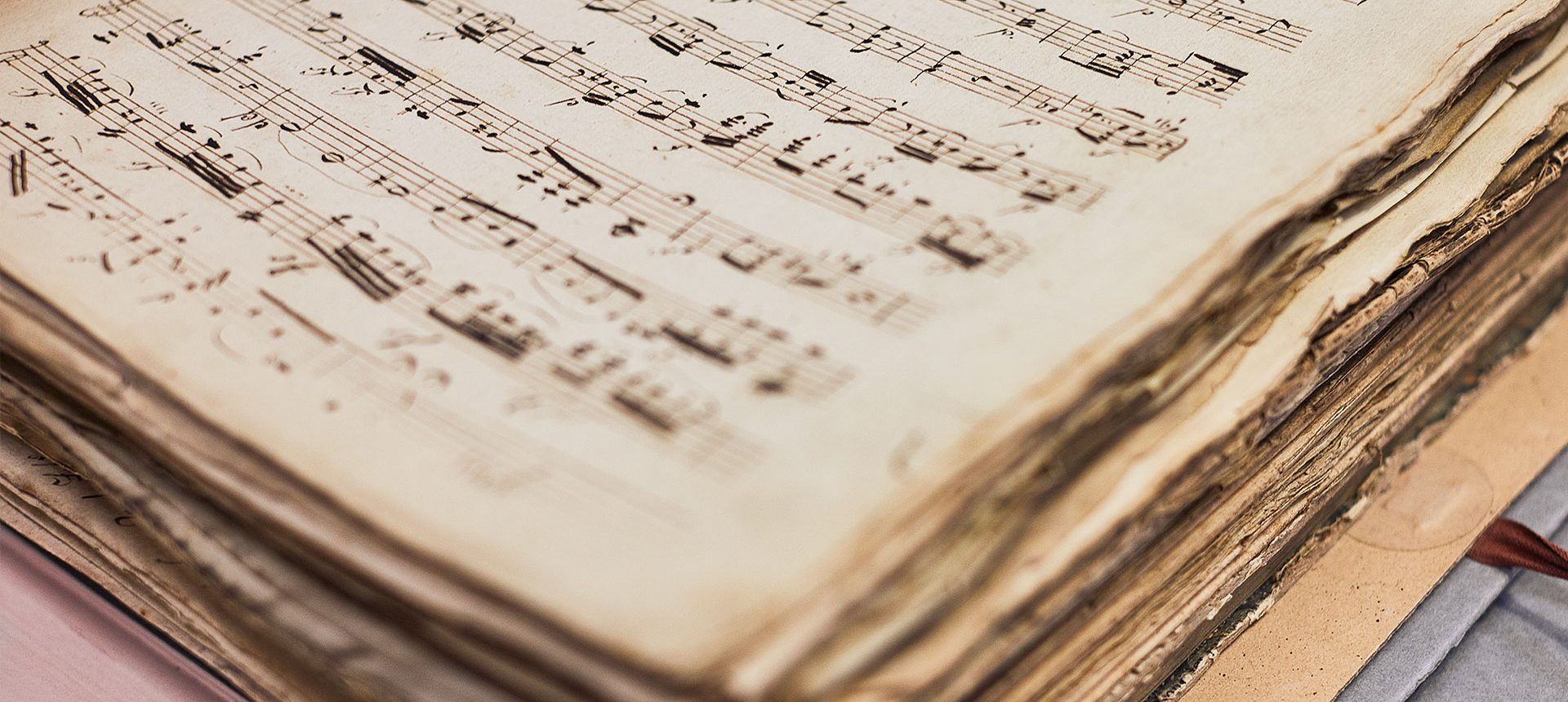
Here you can find almost anything about all the concerts Gothenburg Symphony has played over the years, both in the Concert Hall and on tour.
Search for conductors, soloists and other artists that has played together with us. Or search for composers and music that we have played. And filter on specific seasons. Guesting orchestras and ensembles are also included in the archive.
The result is presented by season.
The Gothenburg Symphony was formed in 1905 and today consists of 109 musicians. The orchestra's base is Gothenburg Concert Hall at Götaplatsen that has gathered music lovers since 1935. Since the 2019-2020 season, Barbara Hannigan is Principal guest conductor. We are also a proud partner of Barbara Hannigan's Equilibrium mentoring program focusing on young singers at the start of their careers. The title Principal Guest Conductor is shared by Pekka Kuusisto from 2025.
Wilhelm Stenhammar was the orchestra's chief conductor from 1907 to 1922. He gave the orchestra a strong Nordic profile and invited colleagues Carl Nielsen and Jean Sibelius to the orchestra. Under the direction of conductor Neeme Järvi from 1982-2004, the orchestra made a series of international tours as well as a hundred disc recordings and established themselves among Europe's leading orchestras. In 1996, the Swedish Riksdag appointed the Gothenburg Symphony as Sweden's National Orchestra.
In recent decades, the orchestra has had prominent chief conductors such as Santtu-Matias Rouvali, Mario Venzago and Gustavo Dudamel, following Kent Nagano as Principal Guest conductor. Anna-Karin Larsson is CEO and artistic director, Gustavo Dudamel honorary conductor and Neeme Järvi chief conductor emeritus. The orchestra's owner is the Västra Götaland Region.
The Gothenburg Symphony works regularly with conductors such as Herbert Blomstedt, Joana Carneiro, Jukka-Pekka Saraste, Christian Zacharias and Anja Bihlmaier.
"Only once have I succeeded in fully realizing my intentions, in Boléro."
Maurice Ravel composed Boléro (1928) as a bold experiment in rhythm, timbre, and endurance. Originally written as ballet music for the Russian ballerina Ida Rubinstein, the work is based on an almost ascetic musical material - an unchanging rhythm of the snare drum together with two simple melodies repeated without thematic development. What changes instead is the color, density, and dynamics of the orchestra. Over a sustained ostinatory rhythm, the melody wanders through the orchestra's instruments, one by one, in a slow and relentless rise toward a monumental climax.
Ravel himself emphasized the monotonous and almost mechanical character of the work, describing it as a pure study in orchestration rather than an expression of drama or narrative. It is precisely this consistent limitation that gives the music its hypnotic, almost trance-like effect. Boléro immediately attracted great attention upon its premiere in Paris, and achieved worldwide success within months. It became Ravel's most famous work, remains one of the most frequently performed classical pieces in the world, and is considered one of the most iconic and powerful orchestral experiences of the 20th century.
Participants
The Gothenburg Symphony was formed in 1905 and today consists of 109 musicians. The orchestra's base is Gothenburg Concert Hall at Götaplatsen that has gathered music lovers since 1935. Since the 2019-2020 season, Barbara Hannigan is Principal guest conductor. We are also a proud partner of Barbara Hannigan's Equilibrium mentoring program focusing on young singers at the start of their careers. The title Principal Guest Conductor is shared by Pekka Kuusisto from 2025.
Wilhelm Stenhammar was the orchestra's chief conductor from 1907 to 1922. He gave the orchestra a strong Nordic profile and invited colleagues Carl Nielsen and Jean Sibelius to the orchestra. Under the direction of conductor Neeme Järvi from 1982-2004, the orchestra made a series of international tours as well as a hundred disc recordings and established themselves among Europe's leading orchestras. In 1996, the Swedish Riksdag appointed the Gothenburg Symphony as Sweden's National Orchestra.
In recent decades, the orchestra has had prominent chief conductors such as Santtu-Matias Rouvali, Mario Venzago and Gustavo Dudamel, following Kent Nagano as Principal Guest conductor. Anna-Karin Larsson is CEO and artistic director, Gustavo Dudamel honorary conductor and Neeme Järvi chief conductor emeritus. The orchestra's owner is the Västra Götaland Region.
The Gothenburg Symphony works regularly with conductors such as Herbert Blomstedt, Joana Carneiro, Jukka-Pekka Saraste, Christian Zacharias and Anja Bihlmaier.
Wolfgang Amadeus Mozart (1756-1791)
Overture to Le nozze di Figaro
The task of an overture is to create anticipation and excitement and to give a foreshadowing of the dramatic events of the opera. Mozart signals joy and comedy with the high tempo, but the dark tones also let us suspect that this is an opera with serious elements. The frame plot is one of the most common in Mozart's time: the struggle between the lord - the count - and the servant, where the latter ultimately draws the longest straw. When the overture's humming flight of bumblebees has come to an end, the curtain rises, and we meet the servant Figaro and his fiancée Susanna in the process of finding the best place for their new bed - they are getting married.
The Gothenburg Symphony was formed in 1905 and today consists of 109 musicians. The orchestra's base is Gothenburg Concert Hall at Götaplatsen that has gathered music lovers since 1935. Since the 2019-2020 season, Barbara Hannigan is Principal guest conductor. We are also a proud partner of Barbara Hannigan's Equilibrium mentoring program focusing on young singers at the start of their careers. The title Principal Guest Conductor is shared by Pekka Kuusisto from 2025.
Wilhelm Stenhammar was the orchestra's chief conductor from 1907 to 1922. He gave the orchestra a strong Nordic profile and invited colleagues Carl Nielsen and Jean Sibelius to the orchestra. Under the direction of conductor Neeme Järvi from 1982-2004, the orchestra made a series of international tours as well as a hundred disc recordings and established themselves among Europe's leading orchestras. In 1996, the Swedish Riksdag appointed the Gothenburg Symphony as Sweden's National Orchestra.
In recent decades, the orchestra has had prominent chief conductors such as Santtu-Matias Rouvali, Mario Venzago and Gustavo Dudamel, following Kent Nagano as Principal Guest conductor. Anna-Karin Larsson is CEO and artistic director, Gustavo Dudamel honorary conductor and Neeme Järvi chief conductor emeritus. The orchestra's owner is the Västra Götaland Region.
The Gothenburg Symphony works regularly with conductors such as Herbert Blomstedt, Joana Carneiro, Jukka-Pekka Saraste, Christian Zacharias and Anja Bihlmaier.
Andante sostenuto
Andantino in modo di canzona
Allegro
Allegro con fuoco
In correspondence as well as a for Tchaikovsky unusual online commentary, both implicit and explicit connections between this fourth symphony and Beethoven's fifth, Symphony of Fate, are suggested. In Tchaikovsky's Fourth Symphony, it sometimes seems as if he is trying to bring everything together, both the absolute of the music and the programmatic, and this is already audible in the first movement's architectural use of the fanfare theme that surrounds the otherwise inserted classical sonata form. The structural thereby gets a certain programmatic design, but within the form, the motivic work is found and listen (!) here to how Tchaikovsky uses the orchestra as a design of the room. The sonorous qualities of the shift of instrumentation provide a for the time unusual, and for posterity remarkable, use of instrumentation as a form of variation, one in which the ear and the room, not the word, are supreme.
And it is here – in the alternation between rhythmic and instrumental variation – that the rhapsodic becomes increasingly apparent: the story the symphony portrays, regardless of whether it is with just the musical aspect or with an idea of ??an underlying narrative, takes on an increasingly clear sonorous garment in Tchaikovsky.
The second movement's simpler, more melancholic feeling, and the third movement's dance-like display of pizzicato shock may seem parenthetical after the weight of the first movement, but in miniature the connection between motivic processing and the exploration of space through orchestration is found here as well. Finally, in the fourth, bombastic, movement, everything ties together. The rhapsodic, in the folk-inspired melodies are modulated and thrown around in the orchestral clusters, and finally we are back in the fate theme, and the coda can triumphantly bring us home.
Esaias Järnegard
The Gothenburg Symphony was formed in 1905 and today consists of 109 musicians. The orchestra's base is Gothenburg Concert Hall at Götaplatsen that has gathered music lovers since 1935. Since the 2019-2020 season, Barbara Hannigan is Principal guest conductor. We are also a proud partner of Barbara Hannigan's Equilibrium mentoring program focusing on young singers at the start of their careers. The title Principal Guest Conductor is shared by Pekka Kuusisto from 2025.
Wilhelm Stenhammar was the orchestra's chief conductor from 1907 to 1922. He gave the orchestra a strong Nordic profile and invited colleagues Carl Nielsen and Jean Sibelius to the orchestra. Under the direction of conductor Neeme Järvi from 1982-2004, the orchestra made a series of international tours as well as a hundred disc recordings and established themselves among Europe's leading orchestras. In 1996, the Swedish Riksdag appointed the Gothenburg Symphony as Sweden's National Orchestra.
In recent decades, the orchestra has had prominent chief conductors such as Santtu-Matias Rouvali, Mario Venzago and Gustavo Dudamel, following Kent Nagano as Principal Guest conductor. Anna-Karin Larsson is CEO and artistic director, Gustavo Dudamel honorary conductor and Neeme Järvi chief conductor emeritus. The orchestra's owner is the Västra Götaland Region.
The Gothenburg Symphony works regularly with conductors such as Herbert Blomstedt, Joana Carneiro, Jukka-Pekka Saraste, Christian Zacharias and Anja Bihlmaier.
Richard Wagner’s last traditionally Romantic opera centers on the knight Lohengrin. The popular prelude to the first act—which the author Thomas Mann considered the “pinnacle of Romanticism”—is frequently performed as a standalone concert piece. Through various musical themes and motifs, we are drawn into the first act’s world of passion, mystery, and heroism. In Lohengrin’s Grail narrative, the myth of the holy vessel is said to symbolize human longing.
The Gothenburg Symphony was formed in 1905 and today consists of 109 musicians. The orchestra's base is Gothenburg Concert Hall at Götaplatsen that has gathered music lovers since 1935. Since the 2019-2020 season, Barbara Hannigan is Principal guest conductor. We are also a proud partner of Barbara Hannigan's Equilibrium mentoring program focusing on young singers at the start of their careers. The title Principal Guest Conductor is shared by Pekka Kuusisto from 2025.
Wilhelm Stenhammar was the orchestra's chief conductor from 1907 to 1922. He gave the orchestra a strong Nordic profile and invited colleagues Carl Nielsen and Jean Sibelius to the orchestra. Under the direction of conductor Neeme Järvi from 1982-2004, the orchestra made a series of international tours as well as a hundred disc recordings and established themselves among Europe's leading orchestras. In 1996, the Swedish Riksdag appointed the Gothenburg Symphony as Sweden's National Orchestra.
In recent decades, the orchestra has had prominent chief conductors such as Santtu-Matias Rouvali, Mario Venzago and Gustavo Dudamel, following Kent Nagano as Principal Guest conductor. Anna-Karin Larsson is CEO and artistic director, Gustavo Dudamel honorary conductor and Neeme Järvi chief conductor emeritus. The orchestra's owner is the Västra Götaland Region.
The Gothenburg Symphony works regularly with conductors such as Herbert Blomstedt, Joana Carneiro, Jukka-Pekka Saraste, Christian Zacharias and Anja Bihlmaier.
Ludwig van Beethoven (1770-1827)
Symphony No. 4 Op 60
The Fourth Symphony is, as often said, situated between two symphonic giants. A reputation that has often led to its being overlooked, but in fact it follows a working method that is more the rule than the exception in Beethoven. The revolutionary works are often followed by music that seems to take care of what follows the storm. And this year, 1806 – we are in perhaps the most insanely productive of Beethoven’s life – is no exception.
The symphony begins with a tender entry followed by a plateau of unison Bb in strings and winds that is shadowily surrounded by slow melodic movements. The music grows suggestively from a melancholy to a euphoria – from minor to major – when the allegro breaks through in all its splendor.
After the first movement's alternating shift between intense outbursts and calm breaths, one of Beethoven's most lyrical adagios follows, where the repetitive rhythm (you hear it immediately in the verse) makes the movement dance forward stubbornly.
In the third and fourth movements, a scherzo and an allegro, the music rushes forward. For those who have already noticed how the form of the adagio rhythm is a variation of the first movement's syncopated outbursts, here, in the more dance-like parts of the symphony, you can notice how Beethoven turns the building blocks of the music inside and outside, but at the same time joins them together. In this way, he lets us anticipate the revolution that the symphony's form is facing. Fate will soon be knocking on the door.
Richard Wagner’s last traditionally Romantic opera centers on the knight Lohengrin. The popular prelude to the first act—which the author Thomas Mann considered the “pinnacle of Romanticism”—is frequently performed as a standalone concert piece. Through various musical themes and motifs, we are drawn into the first act’s world of passion, mystery, and heroism. In Lohengrin’s Grail narrative, the myth of the holy vessel is said to symbolize human longing.
The Gothenburg Symphony was formed in 1905 and today consists of 109 musicians. The orchestra's base is Gothenburg Concert Hall at Götaplatsen that has gathered music lovers since 1935. Since the 2019-2020 season, Barbara Hannigan is Principal guest conductor. We are also a proud partner of Barbara Hannigan's Equilibrium mentoring program focusing on young singers at the start of their careers. The title Principal Guest Conductor is shared by Pekka Kuusisto from 2025.
Wilhelm Stenhammar was the orchestra's chief conductor from 1907 to 1922. He gave the orchestra a strong Nordic profile and invited colleagues Carl Nielsen and Jean Sibelius to the orchestra. Under the direction of conductor Neeme Järvi from 1982-2004, the orchestra made a series of international tours as well as a hundred disc recordings and established themselves among Europe's leading orchestras. In 1996, the Swedish Riksdag appointed the Gothenburg Symphony as Sweden's National Orchestra.
In recent decades, the orchestra has had prominent chief conductors such as Santtu-Matias Rouvali, Mario Venzago and Gustavo Dudamel, following Kent Nagano as Principal Guest conductor. Anna-Karin Larsson is CEO and artistic director, Gustavo Dudamel honorary conductor and Neeme Järvi chief conductor emeritus. The orchestra's owner is the Västra Götaland Region.
The Gothenburg Symphony works regularly with conductors such as Herbert Blomstedt, Joana Carneiro, Jukka-Pekka Saraste, Christian Zacharias and Anja Bihlmaier.
The Gothenburg Symphony was formed in 1905 and today consists of 109 musicians. The orchestra's base is Gothenburg Concert Hall at Götaplatsen that has gathered music lovers since 1935. Since the 2019-2020 season, Barbara Hannigan is Principal guest conductor. We are also a proud partner of Barbara Hannigan's Equilibrium mentoring program focusing on young singers at the start of their careers. The title Principal Guest Conductor is shared by Pekka Kuusisto from 2025.
Wilhelm Stenhammar was the orchestra's chief conductor from 1907 to 1922. He gave the orchestra a strong Nordic profile and invited colleagues Carl Nielsen and Jean Sibelius to the orchestra. Under the direction of conductor Neeme Järvi from 1982-2004, the orchestra made a series of international tours as well as a hundred disc recordings and established themselves among Europe's leading orchestras. In 1996, the Swedish Riksdag appointed the Gothenburg Symphony as Sweden's National Orchestra.
In recent decades, the orchestra has had prominent chief conductors such as Santtu-Matias Rouvali, Mario Venzago and Gustavo Dudamel, following Kent Nagano as Principal Guest conductor. Anna-Karin Larsson is CEO and artistic director, Gustavo Dudamel honorary conductor and Neeme Järvi chief conductor emeritus. The orchestra's owner is the Västra Götaland Region.
The Gothenburg Symphony works regularly with conductors such as Herbert Blomstedt, Joana Carneiro, Jukka-Pekka Saraste, Christian Zacharias and Anja Bihlmaier.