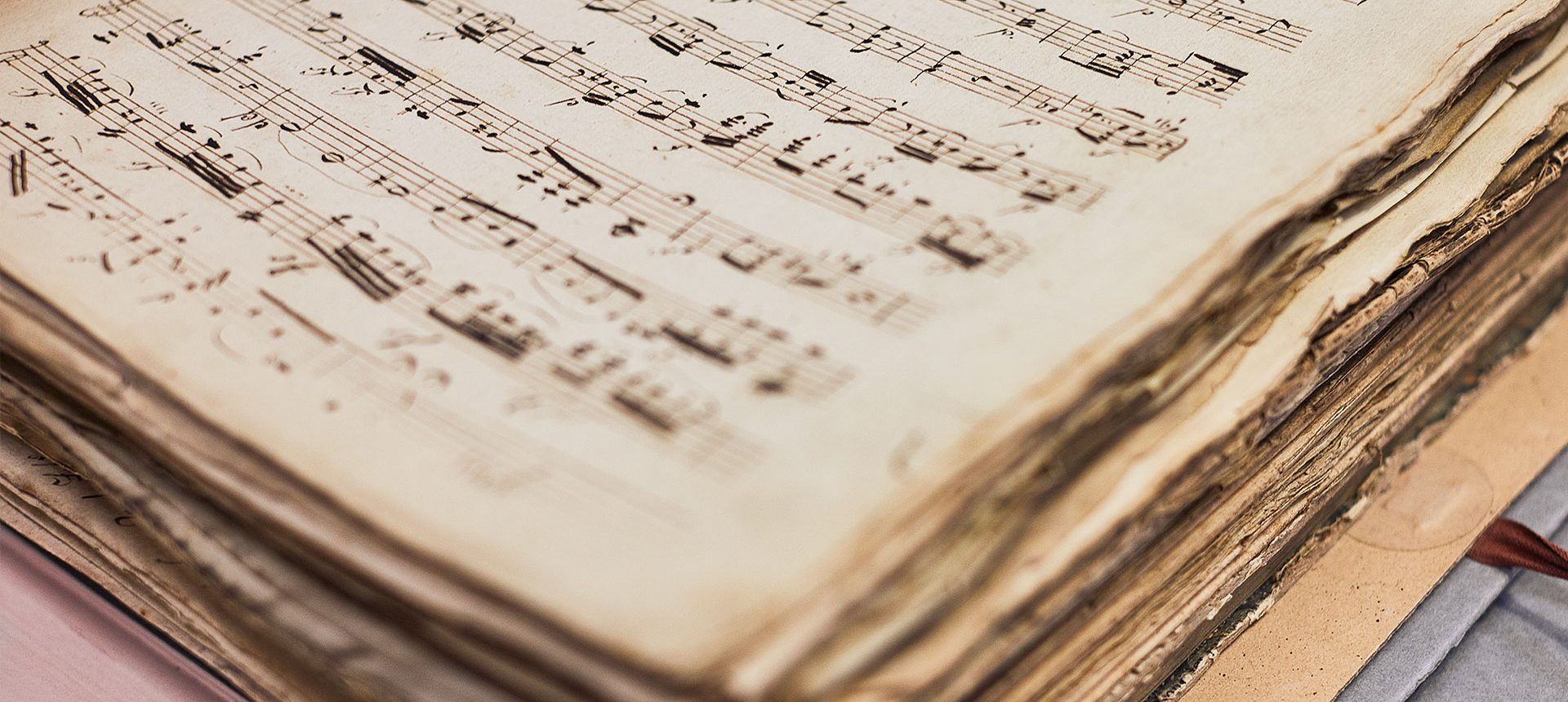
Here you can find almost anything about all the concerts Gothenburg Symphony has played over the years, both in the Concert Hall and on tour.
Search for conductors, soloists and other artists that has played together with us. Or search for composers and music that we have played. And filter on specific seasons. Guesting orchestras and ensembles are also included in the archive.
The result is presented by season.
Bela Bartók (1881-1945)
Concerto for Orchestra
Introduzione
Gioco delle coppie
Elegia
Intermezzo interrotto
Finale
When this music was written in 1943, Bela Bartók had two years left to live. He had come to the United States fleeing a Europe at war and clawed his way through a few lean years in New York. The honorary doctorate at Harvard provided no income. In addition, he became increasingly ill, what previously appeared to be tuberculosis turned out to be leukemia. But he continued to compose as always. Work was his life - and pleasure too, if you will. Like a child, he rested by doing other things.
He was first and foremost a music ethnologist, that is, a recorder and collector of folk music. And it was among other things this immeasurable library, more than 13,000 melodies, he was so keen to save the Second World War. Countless trips in Hungary, Romania, Bulgaria, Slovakia and Turkey were made with a phonograph as a memory aid. In between, he composed, on top of that a whole lot of teaching as income and change, and of course an extensive activity as a concert pianist in many countries. In addition, he was interested in collecting plants, beetles, learning new languages. Palestrina's music was always on the piano and he never traveled without his thumbed score of Stravinsky's The Rite of Spring under his arm. Is there a diagnosis for this? we would ask today.
The music Bela Bartók wrote was highly influenced by all the music he saw and heard on his collecting trips, but in the later works you can also hear how fascinated he was by the Baroque masters. The concerto for orchestra was commissioned by the Sergei Koussevitsky Music Foundation. Bartók himself has described the music as a journey from austerity via an ominous song to a life-affirming ending. Like Mozart, he composed incredibly quickly, he couldn't get an idea out of his head until the next one appeared. With such a cacophony within, it is no wonder that throughout his life he sought out quiet places.
Bartok himself saw the collection of folk music as his greatest and most important deed for more than one reason: "My own idea is the brotherhood of peoples, brotherhood despite all wars and conflicts. I try - as best I can - to serve that idea in my music: therefore I reject no influences, whether Slovak, Romanian, Arabic, or from other sources." (Bartók, 1931)
KATARINA A KARLSSON
Participants
The Gothenburg Symphony was formed in 1905 and today consists of 109 musicians. The orchestra's base is Gothenburg Concert Hall at Götaplatsen that has gathered music lovers since 1935. Since the 2019-2020 season, Barbara Hannigan is Principal guest conductor. We are also a proud partner of Barbara Hannigan's Equilibrium mentoring program focusing on young singers at the start of their careers. The title Principal Guest Conductor is shared by Pekka Kuusisto from 2025.
Wilhelm Stenhammar was the orchestra's chief conductor from 1907 to 1922. He gave the orchestra a strong Nordic profile and invited colleagues Carl Nielsen and Jean Sibelius to the orchestra. Under the direction of conductor Neeme Järvi from 1982-2004, the orchestra made a series of international tours as well as a hundred disc recordings and established themselves among Europe's leading orchestras. In 1996, the Swedish Riksdag appointed the Gothenburg Symphony as Sweden's National Orchestra.
In recent decades, the orchestra has had prominent chief conductors such as Santtu-Matias Rouvali, Mario Venzago and Gustavo Dudamel, following Kent Nagano as Principal Guest conductor. Anna-Karin Larsson is CEO and artistic director, Gustavo Dudamel honorary conductor and Neeme Järvi chief conductor emeritus. The orchestra's owner is the Västra Götaland Region.
The Gothenburg Symphony works regularly with conductors such as Herbert Blomstedt, Joana Carneiro, Jukka-Pekka Saraste, Christian Zacharias and Anja Bihlmaier.
Pianist and conductor Christian Zacharias has served as chief conductor of the Lausanne Chamber Orchestra and principal guest conductor of the Gothenburg Symphony Orchestra. Since 2021, he has been the principal guest conductor of the Orquesta Ciudad de Granada. He regularly collaborates with the Boston Symphony Orchestra, the Basel Chamber Orchestra, the Konzerthausorchester Berlin, the Orchestre National de Lyon, and the Bamberg Symphony. Christian Zacharias is also a dedicated chamber musician. As an opera conductor, he has led productions of La clemenza di Tito, The Marriage of Figaro, The Merry Wives of Windsor, and The Tales of Hoffmann. His many critically acclaimed recordings include the complete piano concertos of Mozart, the symphonies of Schumann, and symphonies by C.P.E. Bach. In 2022 and 2023, two solo albums featuring sonatas by Haydn and partitas and suites by Bach were released (MDG).
In general, the Classical-Romantic repertoire—particularly the works of Schumann, Brahms, Bruckner, Mozart, Haydn, and Beethoven—forms a key musical focus for him. He often complements his programs with modern works by composers such as Schoenberg, Britten, or Bacewicz. As a pianist, he also gives solo recitals and lectures. He last appeared with the Gothenburg Symphony Orchestra in 2023.
The Gothenburg Symphony was formed in 1905 and today consists of 109 musicians. The orchestra's base is Gothenburg Concert Hall at Götaplatsen that has gathered music lovers since 1935. Since the 2019-2020 season, Barbara Hannigan is Principal guest conductor. We are also a proud partner of Barbara Hannigan's Equilibrium mentoring program focusing on young singers at the start of their careers. The title Principal Guest Conductor is shared by Pekka Kuusisto from 2025.
Wilhelm Stenhammar was the orchestra's chief conductor from 1907 to 1922. He gave the orchestra a strong Nordic profile and invited colleagues Carl Nielsen and Jean Sibelius to the orchestra. Under the direction of conductor Neeme Järvi from 1982-2004, the orchestra made a series of international tours as well as a hundred disc recordings and established themselves among Europe's leading orchestras. In 1996, the Swedish Riksdag appointed the Gothenburg Symphony as Sweden's National Orchestra.
In recent decades, the orchestra has had prominent chief conductors such as Santtu-Matias Rouvali, Mario Venzago and Gustavo Dudamel, following Kent Nagano as Principal Guest conductor. Anna-Karin Larsson is CEO and artistic director, Gustavo Dudamel honorary conductor and Neeme Järvi chief conductor emeritus. The orchestra's owner is the Västra Götaland Region.
The Gothenburg Symphony works regularly with conductors such as Herbert Blomstedt, Joana Carneiro, Jukka-Pekka Saraste, Christian Zacharias and Anja Bihlmaier.
Felix Mendelssohn (1809-1847)
Symphony No. 4 in A, Op 90 "The Italian"
Allegro vivace
Andante con moto
Con moto moderato
Saltarello Presto
No other composer - Mozart not excluded - has written such magnificently gifted music already as a child. Between the ages of eleven and fifteen, Felix Mendelssohn composed thirteen string symphonies, four operas, five concertos and countless chamber music works, in addition to piano and organ pieces, solo songs and choirs. And a great deal of this is still in the standard repertoire worldwide. He was the son of the wealthy banker Abraham, in whose home artists and musicians were constant guests. On Sundays, the banker used to organize concerts at his home in Berlin. Court musicians and the siblings Felix and Fanny appeared as soloists, and in the audience you could not infrequently find the philosopher Hegel or the scientist Humboldt. So it is perhaps not surprising that the talented Felix made such progress already in his boyhood.
When he was fifteen years old, he began his first symphony for a full orchestra. He managed to write four more symphonies before his premature death at the age of only 38.
The Gothenburg Symphony was formed in 1905 and today consists of 109 musicians. The orchestra's base is Gothenburg Concert Hall at Götaplatsen that has gathered music lovers since 1935. Since the 2019-2020 season, Barbara Hannigan is Principal guest conductor. We are also a proud partner of Barbara Hannigan's Equilibrium mentoring program focusing on young singers at the start of their careers. The title Principal Guest Conductor is shared by Pekka Kuusisto from 2025.
Wilhelm Stenhammar was the orchestra's chief conductor from 1907 to 1922. He gave the orchestra a strong Nordic profile and invited colleagues Carl Nielsen and Jean Sibelius to the orchestra. Under the direction of conductor Neeme Järvi from 1982-2004, the orchestra made a series of international tours as well as a hundred disc recordings and established themselves among Europe's leading orchestras. In 1996, the Swedish Riksdag appointed the Gothenburg Symphony as Sweden's National Orchestra.
In recent decades, the orchestra has had prominent chief conductors such as Santtu-Matias Rouvali, Mario Venzago and Gustavo Dudamel, following Kent Nagano as Principal Guest conductor. Anna-Karin Larsson is CEO and artistic director, Gustavo Dudamel honorary conductor and Neeme Järvi chief conductor emeritus. The orchestra's owner is the Västra Götaland Region.
The Gothenburg Symphony works regularly with conductors such as Herbert Blomstedt, Joana Carneiro, Jukka-Pekka Saraste, Christian Zacharias and Anja Bihlmaier.
The Estonian-born conductor Neeme Järvi is the Gothenburg Symphony Orchestra's Principal Conductor Emeritus. He conducts many of the world's most prominent orchestras and works with soloists of the highest class. During his long career, he has made over 450 disc recordings. Under Neeme Järvi's direction from 1982-2004, the Gothenburg Symphony made a series of international tours and made around a hundred disc recordings and established itself among Europe's leading orchestras.
Neeme Järvi became chief conductor of the Residentie Orkest in 2005, artistic director of the Estonian National Symphony Orchestra in 2009 and music director of the New Jersey Symphony Orchestra in 2005. He has also been artistic director of the Orchester de la Suisse Romande. He holds the titles of Music Director Emeritus of the Detroit Symphony Orchestra and Conductor Laureate of the Royal Scottish National Orchestra.
Throughout his career, Neeme Järvi has been honored with international honors and awards. In Estonia, these include an honorary doctorate at the Estonian Academy of Music in Tallinn, and the Order of the National Coat of Arms from the President of the Republic of Estonia. He has also received the Commander of the Order of the North Star from King Karl XVI Gustaf.
He most recently guested with the Gothenburg Symphony Orchestra in 2024 at the Hasselblad Concert, which was also recorded for GSOplay and Swedish Radio.
The Gothenburg Symphony was formed in 1905 and today consists of 109 musicians. The orchestra's base is Gothenburg Concert Hall at Götaplatsen that has gathered music lovers since 1935. Since the 2019-2020 season, Barbara Hannigan is Principal guest conductor. We are also a proud partner of Barbara Hannigan's Equilibrium mentoring program focusing on young singers at the start of their careers. The title Principal Guest Conductor is shared by Pekka Kuusisto from 2025.
Wilhelm Stenhammar was the orchestra's chief conductor from 1907 to 1922. He gave the orchestra a strong Nordic profile and invited colleagues Carl Nielsen and Jean Sibelius to the orchestra. Under the direction of conductor Neeme Järvi from 1982-2004, the orchestra made a series of international tours as well as a hundred disc recordings and established themselves among Europe's leading orchestras. In 1996, the Swedish Riksdag appointed the Gothenburg Symphony as Sweden's National Orchestra.
In recent decades, the orchestra has had prominent chief conductors such as Santtu-Matias Rouvali, Mario Venzago and Gustavo Dudamel, following Kent Nagano as Principal Guest conductor. Anna-Karin Larsson is CEO and artistic director, Gustavo Dudamel honorary conductor and Neeme Järvi chief conductor emeritus. The orchestra's owner is the Västra Götaland Region.
The Gothenburg Symphony works regularly with conductors such as Herbert Blomstedt, Joana Carneiro, Jukka-Pekka Saraste, Christian Zacharias and Anja Bihlmaier.
Ludwig van Beethoven's First Symphony, written in 1799-1800, is not a tentative attempt by some inexperienced and immature composer. No, Beethoven had long been known as one of the foremost pianists and improvisers of his time, and his compositions had already received considerable attention. He had managed to write two piano concertos, eleven piano sonatas and six string quartets - to name a few. But on the other hand, he was not as bold as he might have been in some of his chamber music works.
The critics nevertheless thought that the symphony was generally good and that it offered many novelties and "a whole world of ideas". "But too many wind instruments were used, so it sounded more like a brass band than an orchestra". 200 years later, we find the symphony both clear and concise, conventional and strongly related to the symphonies of Mozart and Haydn. But we also notice that there is something more here - a strong personal touch. The driving spirit is not borrowed, it is Beethoven's own signature.
The Gothenburg Symphony was formed in 1905 and today consists of 109 musicians. The orchestra's base is Gothenburg Concert Hall at Götaplatsen that has gathered music lovers since 1935. Since the 2019-2020 season, Barbara Hannigan is Principal guest conductor. We are also a proud partner of Barbara Hannigan's Equilibrium mentoring program focusing on young singers at the start of their careers. The title Principal Guest Conductor is shared by Pekka Kuusisto from 2025.
Wilhelm Stenhammar was the orchestra's chief conductor from 1907 to 1922. He gave the orchestra a strong Nordic profile and invited colleagues Carl Nielsen and Jean Sibelius to the orchestra. Under the direction of conductor Neeme Järvi from 1982-2004, the orchestra made a series of international tours as well as a hundred disc recordings and established themselves among Europe's leading orchestras. In 1996, the Swedish Riksdag appointed the Gothenburg Symphony as Sweden's National Orchestra.
In recent decades, the orchestra has had prominent chief conductors such as Santtu-Matias Rouvali, Mario Venzago and Gustavo Dudamel, following Kent Nagano as Principal Guest conductor. Anna-Karin Larsson is CEO and artistic director, Gustavo Dudamel honorary conductor and Neeme Järvi chief conductor emeritus. The orchestra's owner is the Västra Götaland Region.
The Gothenburg Symphony works regularly with conductors such as Herbert Blomstedt, Joana Carneiro, Jukka-Pekka Saraste, Christian Zacharias and Anja Bihlmaier.
The Estonian-born conductor Neeme Järvi is the Gothenburg Symphony Orchestra's Principal Conductor Emeritus. He conducts many of the world's most prominent orchestras and works with soloists of the highest class. During his long career, he has made over 450 disc recordings. Under Neeme Järvi's direction from 1982-2004, the Gothenburg Symphony made a series of international tours and made around a hundred disc recordings and established itself among Europe's leading orchestras.
Neeme Järvi became chief conductor of the Residentie Orkest in 2005, artistic director of the Estonian National Symphony Orchestra in 2009 and music director of the New Jersey Symphony Orchestra in 2005. He has also been artistic director of the Orchester de la Suisse Romande. He holds the titles of Music Director Emeritus of the Detroit Symphony Orchestra and Conductor Laureate of the Royal Scottish National Orchestra.
Throughout his career, Neeme Järvi has been honored with international honors and awards. In Estonia, these include an honorary doctorate at the Estonian Academy of Music in Tallinn, and the Order of the National Coat of Arms from the President of the Republic of Estonia. He has also received the Commander of the Order of the North Star from King Karl XVI Gustaf.
He most recently guested with the Gothenburg Symphony Orchestra in 2024 at the Hasselblad Concert, which was also recorded for GSOplay and Swedish Radio.
The Gothenburg Symphony was formed in 1905 and today consists of 109 musicians. The orchestra's base is Gothenburg Concert Hall at Götaplatsen that has gathered music lovers since 1935. Since the 2019-2020 season, Barbara Hannigan is Principal guest conductor. We are also a proud partner of Barbara Hannigan's Equilibrium mentoring program focusing on young singers at the start of their careers. The title Principal Guest Conductor is shared by Pekka Kuusisto from 2025.
Wilhelm Stenhammar was the orchestra's chief conductor from 1907 to 1922. He gave the orchestra a strong Nordic profile and invited colleagues Carl Nielsen and Jean Sibelius to the orchestra. Under the direction of conductor Neeme Järvi from 1982-2004, the orchestra made a series of international tours as well as a hundred disc recordings and established themselves among Europe's leading orchestras. In 1996, the Swedish Riksdag appointed the Gothenburg Symphony as Sweden's National Orchestra.
In recent decades, the orchestra has had prominent chief conductors such as Santtu-Matias Rouvali, Mario Venzago and Gustavo Dudamel, following Kent Nagano as Principal Guest conductor. Anna-Karin Larsson is CEO and artistic director, Gustavo Dudamel honorary conductor and Neeme Järvi chief conductor emeritus. The orchestra's owner is the Västra Götaland Region.
The Gothenburg Symphony works regularly with conductors such as Herbert Blomstedt, Joana Carneiro, Jukka-Pekka Saraste, Christian Zacharias and Anja Bihlmaier.
Andante sostenuto
Andantino in modo di canzona
Allegro
Allegro con fuoco
In correspondence as well as a for Tchaikovsky unusual online commentary, both implicit and explicit connections between this fourth symphony and Beethoven's fifth, Symphony of Fate, are suggested. In Tchaikovsky's Fourth Symphony, it sometimes seems as if he is trying to bring everything together, both the absolute of the music and the programmatic, and this is already audible in the first movement's architectural use of the fanfare theme that surrounds the otherwise inserted classical sonata form. The structural thereby gets a certain programmatic design, but within the form, the motivic work is found and listen (!) here to how Tchaikovsky uses the orchestra as a design of the room. The sonorous qualities of the shift of instrumentation provide a for the time unusual, and for posterity remarkable, use of instrumentation as a form of variation, one in which the ear and the room, not the word, are supreme.
And it is here – in the alternation between rhythmic and instrumental variation – that the rhapsodic becomes increasingly apparent: the story the symphony portrays, regardless of whether it is with just the musical aspect or with an idea of ??an underlying narrative, takes on an increasingly clear sonorous garment in Tchaikovsky.
The second movement's simpler, more melancholic feeling, and the third movement's dance-like display of pizzicato shock may seem parenthetical after the weight of the first movement, but in miniature the connection between motivic processing and the exploration of space through orchestration is found here as well. Finally, in the fourth, bombastic, movement, everything ties together. The rhapsodic, in the folk-inspired melodies are modulated and thrown around in the orchestral clusters, and finally we are back in the fate theme, and the coda can triumphantly bring us home.
Esaias Järnegard
The Gothenburg Symphony was formed in 1905 and today consists of 109 musicians. The orchestra's base is Gothenburg Concert Hall at Götaplatsen that has gathered music lovers since 1935. Since the 2019-2020 season, Barbara Hannigan is Principal guest conductor. We are also a proud partner of Barbara Hannigan's Equilibrium mentoring program focusing on young singers at the start of their careers. The title Principal Guest Conductor is shared by Pekka Kuusisto from 2025.
Wilhelm Stenhammar was the orchestra's chief conductor from 1907 to 1922. He gave the orchestra a strong Nordic profile and invited colleagues Carl Nielsen and Jean Sibelius to the orchestra. Under the direction of conductor Neeme Järvi from 1982-2004, the orchestra made a series of international tours as well as a hundred disc recordings and established themselves among Europe's leading orchestras. In 1996, the Swedish Riksdag appointed the Gothenburg Symphony as Sweden's National Orchestra.
In recent decades, the orchestra has had prominent chief conductors such as Santtu-Matias Rouvali, Mario Venzago and Gustavo Dudamel, following Kent Nagano as Principal Guest conductor. Anna-Karin Larsson is CEO and artistic director, Gustavo Dudamel honorary conductor and Neeme Järvi chief conductor emeritus. The orchestra's owner is the Västra Götaland Region.
The Gothenburg Symphony works regularly with conductors such as Herbert Blomstedt, Joana Carneiro, Jukka-Pekka Saraste, Christian Zacharias and Anja Bihlmaier.
Herbert Blomstedt, born in 1927, continues to be one of the world's most sought-after conductors. He has been a regular and much appreciated guest conductor with the Gothenburg Symphony since 1954 and is also named an honorary symphony conductor. His work as a conductor is inextricably linked to his religious and human ethos, and his interpretations combine great fidelity to the score and analytical precision. In the more than sixty years of his career, he has acquired the unrestricted respect of the musical world.
Born in the USA to Swedish parents and educated in Uppsala, New York, Darmstadt and Basel, Herbert Blomstedt made his debut as a conductor in 1954 with the Stockholm Philharmonic Orchestra and was subsequently chief conductor of the Oslo Philharmonic, the Swedish and Danish Radio symphony orchestras and the Staatskapelle Dresden. During his career, Herbert Blomstedt has been chief conductor of the Gewandhaus Orchestra in Leipzig, the NDR Orchestra in Hamburg and the San Francisco Symphony Orchestra. He has appeared with all the major orchestras, including the Berlin Philharmonic, the Boston and Chicago Symphony Orchestras, the Concertgebouw Orchestra, the New York Philharmonic, the Bavarian Radio Symphony Orchestra and the Vienna Philharmonic. Herbert Blomstedt's discography includes hundreds of recordings. Among his later releases are Stenhammar's Serenade and Symphony No. 2 with the Gothenburg Symphony (BIS).
Herbert Blomstedt holds several Honorary Doctorates and is an elected member of the Royal Swedish Music Academy. He continues to be at the helm of all leading international orchestras with enormous presence, verve and artistic drive.
The Gothenburg Symphony was formed in 1905 and today consists of 109 musicians. The orchestra's base is Gothenburg Concert Hall at Götaplatsen that has gathered music lovers since 1935. Since the 2019-2020 season, Barbara Hannigan is Principal guest conductor. We are also a proud partner of Barbara Hannigan's Equilibrium mentoring program focusing on young singers at the start of their careers. The title Principal Guest Conductor is shared by Pekka Kuusisto from 2025.
Wilhelm Stenhammar was the orchestra's chief conductor from 1907 to 1922. He gave the orchestra a strong Nordic profile and invited colleagues Carl Nielsen and Jean Sibelius to the orchestra. Under the direction of conductor Neeme Järvi from 1982-2004, the orchestra made a series of international tours as well as a hundred disc recordings and established themselves among Europe's leading orchestras. In 1996, the Swedish Riksdag appointed the Gothenburg Symphony as Sweden's National Orchestra.
In recent decades, the orchestra has had prominent chief conductors such as Santtu-Matias Rouvali, Mario Venzago and Gustavo Dudamel, following Kent Nagano as Principal Guest conductor. Anna-Karin Larsson is CEO and artistic director, Gustavo Dudamel honorary conductor and Neeme Järvi chief conductor emeritus. The orchestra's owner is the Västra Götaland Region.
The Gothenburg Symphony works regularly with conductors such as Herbert Blomstedt, Joana Carneiro, Jukka-Pekka Saraste, Christian Zacharias and Anja Bihlmaier.