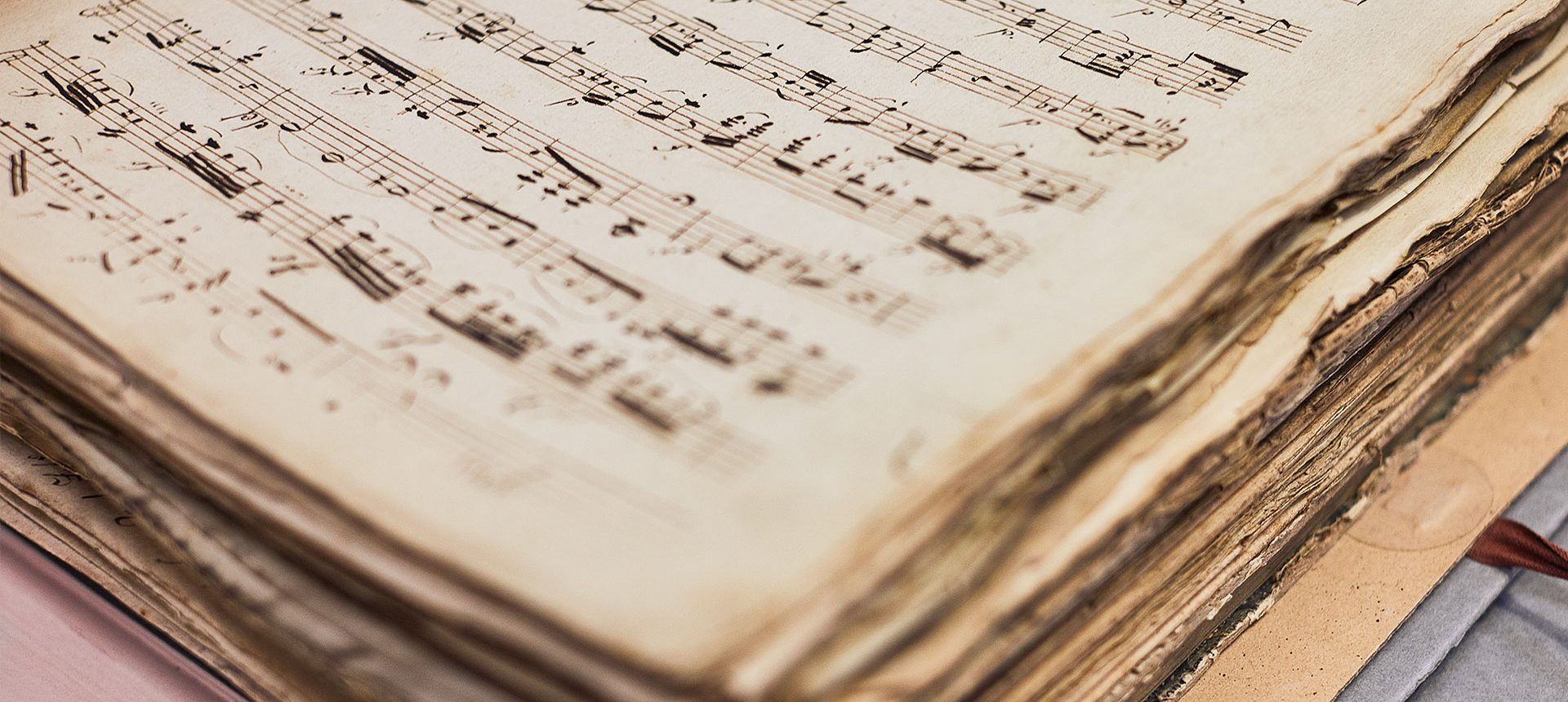
Here you can find almost anything about all the concerts Gothenburg Symphony has played over the years, both in the Concert Hall and on tour.
Search for conductors, soloists and other artists that has played together with us. Or search for composers and music that we have played. And filter on specific seasons. Guesting orchestras and ensembles are also included in the archive.
The result is presented by season.
51 concerts
2014-04-26 21:00 Bergamo
Göteborgs Symfoniker
Programme
Richard Strauss’s symphonic poem Till Eulenspiegels lustige Streiche is one of the great masterpieces of the orchestral repertoire. Until this point the composer had been known as a scholarly and rather serious young master, but after the premiere of Till in Cologne on 5 November 1895, it became clear that he also possessed a sparkling sense of humour.
Formally the work resembles a rondo, inviting us to follow the various escapades of the title character. Till Eulenspiegel, a famous trickster who had appeared in literature since the Middle Ages, is introduced in unmistakably fairy-tale fashion: the violins begin the piece with a dreamy phrase that seems to sing, “Once upon a time...”.
We then encounter Till as an itinerant preacher, see him fall in love, watch as he is brought to trial and sentenced to death, and finally witness his hanging. No name was inscribed on his gravestone, but an image of an owl and a mirror got to illustrate an old proverb: “Man sees his own faults as little as an owl recognizes his ugliness in looking into a mirror.” Hence the name Eulenspiegel (The Owl’s Mirror).
The Gothenburg Symphony was formed in 1905 and today consists of 109 musicians. The orchestra's base is Gothenburg Concert Hall at Götaplatsen that has gathered music lovers since 1935. Since the 2019-2020 season, Barbara Hannigan is Principal guest conductor. We are also a proud partner of Barbara Hannigan's Equilibrium mentoring program focusing on young singers at the start of their careers. The title Principal Guest Conductor is shared by Pekka Kuusisto from 2025.
Wilhelm Stenhammar was the orchestra's chief conductor from 1907 to 1922. He gave the orchestra a strong Nordic profile and invited colleagues Carl Nielsen and Jean Sibelius to the orchestra. Under the direction of conductor Neeme Järvi from 1982-2004, the orchestra made a series of international tours as well as a hundred disc recordings and established themselves among Europe's leading orchestras. In 1996, the Swedish Riksdag appointed the Gothenburg Symphony as Sweden's National Orchestra.
In recent decades, the orchestra has had prominent chief conductors such as Santtu-Matias Rouvali, Mario Venzago and Gustavo Dudamel, following Kent Nagano as Principal Guest conductor. Anna-Karin Larsson is CEO and artistic director, Gustavo Dudamel honorary conductor and Neeme Järvi chief conductor emeritus. The orchestra's owner is the Västra Götaland Region.
The Gothenburg Symphony works regularly with conductors such as Herbert Blomstedt, Joana Carneiro, Jukka-Pekka Saraste, Christian Zacharias and Anja Bihlmaier.
Richard Strauss’s symphonic poem Till Eulenspiegels lustige Streiche is one of the great masterpieces of the orchestral repertoire. Until this point the composer had been known as a scholarly and rather serious young master, but after the premiere of Till in Cologne on 5 November 1895, it became clear that he also possessed a sparkling sense of humour.
Formally the work resembles a rondo, inviting us to follow the various escapades of the title character. Till Eulenspiegel, a famous trickster who had appeared in literature since the Middle Ages, is introduced in unmistakably fairy-tale fashion: the violins begin the piece with a dreamy phrase that seems to sing, “Once upon a time...”.
We then encounter Till as an itinerant preacher, see him fall in love, watch as he is brought to trial and sentenced to death, and finally witness his hanging. No name was inscribed on his gravestone, but an image of an owl and a mirror got to illustrate an old proverb: “Man sees his own faults as little as an owl recognizes his ugliness in looking into a mirror.” Hence the name Eulenspiegel (The Owl’s Mirror).
The Gothenburg Symphony was formed in 1905 and today consists of 109 musicians. The orchestra's base is Gothenburg Concert Hall at Götaplatsen that has gathered music lovers since 1935. Since the 2019-2020 season, Barbara Hannigan is Principal guest conductor. We are also a proud partner of Barbara Hannigan's Equilibrium mentoring program focusing on young singers at the start of their careers. The title Principal Guest Conductor is shared by Pekka Kuusisto from 2025.
Wilhelm Stenhammar was the orchestra's chief conductor from 1907 to 1922. He gave the orchestra a strong Nordic profile and invited colleagues Carl Nielsen and Jean Sibelius to the orchestra. Under the direction of conductor Neeme Järvi from 1982-2004, the orchestra made a series of international tours as well as a hundred disc recordings and established themselves among Europe's leading orchestras. In 1996, the Swedish Riksdag appointed the Gothenburg Symphony as Sweden's National Orchestra.
In recent decades, the orchestra has had prominent chief conductors such as Santtu-Matias Rouvali, Mario Venzago and Gustavo Dudamel, following Kent Nagano as Principal Guest conductor. Anna-Karin Larsson is CEO and artistic director, Gustavo Dudamel honorary conductor and Neeme Järvi chief conductor emeritus. The orchestra's owner is the Västra Götaland Region.
The Gothenburg Symphony works regularly with conductors such as Herbert Blomstedt, Joana Carneiro, Jukka-Pekka Saraste, Christian Zacharias and Anja Bihlmaier.
With his broad musical experience (he played cornet, percussion and violin), Nielsen has always been popular with orchestras: he is a "musicians' composer" whose parts are almost always rich in content and challenging.
The Fourth Symphony (1916) is dense and intense, but there are also peaceful islands of recovery. The symphony opens with a powerful, completely surprising first movement, moves through a graceful allegretto (in which the wind instruments initially dominate) and a glowing third movement before ending with a blazing finale in which two drummers duel violently - incited and supported by the rest of the orchestra.
This is how Nielsen himself described the symphony: "The title (The Inextinguishable) suggests something that only music itself can express: the elementary will to live. /.../ Life is indelible and inextinguishable, yesterday, today and tomorrow, life was, is and will exist in struggle, conflict, generation and annihilation."
Participants
The Gothenburg Symphony was formed in 1905 and today consists of 109 musicians. The orchestra's base is Gothenburg Concert Hall at Götaplatsen that has gathered music lovers since 1935. Since the 2019-2020 season, Barbara Hannigan is Principal guest conductor. We are also a proud partner of Barbara Hannigan's Equilibrium mentoring program focusing on young singers at the start of their careers. The title Principal Guest Conductor is shared by Pekka Kuusisto from 2025.
Wilhelm Stenhammar was the orchestra's chief conductor from 1907 to 1922. He gave the orchestra a strong Nordic profile and invited colleagues Carl Nielsen and Jean Sibelius to the orchestra. Under the direction of conductor Neeme Järvi from 1982-2004, the orchestra made a series of international tours as well as a hundred disc recordings and established themselves among Europe's leading orchestras. In 1996, the Swedish Riksdag appointed the Gothenburg Symphony as Sweden's National Orchestra.
In recent decades, the orchestra has had prominent chief conductors such as Santtu-Matias Rouvali, Mario Venzago and Gustavo Dudamel, following Kent Nagano as Principal Guest conductor. Anna-Karin Larsson is CEO and artistic director, Gustavo Dudamel honorary conductor and Neeme Järvi chief conductor emeritus. The orchestra's owner is the Västra Götaland Region.
The Gothenburg Symphony works regularly with conductors such as Herbert Blomstedt, Joana Carneiro, Jukka-Pekka Saraste, Christian Zacharias and Anja Bihlmaier.
The rhapsody was a perfect tool for provincial exploration - genuine or newly composed folk songs were arranged and assembled into a kind of more elaborate suite. Not even the elegant Ravel, known for clarity and refined orchestral effects, could resist the temptation. His favourite Chabrier had already composed the successful rhapsody Espana in 1883, and he himself had been attracted by Spanish tones in Habanera (1895) for two pianos - which was orchestrated and incorporated into Rapsodie espagnole - and Alborada del gracioso (1905). So the foundation was already laid when he wrote his first major orchestral work Rapsodie espagnole in 1908.
The work flows with sensual orchestral sounds, enchanting natural impressions and fiery dances. "Night Prelude" is followed by a malaguena, a dance from Malaga, and the mentioned habanera, which takes its name from the capital of Cuba. Ravel's mastery in painting with the orchestra is particularly prominent in the concluding Feria, "festival". Here the melody part plays virtuoso between strings and winds while cellos, basses and bassoons run a relay race, all the while percussion with triangle, tambourine and castanets deliver their hits with powerful support from the brass. A more effective orchestral finale is hard to find.
The Gothenburg Symphony was formed in 1905 and today consists of 109 musicians. The orchestra's base is Gothenburg Concert Hall at Götaplatsen that has gathered music lovers since 1935. Since the 2019-2020 season, Barbara Hannigan is Principal guest conductor. We are also a proud partner of Barbara Hannigan's Equilibrium mentoring program focusing on young singers at the start of their careers. The title Principal Guest Conductor is shared by Pekka Kuusisto from 2025.
Wilhelm Stenhammar was the orchestra's chief conductor from 1907 to 1922. He gave the orchestra a strong Nordic profile and invited colleagues Carl Nielsen and Jean Sibelius to the orchestra. Under the direction of conductor Neeme Järvi from 1982-2004, the orchestra made a series of international tours as well as a hundred disc recordings and established themselves among Europe's leading orchestras. In 1996, the Swedish Riksdag appointed the Gothenburg Symphony as Sweden's National Orchestra.
In recent decades, the orchestra has had prominent chief conductors such as Santtu-Matias Rouvali, Mario Venzago and Gustavo Dudamel, following Kent Nagano as Principal Guest conductor. Anna-Karin Larsson is CEO and artistic director, Gustavo Dudamel honorary conductor and Neeme Järvi chief conductor emeritus. The orchestra's owner is the Västra Götaland Region.
The Gothenburg Symphony works regularly with conductors such as Herbert Blomstedt, Joana Carneiro, Jukka-Pekka Saraste, Christian Zacharias and Anja Bihlmaier.
Cellist Johan Stern is principal conductor of the Gothenburg Symphony Orchestra and teaches cello, chamber music and orchestral playing at the Academy of Music and Performing Arts. He studied at the Royal Academy of Music in Stockholm and at the Juilliard School in New York. As a member of Gageego!, the Gothenburg Ensemble for New Music, he has premiered several solo works by our leading Nordic composers. Johan Stern has participated in a number of international festivals and as a soloist and chamber musician has performed with figures such as Bobby McFerrin, Edward Gardner, Petri Sakari, Kristjan Järvi, Daniel Müller-Schott and Levon Chilingirian. During his studies at Juilliard, he had the privilege of collaborating with several internationally renowned musical figures, including cellist Yo-Yo Ma and composers Elliott Carter and John Cage.
The Gothenburg Symphony was formed in 1905 and today consists of 109 musicians. The orchestra's base is Gothenburg Concert Hall at Götaplatsen that has gathered music lovers since 1935. Since the 2019-2020 season, Barbara Hannigan is Principal guest conductor. We are also a proud partner of Barbara Hannigan's Equilibrium mentoring program focusing on young singers at the start of their careers. The title Principal Guest Conductor is shared by Pekka Kuusisto from 2025.
Wilhelm Stenhammar was the orchestra's chief conductor from 1907 to 1922. He gave the orchestra a strong Nordic profile and invited colleagues Carl Nielsen and Jean Sibelius to the orchestra. Under the direction of conductor Neeme Järvi from 1982-2004, the orchestra made a series of international tours as well as a hundred disc recordings and established themselves among Europe's leading orchestras. In 1996, the Swedish Riksdag appointed the Gothenburg Symphony as Sweden's National Orchestra.
In recent decades, the orchestra has had prominent chief conductors such as Santtu-Matias Rouvali, Mario Venzago and Gustavo Dudamel, following Kent Nagano as Principal Guest conductor. Anna-Karin Larsson is CEO and artistic director, Gustavo Dudamel honorary conductor and Neeme Järvi chief conductor emeritus. The orchestra's owner is the Västra Götaland Region.
The Gothenburg Symphony works regularly with conductors such as Herbert Blomstedt, Joana Carneiro, Jukka-Pekka Saraste, Christian Zacharias and Anja Bihlmaier.
Ludwig van Beethoven's First Symphony, written in 1799-1800, is not a tentative attempt by some inexperienced and immature composer. No, Beethoven had long been known as one of the foremost pianists and improvisers of his time, and his compositions had already received considerable attention. He had managed to write two piano concertos, eleven piano sonatas and six string quartets - to name a few. But on the other hand, he was not as bold as he might have been in some of his chamber music works.
The critics nevertheless thought that the symphony was generally good and that it offered many novelties and "a whole world of ideas". "But too many wind instruments were used, so it sounded more like a brass band than an orchestra". 200 years later, we find the symphony both clear and concise, conventional and strongly related to the symphonies of Mozart and Haydn. But we also notice that there is something more here - a strong personal touch. The driving spirit is not borrowed, it is Beethoven's own signature.
The Gothenburg Symphony was formed in 1905 and today consists of 109 musicians. The orchestra's base is Gothenburg Concert Hall at Götaplatsen that has gathered music lovers since 1935. Since the 2019-2020 season, Barbara Hannigan is Principal guest conductor. We are also a proud partner of Barbara Hannigan's Equilibrium mentoring program focusing on young singers at the start of their careers. The title Principal Guest Conductor is shared by Pekka Kuusisto from 2025.
Wilhelm Stenhammar was the orchestra's chief conductor from 1907 to 1922. He gave the orchestra a strong Nordic profile and invited colleagues Carl Nielsen and Jean Sibelius to the orchestra. Under the direction of conductor Neeme Järvi from 1982-2004, the orchestra made a series of international tours as well as a hundred disc recordings and established themselves among Europe's leading orchestras. In 1996, the Swedish Riksdag appointed the Gothenburg Symphony as Sweden's National Orchestra.
In recent decades, the orchestra has had prominent chief conductors such as Santtu-Matias Rouvali, Mario Venzago and Gustavo Dudamel, following Kent Nagano as Principal Guest conductor. Anna-Karin Larsson is CEO and artistic director, Gustavo Dudamel honorary conductor and Neeme Järvi chief conductor emeritus. The orchestra's owner is the Västra Götaland Region.
The Gothenburg Symphony works regularly with conductors such as Herbert Blomstedt, Joana Carneiro, Jukka-Pekka Saraste, Christian Zacharias and Anja Bihlmaier.
Andante sostenuto
Andantino in modo di canzona
Allegro
Allegro con fuoco
In correspondence as well as a for Tchaikovsky unusual online commentary, both implicit and explicit connections between this fourth symphony and Beethoven's fifth, Symphony of Fate, are suggested. In Tchaikovsky's Fourth Symphony, it sometimes seems as if he is trying to bring everything together, both the absolute of the music and the programmatic, and this is already audible in the first movement's architectural use of the fanfare theme that surrounds the otherwise inserted classical sonata form. The structural thereby gets a certain programmatic design, but within the form, the motivic work is found and listen (!) here to how Tchaikovsky uses the orchestra as a design of the room. The sonorous qualities of the shift of instrumentation provide a for the time unusual, and for posterity remarkable, use of instrumentation as a form of variation, one in which the ear and the room, not the word, are supreme.
And it is here – in the alternation between rhythmic and instrumental variation – that the rhapsodic becomes increasingly apparent: the story the symphony portrays, regardless of whether it is with just the musical aspect or with an idea of ??an underlying narrative, takes on an increasingly clear sonorous garment in Tchaikovsky.
The second movement's simpler, more melancholic feeling, and the third movement's dance-like display of pizzicato shock may seem parenthetical after the weight of the first movement, but in miniature the connection between motivic processing and the exploration of space through orchestration is found here as well. Finally, in the fourth, bombastic, movement, everything ties together. The rhapsodic, in the folk-inspired melodies are modulated and thrown around in the orchestral clusters, and finally we are back in the fate theme, and the coda can triumphantly bring us home.
Esaias Järnegard
Carl Orff (1895-1982)
Carmina Burana
Fortuna imperatrix mundi - Primo vere - In taberna´- Cour d'amours - Blanziflor et Helena - Fortuna imperatrix mundi
During the 1930s, Carl Orff was one of the most noted composers in Germany. Much of his fame came with Carmina burana which was composed in 1935-1936. Its subtitle reads "secular songs for soli and choir accompanied by orchestra and with magical images" - a scenography of a medieval kind where evocative paintings and decorations in concert with the large choir create an overwhelming impression. Carmina burana was first performed in Frankfurt am Main in 1937, given at La Scala in 1942 and shortly afterwards also in Vienna, but despite this Orff only became more widely known as a composer after the war.
The music was not like anything else, it felt original and stood outside contemporary trends and schools. His musical inspiration can be said to have its roots in the dramatic imagery, with Greek tragedy and Italian baroque opera as two major sources of inspiration. Musically, there is a closer influence: Stravinsky's dramatic cantata Oedipus Rex and above all Les noces - rhythmically marked music of a deliberately simple style with a sparse orchestral movement (lots of percussion) and the choir as basic elements.
Orff's work often grew out of a combined vision of the scenic and the musical - everything he created reveals a lush, visible imagination. Most of what he produced is intended for the stage, including Carmina burana. But the piece has shown its strength even without stage arrangements and is just as often performed in the concert hall with great success.
The Gothenburg Symphony was formed in 1905 and today consists of 109 musicians. The orchestra's base is Gothenburg Concert Hall at Götaplatsen that has gathered music lovers since 1935. Since the 2019-2020 season, Barbara Hannigan is Principal guest conductor. We are also a proud partner of Barbara Hannigan's Equilibrium mentoring program focusing on young singers at the start of their careers. The title Principal Guest Conductor is shared by Pekka Kuusisto from 2025.
Wilhelm Stenhammar was the orchestra's chief conductor from 1907 to 1922. He gave the orchestra a strong Nordic profile and invited colleagues Carl Nielsen and Jean Sibelius to the orchestra. Under the direction of conductor Neeme Järvi from 1982-2004, the orchestra made a series of international tours as well as a hundred disc recordings and established themselves among Europe's leading orchestras. In 1996, the Swedish Riksdag appointed the Gothenburg Symphony as Sweden's National Orchestra.
In recent decades, the orchestra has had prominent chief conductors such as Santtu-Matias Rouvali, Mario Venzago and Gustavo Dudamel, following Kent Nagano as Principal Guest conductor. Anna-Karin Larsson is CEO and artistic director, Gustavo Dudamel honorary conductor and Neeme Järvi chief conductor emeritus. The orchestra's owner is the Västra Götaland Region.
The Gothenburg Symphony works regularly with conductors such as Herbert Blomstedt, Joana Carneiro, Jukka-Pekka Saraste, Christian Zacharias and Anja Bihlmaier.
Bela Bartók (1881-1945)
Concerto for Orchestra
Introduzione
Gioco delle coppie
Elegia
Intermezzo interrotto
Finale
When this music was written in 1943, Bela Bartók had two years left to live. He had come to the United States fleeing a Europe at war and clawed his way through a few lean years in New York. The honorary doctorate at Harvard provided no income. In addition, he became increasingly ill, what previously appeared to be tuberculosis turned out to be leukemia. But he continued to compose as always. Work was his life - and pleasure too, if you will. Like a child, he rested by doing other things.
He was first and foremost a music ethnologist, that is, a recorder and collector of folk music. And it was among other things this immeasurable library, more than 13,000 melodies, he was so keen to save the Second World War. Countless trips in Hungary, Romania, Bulgaria, Slovakia and Turkey were made with a phonograph as a memory aid. In between, he composed, on top of that a whole lot of teaching as income and change, and of course an extensive activity as a concert pianist in many countries. In addition, he was interested in collecting plants, beetles, learning new languages. Palestrina's music was always on the piano and he never traveled without his thumbed score of Stravinsky's The Rite of Spring under his arm. Is there a diagnosis for this? we would ask today.
The music Bela Bartók wrote was highly influenced by all the music he saw and heard on his collecting trips, but in the later works you can also hear how fascinated he was by the Baroque masters. The concerto for orchestra was commissioned by the Sergei Koussevitsky Music Foundation. Bartók himself has described the music as a journey from austerity via an ominous song to a life-affirming ending. Like Mozart, he composed incredibly quickly, he couldn't get an idea out of his head until the next one appeared. With such a cacophony within, it is no wonder that throughout his life he sought out quiet places.
Bartok himself saw the collection of folk music as his greatest and most important deed for more than one reason: "My own idea is the brotherhood of peoples, brotherhood despite all wars and conflicts. I try - as best I can - to serve that idea in my music: therefore I reject no influences, whether Slovak, Romanian, Arabic, or from other sources." (Bartók, 1931)
KATARINA A KARLSSON
The Gothenburg Symphony was formed in 1905 and today consists of 109 musicians. The orchestra's base is Gothenburg Concert Hall at Götaplatsen that has gathered music lovers since 1935. Since the 2019-2020 season, Barbara Hannigan is Principal guest conductor. We are also a proud partner of Barbara Hannigan's Equilibrium mentoring program focusing on young singers at the start of their careers. The title Principal Guest Conductor is shared by Pekka Kuusisto from 2025.
Wilhelm Stenhammar was the orchestra's chief conductor from 1907 to 1922. He gave the orchestra a strong Nordic profile and invited colleagues Carl Nielsen and Jean Sibelius to the orchestra. Under the direction of conductor Neeme Järvi from 1982-2004, the orchestra made a series of international tours as well as a hundred disc recordings and established themselves among Europe's leading orchestras. In 1996, the Swedish Riksdag appointed the Gothenburg Symphony as Sweden's National Orchestra.
In recent decades, the orchestra has had prominent chief conductors such as Santtu-Matias Rouvali, Mario Venzago and Gustavo Dudamel, following Kent Nagano as Principal Guest conductor. Anna-Karin Larsson is CEO and artistic director, Gustavo Dudamel honorary conductor and Neeme Järvi chief conductor emeritus. The orchestra's owner is the Västra Götaland Region.
The Gothenburg Symphony works regularly with conductors such as Herbert Blomstedt, Joana Carneiro, Jukka-Pekka Saraste, Christian Zacharias and Anja Bihlmaier.