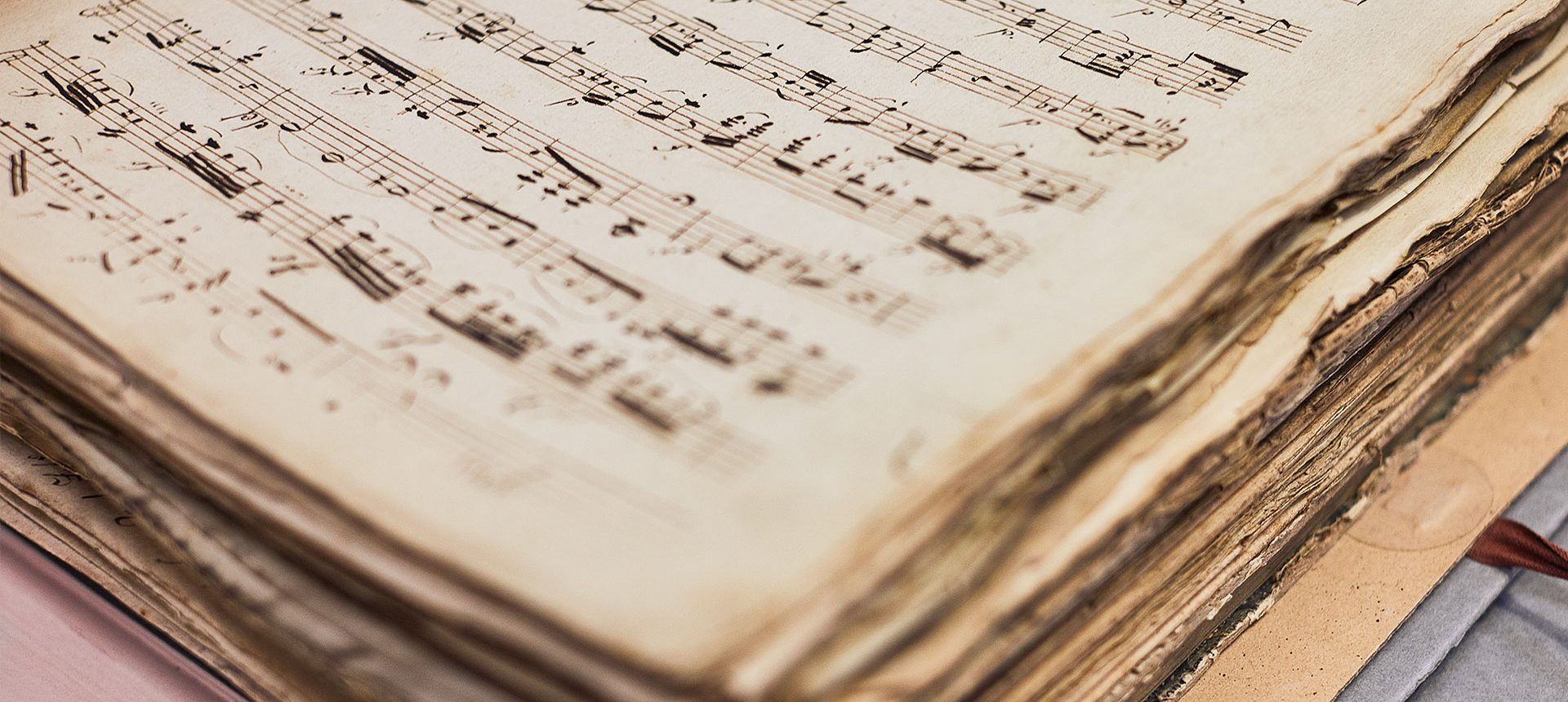
Here you can find almost anything about all the concerts Gothenburg Symphony has played over the years, both in the Concert Hall and on tour.
Search for conductors, soloists and other artists that has played together with us. Or search for composers and music that we have played. And filter on specific seasons. Guesting orchestras and ensembles are also included in the archive.
The result is presented by season.
In 1874, a major memorial exhibition of works by the artist and architect Victor Hartmann was held in St. Petersburg. The composer Mussorgsky, one of his closest friends, was so deeply moved by the paintings that he went home and composed his piano suite Pictures at an Exhibition. Unfortunately, the music was not published until five years after the composer's death, and it did not achieve true popularity until Ravel orchestrated it in 1922.
The suite consists, in effect, of musical depictions of paintings—some of which still survive today. It begins with a "Promenade," a melody that recurs in various forms between the movements, guiding the viewer from one painting to the next. The Promenade has been interpreted as a portrait of the portly composer himself, waddling through the exhibition. "Gnomus" depicts a nutcracker—a toy figure that cracks nuts with its jaws. *The Old Castle* portrays a medieval Italian castle with a singing troubadour standing before it. In Tuileries, we encounter children and their nannies playing in the Parisian park. "Bydlo" is an old Polish cart with enormous wheels, drawn by oxen.
"Ballet of the Unhatched Chicks" is a small sketch for a ballet; *Samuel Goldenberg and Schmuyle* depicts two Polish Jews—one rich, the other poor. In the marketplace at Limoges, we encounter French women passionately trying to haggle. In *Catacombs*, the artist himself is depicted holding a lantern at the entrance to the Paris catacombs. Baba Yaga was a witch from Russian folklore who lived in a hut—here rendered as a table clock. The finale is *The Great Gate of Kiev*, an unrealized architectural project for a triumphal arch. The music builds into a monumental tribute to the deceased friend.
Hearing this grandiose music, one might easily get the impression that the artworks themselves were masterpieces. In reality, however, they consist of rather simple sketches and small paintings. It was memories and emotions that inspired Mussorgsky—he likely even had one of Hartmann’s paintings hanging on his own wall.
Stig Jacobsson
Participants
The Gothenburg Symphony was formed in 1905 and today consists of 109 musicians. The orchestra's base is Gothenburg Concert Hall at Götaplatsen that has gathered music lovers since 1935. Since the 2019-2020 season, Barbara Hannigan is Principal guest conductor. We are also a proud partner of Barbara Hannigan's Equilibrium mentoring program focusing on young singers at the start of their careers. The title Principal Guest Conductor is shared by Pekka Kuusisto from 2025.
Wilhelm Stenhammar was the orchestra's chief conductor from 1907 to 1922. He gave the orchestra a strong Nordic profile and invited colleagues Carl Nielsen and Jean Sibelius to the orchestra. Under the direction of conductor Neeme Järvi from 1982-2004, the orchestra made a series of international tours as well as a hundred disc recordings and established themselves among Europe's leading orchestras. In 1996, the Swedish Riksdag appointed the Gothenburg Symphony as Sweden's National Orchestra.
In recent decades, the orchestra has had prominent chief conductors such as Santtu-Matias Rouvali, Mario Venzago and Gustavo Dudamel, following Kent Nagano as Principal Guest conductor. Anna-Karin Larsson is CEO and artistic director, Gustavo Dudamel honorary conductor and Neeme Järvi chief conductor emeritus. The orchestra's owner is the Västra Götaland Region.
The Gothenburg Symphony works regularly with conductors such as Herbert Blomstedt, Joana Carneiro, Jukka-Pekka Saraste, Christian Zacharias and Anja Bihlmaier.
The Estonian-born conductor Neeme Järvi is the Gothenburg Symphony Orchestra's Principal Conductor Emeritus. He conducts many of the world's most prominent orchestras and works with soloists of the highest class. During his long career, he has made over 450 disc recordings. Under Neeme Järvi's direction from 1982-2004, the Gothenburg Symphony made a series of international tours and made around a hundred disc recordings and established itself among Europe's leading orchestras.
Neeme Järvi became chief conductor of the Residentie Orkest in 2005, artistic director of the Estonian National Symphony Orchestra in 2009 and music director of the New Jersey Symphony Orchestra in 2005. He has also been artistic director of the Orchester de la Suisse Romande. He holds the titles of Music Director Emeritus of the Detroit Symphony Orchestra and Conductor Laureate of the Royal Scottish National Orchestra.
Throughout his career, Neeme Järvi has been honored with international honors and awards. In Estonia, these include an honorary doctorate at the Estonian Academy of Music in Tallinn, and the Order of the National Coat of Arms from the President of the Republic of Estonia. He has also received the Commander of the Order of the North Star from King Karl XVI Gustaf.
He most recently guested with the Gothenburg Symphony Orchestra in 2024 at the Hasselblad Concert, which was also recorded for GSOplay and Swedish Radio.
In 1874, a major memorial exhibition of works by the artist and architect Victor Hartmann was held in St. Petersburg. The composer Mussorgsky, one of his closest friends, was so deeply moved by the paintings that he went home and composed his piano suite Pictures at an Exhibition. Unfortunately, the music was not published until five years after the composer's death, and it did not achieve true popularity until Ravel orchestrated it in 1922.
The suite consists, in effect, of musical depictions of paintings—some of which still survive today. It begins with a "Promenade," a melody that recurs in various forms between the movements, guiding the viewer from one painting to the next. The Promenade has been interpreted as a portrait of the portly composer himself, waddling through the exhibition. "Gnomus" depicts a nutcracker—a toy figure that cracks nuts with its jaws. *The Old Castle* portrays a medieval Italian castle with a singing troubadour standing before it. In Tuileries, we encounter children and their nannies playing in the Parisian park. "Bydlo" is an old Polish cart with enormous wheels, drawn by oxen.
"Ballet of the Unhatched Chicks" is a small sketch for a ballet; *Samuel Goldenberg and Schmuyle* depicts two Polish Jews—one rich, the other poor. In the marketplace at Limoges, we encounter French women passionately trying to haggle. In *Catacombs*, the artist himself is depicted holding a lantern at the entrance to the Paris catacombs. Baba Yaga was a witch from Russian folklore who lived in a hut—here rendered as a table clock. The finale is *The Great Gate of Kiev*, an unrealized architectural project for a triumphal arch. The music builds into a monumental tribute to the deceased friend.
Hearing this grandiose music, one might easily get the impression that the artworks themselves were masterpieces. In reality, however, they consist of rather simple sketches and small paintings. It was memories and emotions that inspired Mussorgsky—he likely even had one of Hartmann’s paintings hanging on his own wall.
Stig Jacobsson
Participants
The Gothenburg Symphony was formed in 1905 and today consists of 109 musicians. The orchestra's base is Gothenburg Concert Hall at Götaplatsen that has gathered music lovers since 1935. Since the 2019-2020 season, Barbara Hannigan is Principal guest conductor. We are also a proud partner of Barbara Hannigan's Equilibrium mentoring program focusing on young singers at the start of their careers. The title Principal Guest Conductor is shared by Pekka Kuusisto from 2025.
Wilhelm Stenhammar was the orchestra's chief conductor from 1907 to 1922. He gave the orchestra a strong Nordic profile and invited colleagues Carl Nielsen and Jean Sibelius to the orchestra. Under the direction of conductor Neeme Järvi from 1982-2004, the orchestra made a series of international tours as well as a hundred disc recordings and established themselves among Europe's leading orchestras. In 1996, the Swedish Riksdag appointed the Gothenburg Symphony as Sweden's National Orchestra.
In recent decades, the orchestra has had prominent chief conductors such as Santtu-Matias Rouvali, Mario Venzago and Gustavo Dudamel, following Kent Nagano as Principal Guest conductor. Anna-Karin Larsson is CEO and artistic director, Gustavo Dudamel honorary conductor and Neeme Järvi chief conductor emeritus. The orchestra's owner is the Västra Götaland Region.
The Gothenburg Symphony works regularly with conductors such as Herbert Blomstedt, Joana Carneiro, Jukka-Pekka Saraste, Christian Zacharias and Anja Bihlmaier.
The Estonian-born conductor Neeme Järvi is the Gothenburg Symphony Orchestra's Principal Conductor Emeritus. He conducts many of the world's most prominent orchestras and works with soloists of the highest class. During his long career, he has made over 450 disc recordings. Under Neeme Järvi's direction from 1982-2004, the Gothenburg Symphony made a series of international tours and made around a hundred disc recordings and established itself among Europe's leading orchestras.
Neeme Järvi became chief conductor of the Residentie Orkest in 2005, artistic director of the Estonian National Symphony Orchestra in 2009 and music director of the New Jersey Symphony Orchestra in 2005. He has also been artistic director of the Orchester de la Suisse Romande. He holds the titles of Music Director Emeritus of the Detroit Symphony Orchestra and Conductor Laureate of the Royal Scottish National Orchestra.
Throughout his career, Neeme Järvi has been honored with international honors and awards. In Estonia, these include an honorary doctorate at the Estonian Academy of Music in Tallinn, and the Order of the National Coat of Arms from the President of the Republic of Estonia. He has also received the Commander of the Order of the North Star from King Karl XVI Gustaf.
He most recently guested with the Gothenburg Symphony Orchestra in 2024 at the Hasselblad Concert, which was also recorded for GSOplay and Swedish Radio.
The Gothenburg Symphony was formed in 1905 and today consists of 109 musicians. The orchestra's base is Gothenburg Concert Hall at Götaplatsen that has gathered music lovers since 1935. Since the 2019-2020 season, Barbara Hannigan is Principal guest conductor. We are also a proud partner of Barbara Hannigan's Equilibrium mentoring program focusing on young singers at the start of their careers. The title Principal Guest Conductor is shared by Pekka Kuusisto from 2025.
Wilhelm Stenhammar was the orchestra's chief conductor from 1907 to 1922. He gave the orchestra a strong Nordic profile and invited colleagues Carl Nielsen and Jean Sibelius to the orchestra. Under the direction of conductor Neeme Järvi from 1982-2004, the orchestra made a series of international tours as well as a hundred disc recordings and established themselves among Europe's leading orchestras. In 1996, the Swedish Riksdag appointed the Gothenburg Symphony as Sweden's National Orchestra.
In recent decades, the orchestra has had prominent chief conductors such as Santtu-Matias Rouvali, Mario Venzago and Gustavo Dudamel, following Kent Nagano as Principal Guest conductor. Anna-Karin Larsson is CEO and artistic director, Gustavo Dudamel honorary conductor and Neeme Järvi chief conductor emeritus. The orchestra's owner is the Västra Götaland Region.
The Gothenburg Symphony works regularly with conductors such as Herbert Blomstedt, Joana Carneiro, Jukka-Pekka Saraste, Christian Zacharias and Anja Bihlmaier.
Allegro con brio
Largo
Rondo: Allegro
The first sketches for the Third Piano Concerto can be dated to 1797, when Beethoven was greatly inspired by listening to a performance of Mozart's Piano Concerto No. 24 in the same key. The handwritten manuscript is dated 1800, but he continued to refine the design until early 1803.
The first performance of the Third Piano Concerto took place on 5 April 1803 at the Theater an der Wien. A newspaper article states that Beethoven did not receive a particularly long applause, even though he had gathered all his most devoted admirers for the evening. The reason is that he was already beginning to be regarded as a strange scoundrel. Beethoven's pupil Ferdinand Ries reported that Beethoven played the solo part in the Piano Concerto in good spirits, but that many notes "fell under the table". When it came to the composition itself, however, Ries believed that no composer he knew even came close to the master - and we are still willing to agree today.
Despite its serious key, Beethoven's Third Piano Concerto is not a grand and tragic drama, unlike his other works in C minor (for example, Symphony No. 5, the Symphony of Fate). On the contrary, this concerto has a classically clear structure. The largo in particular is transparently simple and butterfly-like. The outward-looking final rondo, on the other hand, is more concerned with sharp shifts between both emotions and keys.
The Gothenburg Symphony was formed in 1905 and today consists of 109 musicians. The orchestra's base is Gothenburg Concert Hall at Götaplatsen that has gathered music lovers since 1935. Since the 2019-2020 season, Barbara Hannigan is Principal guest conductor. We are also a proud partner of Barbara Hannigan's Equilibrium mentoring program focusing on young singers at the start of their careers. The title Principal Guest Conductor is shared by Pekka Kuusisto from 2025.
Wilhelm Stenhammar was the orchestra's chief conductor from 1907 to 1922. He gave the orchestra a strong Nordic profile and invited colleagues Carl Nielsen and Jean Sibelius to the orchestra. Under the direction of conductor Neeme Järvi from 1982-2004, the orchestra made a series of international tours as well as a hundred disc recordings and established themselves among Europe's leading orchestras. In 1996, the Swedish Riksdag appointed the Gothenburg Symphony as Sweden's National Orchestra.
In recent decades, the orchestra has had prominent chief conductors such as Santtu-Matias Rouvali, Mario Venzago and Gustavo Dudamel, following Kent Nagano as Principal Guest conductor. Anna-Karin Larsson is CEO and artistic director, Gustavo Dudamel honorary conductor and Neeme Järvi chief conductor emeritus. The orchestra's owner is the Västra Götaland Region.
The Gothenburg Symphony works regularly with conductors such as Herbert Blomstedt, Joana Carneiro, Jukka-Pekka Saraste, Christian Zacharias and Anja Bihlmaier.
Allegro
Larghetto
Allegretto
At the beginning of 1786, Mozart worked most intensively on the opera buffa The Marriage of Figaro. But as always, the work was interrupted now and then by other commissions and by other works that were begging to be written down. Mozart himself probably premiered his 24th piano concerto on April 7 at the Burgtheater in Vienna. After this very personal and open-hearted music, he was able to return to the comedy in Figaro and complete the opera without further interruptions.
The main theme in the first movement is presented in unison in the orchestra and is allowed to play the role of a kind of chorus throughout the movement. When the piano enters, it takes up another theme, which nevertheless shows a certain kinship. Mozart had only used this method once before, and that was in the Piano Concerto in D minor, No. 20. He did not write any more concertos in minor! This first movement is more symphonic than concertante, and the orchestra is the largest that Mozart prescribed in both concerto and symphony contexts. To this challenge, the easy larghetto stands out as a bright contrast, even if the attentive listener notices the tears behind the smile.
The Royal Philharmonic Orchestra was founded in 1902 and Stockholm Concert Hall has been the orchestra's home since 1926. Chief conductor since 2023 is award-winning American Ryan Bancroft. Among the guest conductors are greats such as Riccardo Muti, Andris Nelsons, Herbert Blomstedt, Nathalie Stutzmann, Gianandrea Noseda and honorary conductors Sakari Oramo and Alan Gilbert. Sakari Oramo was the orchestra's chief conductor in the years 2008–2021. Together, over the years, they gained a lot of attention for both recordings and international tours. The German daily Die Welt described the Royal Philharmonic as "one of the world's best orchestras".
The Royal Philharmonic has received a lot of attention for its recordings. Among these can be mentioned Carl Nielsen's six symphonies on three CDs (BIS), which were praised by critics worldwide and the CD with symphonies no. 1 and 3 was awarded the BBC Music Magazine Award for best classical orchestral production. Two CDs with recordings of Anders Hillborg's music have both been awarded Grammis, and they have also released a CD with the American star soprano Renée Fleming. The recording of Nielsen's and Sibelius' violin concertos together with Johan Dalene was awarded a Grammis in 2023.
Herbert Blomstedt, born in 1927, continues to be one of the world's most sought-after conductors. He has been a regular and much appreciated guest conductor with the Gothenburg Symphony since 1954 and is also named an honorary symphony conductor. His work as a conductor is inextricably linked to his religious and human ethos, and his interpretations combine great fidelity to the score and analytical precision. In the more than sixty years of his career, he has acquired the unrestricted respect of the musical world.
Born in the USA to Swedish parents and educated in Uppsala, New York, Darmstadt and Basel, Herbert Blomstedt made his debut as a conductor in 1954 with the Stockholm Philharmonic Orchestra and was subsequently chief conductor of the Oslo Philharmonic, the Swedish and Danish Radio symphony orchestras and the Staatskapelle Dresden. During his career, Herbert Blomstedt has been chief conductor of the Gewandhaus Orchestra in Leipzig, the NDR Orchestra in Hamburg and the San Francisco Symphony Orchestra. He has appeared with all the major orchestras, including the Berlin Philharmonic, the Boston and Chicago Symphony Orchestras, the Concertgebouw Orchestra, the New York Philharmonic, the Bavarian Radio Symphony Orchestra and the Vienna Philharmonic. Herbert Blomstedt's discography includes hundreds of recordings. Among his later releases are Stenhammar's Serenade and Symphony No. 2 with the Gothenburg Symphony (BIS).
Herbert Blomstedt holds several Honorary Doctorates and is an elected member of the Royal Swedish Music Academy. He continues to be at the helm of all leading international orchestras with enormous presence, verve and artistic drive.
The Gothenburg Symphony was formed in 1905 and today consists of 109 musicians. The orchestra's base is Gothenburg Concert Hall at Götaplatsen that has gathered music lovers since 1935. Since the 2019-2020 season, Barbara Hannigan is Principal guest conductor. We are also a proud partner of Barbara Hannigan's Equilibrium mentoring program focusing on young singers at the start of their careers. The title Principal Guest Conductor is shared by Pekka Kuusisto from 2025.
Wilhelm Stenhammar was the orchestra's chief conductor from 1907 to 1922. He gave the orchestra a strong Nordic profile and invited colleagues Carl Nielsen and Jean Sibelius to the orchestra. Under the direction of conductor Neeme Järvi from 1982-2004, the orchestra made a series of international tours as well as a hundred disc recordings and established themselves among Europe's leading orchestras. In 1996, the Swedish Riksdag appointed the Gothenburg Symphony as Sweden's National Orchestra.
In recent decades, the orchestra has had prominent chief conductors such as Santtu-Matias Rouvali, Mario Venzago and Gustavo Dudamel, following Kent Nagano as Principal Guest conductor. Anna-Karin Larsson is CEO and artistic director, Gustavo Dudamel honorary conductor and Neeme Järvi chief conductor emeritus. The orchestra's owner is the Västra Götaland Region.
The Gothenburg Symphony works regularly with conductors such as Herbert Blomstedt, Joana Carneiro, Jukka-Pekka Saraste, Christian Zacharias and Anja Bihlmaier.
In fact, this is Dvorák's second cello concerto. The first in A major (1865) was a youthful work that he never orchestrated. He filled his new concerto with an overwhelming romanticism, not only through the expressive use of the solo instrument, but also the colorful orchestral palette in which the winds play a major role.
The concerto is dedicated to his friend Hanuš Wihan, cellist of the Czech Quartet, who wanted to make some changes at the end. Dvorák wrote to the publisher: "I must insist that the work be printed as I wrote it!" Wihan took offense and entrusted the premiere in London on March 19, 1896 to Leo Stern.
Over time, Dvorák reconciled with Wihan and they often performed the concerto together. The reason why Dvorák did not want to change anything in the final movement was purely personal. Returning to Bohemia, he had been reached by the news that a dear sister-in-law had died. He remembered that he had quoted one of her favorite melodies in Four Songs, and he now also included parts of the song in the coda.
To emphasize the importance of the work, the cello concerto has sometimes been called "Dvorák's tenth symphony". And Brahms asked himself: "Why on earth did I not know that such a cello concerto could be written?" The musically mature and magnificent concerto is a real test of mastery for the soloist.
The Gothenburg Symphony was formed in 1905 and today consists of 109 musicians. The orchestra's base is Gothenburg Concert Hall at Götaplatsen that has gathered music lovers since 1935. Since the 2019-2020 season, Barbara Hannigan is Principal guest conductor. We are also a proud partner of Barbara Hannigan's Equilibrium mentoring program focusing on young singers at the start of their careers. The title Principal Guest Conductor is shared by Pekka Kuusisto from 2025.
Wilhelm Stenhammar was the orchestra's chief conductor from 1907 to 1922. He gave the orchestra a strong Nordic profile and invited colleagues Carl Nielsen and Jean Sibelius to the orchestra. Under the direction of conductor Neeme Järvi from 1982-2004, the orchestra made a series of international tours as well as a hundred disc recordings and established themselves among Europe's leading orchestras. In 1996, the Swedish Riksdag appointed the Gothenburg Symphony as Sweden's National Orchestra.
In recent decades, the orchestra has had prominent chief conductors such as Santtu-Matias Rouvali, Mario Venzago and Gustavo Dudamel, following Kent Nagano as Principal Guest conductor. Anna-Karin Larsson is CEO and artistic director, Gustavo Dudamel honorary conductor and Neeme Järvi chief conductor emeritus. The orchestra's owner is the Västra Götaland Region.
The Gothenburg Symphony works regularly with conductors such as Herbert Blomstedt, Joana Carneiro, Jukka-Pekka Saraste, Christian Zacharias and Anja Bihlmaier.
Franz Schubert (1797-1828)
Symphony No. 5 D. 485
No great composer received as little international attention during his lifetime as Schubert. When he died, aged 31, he was practically unknown outside Vienna, and in Vienna he was best known for his songs. Schubert's vocal singing style is also found in his instrumental compositions.
Franz Schubert's Fifth Symphony, without trumpets and timpani, is a youthful masterpiece – written when he was 19. The work carries a lightness, elegance and luminosity. Mozart had been dead for 25 years and his music was more popular than ever. For a young composer, Mozart was the model to emulate. Symphony No. 5 is a chamber symphonic gem in which every instrument is allowed to breathe. Parts of the melody echo in the lower instruments as accompaniment, a technique that can be heard throughout the symphony's four movements. The opening Allegro movement bubbles with energy, and the finale after the minuet sparkles with playful brilliance. The slow second movement is perhaps the most original. The singable melodies (cantilenas) carry an operatic calm. The duet between violins and woodwinds has a dreamy sharpness.
A couple of months before the work was completed (1816), Schubert wrote in his diary: "O Mozart, immortal Mozart! What countless impressions, of a brighter and better life, you have stamped on our souls."
The Gothenburg Symphony was formed in 1905 and today consists of 109 musicians. The orchestra's base is Gothenburg Concert Hall at Götaplatsen that has gathered music lovers since 1935. Since the 2019-2020 season, Barbara Hannigan is Principal guest conductor. We are also a proud partner of Barbara Hannigan's Equilibrium mentoring program focusing on young singers at the start of their careers. The title Principal Guest Conductor is shared by Pekka Kuusisto from 2025.
Wilhelm Stenhammar was the orchestra's chief conductor from 1907 to 1922. He gave the orchestra a strong Nordic profile and invited colleagues Carl Nielsen and Jean Sibelius to the orchestra. Under the direction of conductor Neeme Järvi from 1982-2004, the orchestra made a series of international tours as well as a hundred disc recordings and established themselves among Europe's leading orchestras. In 1996, the Swedish Riksdag appointed the Gothenburg Symphony as Sweden's National Orchestra.
In recent decades, the orchestra has had prominent chief conductors such as Santtu-Matias Rouvali, Mario Venzago and Gustavo Dudamel, following Kent Nagano as Principal Guest conductor. Anna-Karin Larsson is CEO and artistic director, Gustavo Dudamel honorary conductor and Neeme Järvi chief conductor emeritus. The orchestra's owner is the Västra Götaland Region.
The Gothenburg Symphony works regularly with conductors such as Herbert Blomstedt, Joana Carneiro, Jukka-Pekka Saraste, Christian Zacharias and Anja Bihlmaier.
In 1874, a major memorial exhibition of works by the artist and architect Victor Hartmann was held in St. Petersburg. The composer Mussorgsky, one of his closest friends, was so deeply moved by the paintings that he went home and composed his piano suite Pictures at an Exhibition. Unfortunately, the music was not published until five years after the composer's death, and it did not achieve true popularity until Ravel orchestrated it in 1922.
The suite consists, in effect, of musical depictions of paintings—some of which still survive today. It begins with a "Promenade," a melody that recurs in various forms between the movements, guiding the viewer from one painting to the next. The Promenade has been interpreted as a portrait of the portly composer himself, waddling through the exhibition. "Gnomus" depicts a nutcracker—a toy figure that cracks nuts with its jaws. *The Old Castle* portrays a medieval Italian castle with a singing troubadour standing before it. In Tuileries, we encounter children and their nannies playing in the Parisian park. "Bydlo" is an old Polish cart with enormous wheels, drawn by oxen.
"Ballet of the Unhatched Chicks" is a small sketch for a ballet; *Samuel Goldenberg and Schmuyle* depicts two Polish Jews—one rich, the other poor. In the marketplace at Limoges, we encounter French women passionately trying to haggle. In *Catacombs*, the artist himself is depicted holding a lantern at the entrance to the Paris catacombs. Baba Yaga was a witch from Russian folklore who lived in a hut—here rendered as a table clock. The finale is *The Great Gate of Kiev*, an unrealized architectural project for a triumphal arch. The music builds into a monumental tribute to the deceased friend.
Hearing this grandiose music, one might easily get the impression that the artworks themselves were masterpieces. In reality, however, they consist of rather simple sketches and small paintings. It was memories and emotions that inspired Mussorgsky—he likely even had one of Hartmann’s paintings hanging on his own wall.
Stig Jacobsson
The Gothenburg Symphony was formed in 1905 and today consists of 109 musicians. The orchestra's base is Gothenburg Concert Hall at Götaplatsen that has gathered music lovers since 1935. Since the 2019-2020 season, Barbara Hannigan is Principal guest conductor. We are also a proud partner of Barbara Hannigan's Equilibrium mentoring program focusing on young singers at the start of their careers. The title Principal Guest Conductor is shared by Pekka Kuusisto from 2025.
Wilhelm Stenhammar was the orchestra's chief conductor from 1907 to 1922. He gave the orchestra a strong Nordic profile and invited colleagues Carl Nielsen and Jean Sibelius to the orchestra. Under the direction of conductor Neeme Järvi from 1982-2004, the orchestra made a series of international tours as well as a hundred disc recordings and established themselves among Europe's leading orchestras. In 1996, the Swedish Riksdag appointed the Gothenburg Symphony as Sweden's National Orchestra.
In recent decades, the orchestra has had prominent chief conductors such as Santtu-Matias Rouvali, Mario Venzago and Gustavo Dudamel, following Kent Nagano as Principal Guest conductor. Anna-Karin Larsson is CEO and artistic director, Gustavo Dudamel honorary conductor and Neeme Järvi chief conductor emeritus. The orchestra's owner is the Västra Götaland Region.
The Gothenburg Symphony works regularly with conductors such as Herbert Blomstedt, Joana Carneiro, Jukka-Pekka Saraste, Christian Zacharias and Anja Bihlmaier.