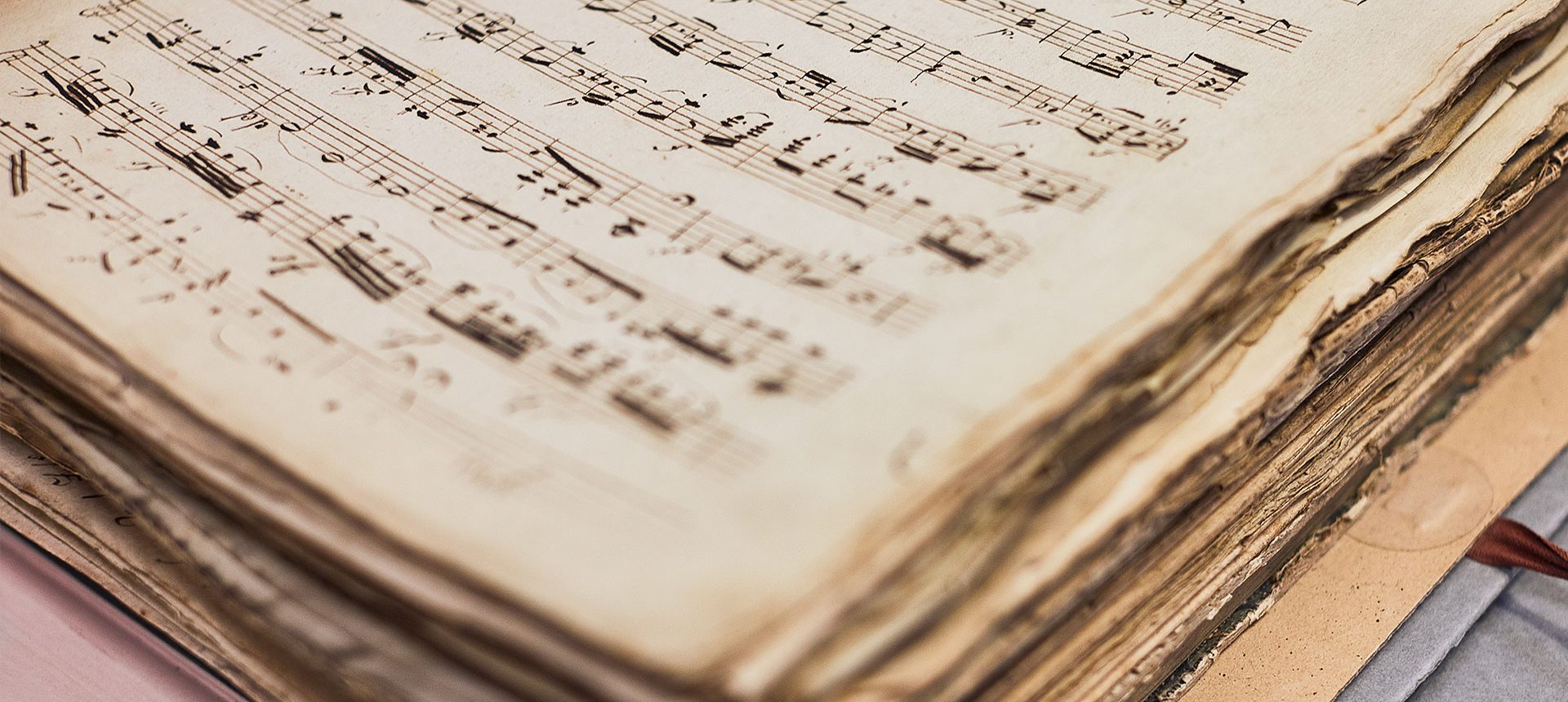
Here you can find almost anything about all the concerts Gothenburg Symphony has played over the years, both in the Concert Hall and on tour.
Search for conductors, soloists and other artists that has played together with us. Or search for composers and music that we have played. And filter on specific seasons. Guesting orchestras and ensembles are also included in the archive.
The result is presented by season.
Felix Mendelssohn (1809-1847)
Violin Concerto E minor
Allegro molto appassionato
Andante
Allegretto non troppo. Allegro molto vivace
Felix Mendelssohn came from a German-Jewish family and as a composer strove to reconcile issues of spirituality and religious tolerance within society, and within himself. The Violin Concerto in E minor was written for the soloist Ferdinand David. However, the wait was six years before the premiere could take place in Leipzig on March 13, 1845 with David and the Gewandhaus Orchestra. New was the transition to the second movement without a break, as well as the fact that the soloist took up the opening theme, not the orchestra, and that a solo cadenza came already in the introduction - something that Sibelius and Tchaikovsky would also follow. The success was immediate. But in Nazi Germany, Mendelssohn's greatness was denied and his name was erased from public life.
Participants
The Gothenburg Symphony was formed in 1905 and today consists of 109 musicians. The orchestra's base is Gothenburg Concert Hall at Götaplatsen that has gathered music lovers since 1935. Since the 2019-2020 season, Barbara Hannigan is Principal guest conductor. We are also a proud partner of Barbara Hannigan's Equilibrium mentoring program focusing on young singers at the start of their careers. The title Principal Guest Conductor is shared by Pekka Kuusisto from 2025.
Wilhelm Stenhammar was the orchestra's chief conductor from 1907 to 1922. He gave the orchestra a strong Nordic profile and invited colleagues Carl Nielsen and Jean Sibelius to the orchestra. Under the direction of conductor Neeme Järvi from 1982-2004, the orchestra made a series of international tours as well as a hundred disc recordings and established themselves among Europe's leading orchestras. In 1996, the Swedish Riksdag appointed the Gothenburg Symphony as Sweden's National Orchestra.
In recent decades, the orchestra has had prominent chief conductors such as Santtu-Matias Rouvali, Mario Venzago and Gustavo Dudamel, following Kent Nagano as Principal Guest conductor. Anna-Karin Larsson is CEO and artistic director, Gustavo Dudamel honorary conductor and Neeme Järvi chief conductor emeritus. The orchestra's owner is the Västra Götaland Region.
The Gothenburg Symphony works regularly with conductors such as Herbert Blomstedt, Joana Carneiro, Jukka-Pekka Saraste, Christian Zacharias and Anja Bihlmaier.
Felix Mendelssohn (1809-1847)
Violin Concerto E minor
Allegro molto appassionato
Andante
Allegretto non troppo. Allegro molto vivace
Felix Mendelssohn came from a German-Jewish family and as a composer strove to reconcile issues of spirituality and religious tolerance within society, and within himself. The Violin Concerto in E minor was written for the soloist Ferdinand David. However, the wait was six years before the premiere could take place in Leipzig on March 13, 1845 with David and the Gewandhaus Orchestra. New was the transition to the second movement without a break, as well as the fact that the soloist took up the opening theme, not the orchestra, and that a solo cadenza came already in the introduction - something that Sibelius and Tchaikovsky would also follow. The success was immediate. But in Nazi Germany, Mendelssohn's greatness was denied and his name was erased from public life.
The Gothenburg Symphony was formed in 1905 and today consists of 109 musicians. The orchestra's base is Gothenburg Concert Hall at Götaplatsen that has gathered music lovers since 1935. Since the 2019-2020 season, Barbara Hannigan is Principal guest conductor. We are also a proud partner of Barbara Hannigan's Equilibrium mentoring program focusing on young singers at the start of their careers. The title Principal Guest Conductor is shared by Pekka Kuusisto from 2025.
Wilhelm Stenhammar was the orchestra's chief conductor from 1907 to 1922. He gave the orchestra a strong Nordic profile and invited colleagues Carl Nielsen and Jean Sibelius to the orchestra. Under the direction of conductor Neeme Järvi from 1982-2004, the orchestra made a series of international tours as well as a hundred disc recordings and established themselves among Europe's leading orchestras. In 1996, the Swedish Riksdag appointed the Gothenburg Symphony as Sweden's National Orchestra.
In recent decades, the orchestra has had prominent chief conductors such as Santtu-Matias Rouvali, Mario Venzago and Gustavo Dudamel, following Kent Nagano as Principal Guest conductor. Anna-Karin Larsson is CEO and artistic director, Gustavo Dudamel honorary conductor and Neeme Järvi chief conductor emeritus. The orchestra's owner is the Västra Götaland Region.
The Gothenburg Symphony works regularly with conductors such as Herbert Blomstedt, Joana Carneiro, Jukka-Pekka Saraste, Christian Zacharias and Anja Bihlmaier.
Lars-Erik Larsson (1908-1986)
Pastoral Suite
Overture - Romance - Scherzo
Lars-Erik Larsson made his debut in Stockholm at the age of 20 and became one of Sweden's most popular composers. The Pastoral Suite was composed in the autumn of 1938 for the programme "Moments of the Day" on Swedish Radio, where Larsson was conductor. He originally wrote six movements, three of which have been retained in the suite. The overture has a slow introduction and a subsequent longer allegro in the composer's typical easygoing, rhythmically varied style. Then the romance, the most frequently performed movement, which is singable with great melodic beauty. Finally, a lively and graceful scherzo. The suite is scored for double woodwinds, two horns, two trumpets, timpani and strings, while the middle movement is for strings only.
Felix Mendelssohn (1809-1847)
Violin Concerto E minor
Allegro molto appassionato
Andante
Allegretto non troppo. Allegro molto vivace
Felix Mendelssohn came from a German-Jewish family and as a composer strove to reconcile issues of spirituality and religious tolerance within society, and within himself. The Violin Concerto in E minor was written for the soloist Ferdinand David. However, the wait was six years before the premiere could take place in Leipzig on March 13, 1845 with David and the Gewandhaus Orchestra. New was the transition to the second movement without a break, as well as the fact that the soloist took up the opening theme, not the orchestra, and that a solo cadenza came already in the introduction - something that Sibelius and Tchaikovsky would also follow. The success was immediate. But in Nazi Germany, Mendelssohn's greatness was denied and his name was erased from public life.
Participants
The Gothenburg Symphony was formed in 1905 and today consists of 109 musicians. The orchestra's base is Gothenburg Concert Hall at Götaplatsen that has gathered music lovers since 1935. Since the 2019-2020 season, Barbara Hannigan is Principal guest conductor. We are also a proud partner of Barbara Hannigan's Equilibrium mentoring program focusing on young singers at the start of their careers. The title Principal Guest Conductor is shared by Pekka Kuusisto from 2025.
Wilhelm Stenhammar was the orchestra's chief conductor from 1907 to 1922. He gave the orchestra a strong Nordic profile and invited colleagues Carl Nielsen and Jean Sibelius to the orchestra. Under the direction of conductor Neeme Järvi from 1982-2004, the orchestra made a series of international tours as well as a hundred disc recordings and established themselves among Europe's leading orchestras. In 1996, the Swedish Riksdag appointed the Gothenburg Symphony as Sweden's National Orchestra.
In recent decades, the orchestra has had prominent chief conductors such as Santtu-Matias Rouvali, Mario Venzago and Gustavo Dudamel, following Kent Nagano as Principal Guest conductor. Anna-Karin Larsson is CEO and artistic director, Gustavo Dudamel honorary conductor and Neeme Järvi chief conductor emeritus. The orchestra's owner is the Västra Götaland Region.
The Gothenburg Symphony works regularly with conductors such as Herbert Blomstedt, Joana Carneiro, Jukka-Pekka Saraste, Christian Zacharias and Anja Bihlmaier.
Ludwig van Beethoven's First Symphony, written in 1799-1800, is not a tentative attempt by some inexperienced and immature composer. No, Beethoven had long been known as one of the foremost pianists and improvisers of his time, and his compositions had already received considerable attention. He had managed to write two piano concertos, eleven piano sonatas and six string quartets - to name a few. But on the other hand, he was not as bold as he might have been in some of his chamber music works.
The critics nevertheless thought that the symphony was generally good and that it offered many novelties and "a whole world of ideas". "But too many wind instruments were used, so it sounded more like a brass band than an orchestra". 200 years later, we find the symphony both clear and concise, conventional and strongly related to the symphonies of Mozart and Haydn. But we also notice that there is something more here - a strong personal touch. The driving spirit is not borrowed, it is Beethoven's own signature.
Felix Mendelssohn (1809-1847)
Violin Concerto E minor
Allegro molto appassionato
Andante
Allegretto non troppo. Allegro molto vivace
Felix Mendelssohn came from a German-Jewish family and as a composer strove to reconcile issues of spirituality and religious tolerance within society, and within himself. The Violin Concerto in E minor was written for the soloist Ferdinand David. However, the wait was six years before the premiere could take place in Leipzig on March 13, 1845 with David and the Gewandhaus Orchestra. New was the transition to the second movement without a break, as well as the fact that the soloist took up the opening theme, not the orchestra, and that a solo cadenza came already in the introduction - something that Sibelius and Tchaikovsky would also follow. The success was immediate. But in Nazi Germany, Mendelssohn's greatness was denied and his name was erased from public life.
Participants
The Gothenburg Symphony was formed in 1905 and today consists of 109 musicians. The orchestra's base is Gothenburg Concert Hall at Götaplatsen that has gathered music lovers since 1935. Since the 2019-2020 season, Barbara Hannigan is Principal guest conductor. We are also a proud partner of Barbara Hannigan's Equilibrium mentoring program focusing on young singers at the start of their careers. The title Principal Guest Conductor is shared by Pekka Kuusisto from 2025.
Wilhelm Stenhammar was the orchestra's chief conductor from 1907 to 1922. He gave the orchestra a strong Nordic profile and invited colleagues Carl Nielsen and Jean Sibelius to the orchestra. Under the direction of conductor Neeme Järvi from 1982-2004, the orchestra made a series of international tours as well as a hundred disc recordings and established themselves among Europe's leading orchestras. In 1996, the Swedish Riksdag appointed the Gothenburg Symphony as Sweden's National Orchestra.
In recent decades, the orchestra has had prominent chief conductors such as Santtu-Matias Rouvali, Mario Venzago and Gustavo Dudamel, following Kent Nagano as Principal Guest conductor. Anna-Karin Larsson is CEO and artistic director, Gustavo Dudamel honorary conductor and Neeme Järvi chief conductor emeritus. The orchestra's owner is the Västra Götaland Region.
The Gothenburg Symphony works regularly with conductors such as Herbert Blomstedt, Joana Carneiro, Jukka-Pekka Saraste, Christian Zacharias and Anja Bihlmaier.
Felix Mendelssohn (1809-1847)
Violin Concerto E minor
Allegro molto appassionato
Andante
Allegretto non troppo. Allegro molto vivace
Felix Mendelssohn came from a German-Jewish family and as a composer strove to reconcile issues of spirituality and religious tolerance within society, and within himself. The Violin Concerto in E minor was written for the soloist Ferdinand David. However, the wait was six years before the premiere could take place in Leipzig on March 13, 1845 with David and the Gewandhaus Orchestra. New was the transition to the second movement without a break, as well as the fact that the soloist took up the opening theme, not the orchestra, and that a solo cadenza came already in the introduction - something that Sibelius and Tchaikovsky would also follow. The success was immediate. But in Nazi Germany, Mendelssohn's greatness was denied and his name was erased from public life.
The Gothenburg Symphony was formed in 1905 and today consists of 109 musicians. The orchestra's base is Gothenburg Concert Hall at Götaplatsen that has gathered music lovers since 1935. Since the 2019-2020 season, Barbara Hannigan is Principal guest conductor. We are also a proud partner of Barbara Hannigan's Equilibrium mentoring program focusing on young singers at the start of their careers. The title Principal Guest Conductor is shared by Pekka Kuusisto from 2025.
Wilhelm Stenhammar was the orchestra's chief conductor from 1907 to 1922. He gave the orchestra a strong Nordic profile and invited colleagues Carl Nielsen and Jean Sibelius to the orchestra. Under the direction of conductor Neeme Järvi from 1982-2004, the orchestra made a series of international tours as well as a hundred disc recordings and established themselves among Europe's leading orchestras. In 1996, the Swedish Riksdag appointed the Gothenburg Symphony as Sweden's National Orchestra.
In recent decades, the orchestra has had prominent chief conductors such as Santtu-Matias Rouvali, Mario Venzago and Gustavo Dudamel, following Kent Nagano as Principal Guest conductor. Anna-Karin Larsson is CEO and artistic director, Gustavo Dudamel honorary conductor and Neeme Järvi chief conductor emeritus. The orchestra's owner is the Västra Götaland Region.
The Gothenburg Symphony works regularly with conductors such as Herbert Blomstedt, Joana Carneiro, Jukka-Pekka Saraste, Christian Zacharias and Anja Bihlmaier.
Felix Mendelssohn (1809-1847)
Violin Concerto E minor
Allegro molto appassionato
Andante
Allegretto non troppo. Allegro molto vivace
Felix Mendelssohn came from a German-Jewish family and as a composer strove to reconcile issues of spirituality and religious tolerance within society, and within himself. The Violin Concerto in E minor was written for the soloist Ferdinand David. However, the wait was six years before the premiere could take place in Leipzig on March 13, 1845 with David and the Gewandhaus Orchestra. New was the transition to the second movement without a break, as well as the fact that the soloist took up the opening theme, not the orchestra, and that a solo cadenza came already in the introduction - something that Sibelius and Tchaikovsky would also follow. The success was immediate. But in Nazi Germany, Mendelssohn's greatness was denied and his name was erased from public life.
The Gothenburg Symphony was formed in 1905 and today consists of 109 musicians. The orchestra's base is Gothenburg Concert Hall at Götaplatsen that has gathered music lovers since 1935. Since the 2019-2020 season, Barbara Hannigan is Principal guest conductor. We are also a proud partner of Barbara Hannigan's Equilibrium mentoring program focusing on young singers at the start of their careers. The title Principal Guest Conductor is shared by Pekka Kuusisto from 2025.
Wilhelm Stenhammar was the orchestra's chief conductor from 1907 to 1922. He gave the orchestra a strong Nordic profile and invited colleagues Carl Nielsen and Jean Sibelius to the orchestra. Under the direction of conductor Neeme Järvi from 1982-2004, the orchestra made a series of international tours as well as a hundred disc recordings and established themselves among Europe's leading orchestras. In 1996, the Swedish Riksdag appointed the Gothenburg Symphony as Sweden's National Orchestra.
In recent decades, the orchestra has had prominent chief conductors such as Santtu-Matias Rouvali, Mario Venzago and Gustavo Dudamel, following Kent Nagano as Principal Guest conductor. Anna-Karin Larsson is CEO and artistic director, Gustavo Dudamel honorary conductor and Neeme Järvi chief conductor emeritus. The orchestra's owner is the Västra Götaland Region.
The Gothenburg Symphony works regularly with conductors such as Herbert Blomstedt, Joana Carneiro, Jukka-Pekka Saraste, Christian Zacharias and Anja Bihlmaier.
Felix Mendelssohn (1809-1847)
Violin Concerto E minor
Allegro molto appassionato
Andante
Allegretto non troppo. Allegro molto vivace
Felix Mendelssohn came from a German-Jewish family and as a composer strove to reconcile issues of spirituality and religious tolerance within society, and within himself. The Violin Concerto in E minor was written for the soloist Ferdinand David. However, the wait was six years before the premiere could take place in Leipzig on March 13, 1845 with David and the Gewandhaus Orchestra. New was the transition to the second movement without a break, as well as the fact that the soloist took up the opening theme, not the orchestra, and that a solo cadenza came already in the introduction - something that Sibelius and Tchaikovsky would also follow. The success was immediate. But in Nazi Germany, Mendelssohn's greatness was denied and his name was erased from public life.
Not all composers write their most famous works when they are 19 years old. One who did was George Enescu with his two Romanian Rhapsodies from 1901. They accompanied him throughout his life. In his later years, he is said to have lamented how they overshadowed his other music.
Enescu came from Romania and was a bit of a master at everything he did. It has been said of his memory that he could recreate all of Beethoven's works if they were lost. He picked up the term rhapsody from Liszt's Hungarian Rhapsodies. It is a title that signals spontaneity, improvisation and movement. But also that different parts have been joined together.
In the rhapsodies, Enescu portrayed a romantic image of his homeland. The first begins with the folk song “Am un leu” which is said to have been the first Enescu learned at the age of 4. After the calm introduction, the piece bursts into lively dances. The piece depicts peasants stamping and hooting at an increasingly fast pace. It is an exotic dream image of a world that may have been – but is no longer.
Participants
The Gothenburg Symphony was formed in 1905 and today consists of 109 musicians. The orchestra's base is Gothenburg Concert Hall at Götaplatsen that has gathered music lovers since 1935. Since the 2019-2020 season, Barbara Hannigan is Principal guest conductor. We are also a proud partner of Barbara Hannigan's Equilibrium mentoring program focusing on young singers at the start of their careers. The title Principal Guest Conductor is shared by Pekka Kuusisto from 2025.
Wilhelm Stenhammar was the orchestra's chief conductor from 1907 to 1922. He gave the orchestra a strong Nordic profile and invited colleagues Carl Nielsen and Jean Sibelius to the orchestra. Under the direction of conductor Neeme Järvi from 1982-2004, the orchestra made a series of international tours as well as a hundred disc recordings and established themselves among Europe's leading orchestras. In 1996, the Swedish Riksdag appointed the Gothenburg Symphony as Sweden's National Orchestra.
In recent decades, the orchestra has had prominent chief conductors such as Santtu-Matias Rouvali, Mario Venzago and Gustavo Dudamel, following Kent Nagano as Principal Guest conductor. Anna-Karin Larsson is CEO and artistic director, Gustavo Dudamel honorary conductor and Neeme Järvi chief conductor emeritus. The orchestra's owner is the Västra Götaland Region.
The Gothenburg Symphony works regularly with conductors such as Herbert Blomstedt, Joana Carneiro, Jukka-Pekka Saraste, Christian Zacharias and Anja Bihlmaier.
Felix Mendelssohn (1809-1847)
Violin Concerto E minor
Allegro molto appassionato
Andante
Allegretto non troppo. Allegro molto vivace
Felix Mendelssohn came from a German-Jewish family and as a composer strove to reconcile issues of spirituality and religious tolerance within society, and within himself. The Violin Concerto in E minor was written for the soloist Ferdinand David. However, the wait was six years before the premiere could take place in Leipzig on March 13, 1845 with David and the Gewandhaus Orchestra. New was the transition to the second movement without a break, as well as the fact that the soloist took up the opening theme, not the orchestra, and that a solo cadenza came already in the introduction - something that Sibelius and Tchaikovsky would also follow. The success was immediate. But in Nazi Germany, Mendelssohn's greatness was denied and his name was erased from public life.
The Gothenburg Symphony was formed in 1905 and today consists of 109 musicians. The orchestra's base is Gothenburg Concert Hall at Götaplatsen that has gathered music lovers since 1935. Since the 2019-2020 season, Barbara Hannigan is Principal guest conductor. We are also a proud partner of Barbara Hannigan's Equilibrium mentoring program focusing on young singers at the start of their careers. The title Principal Guest Conductor is shared by Pekka Kuusisto from 2025.
Wilhelm Stenhammar was the orchestra's chief conductor from 1907 to 1922. He gave the orchestra a strong Nordic profile and invited colleagues Carl Nielsen and Jean Sibelius to the orchestra. Under the direction of conductor Neeme Järvi from 1982-2004, the orchestra made a series of international tours as well as a hundred disc recordings and established themselves among Europe's leading orchestras. In 1996, the Swedish Riksdag appointed the Gothenburg Symphony as Sweden's National Orchestra.
In recent decades, the orchestra has had prominent chief conductors such as Santtu-Matias Rouvali, Mario Venzago and Gustavo Dudamel, following Kent Nagano as Principal Guest conductor. Anna-Karin Larsson is CEO and artistic director, Gustavo Dudamel honorary conductor and Neeme Järvi chief conductor emeritus. The orchestra's owner is the Västra Götaland Region.
The Gothenburg Symphony works regularly with conductors such as Herbert Blomstedt, Joana Carneiro, Jukka-Pekka Saraste, Christian Zacharias and Anja Bihlmaier.
Felix Mendelssohn (1809-1847)
Violin Concerto E minor
Allegro molto appassionato
Andante
Allegretto non troppo. Allegro molto vivace
Felix Mendelssohn came from a German-Jewish family and as a composer strove to reconcile issues of spirituality and religious tolerance within society, and within himself. The Violin Concerto in E minor was written for the soloist Ferdinand David. However, the wait was six years before the premiere could take place in Leipzig on March 13, 1845 with David and the Gewandhaus Orchestra. New was the transition to the second movement without a break, as well as the fact that the soloist took up the opening theme, not the orchestra, and that a solo cadenza came already in the introduction - something that Sibelius and Tchaikovsky would also follow. The success was immediate. But in Nazi Germany, Mendelssohn's greatness was denied and his name was erased from public life.
The Gothenburg Symphony was formed in 1905 and today consists of 109 musicians. The orchestra's base is Gothenburg Concert Hall at Götaplatsen that has gathered music lovers since 1935. Since the 2019-2020 season, Barbara Hannigan is Principal guest conductor. We are also a proud partner of Barbara Hannigan's Equilibrium mentoring program focusing on young singers at the start of their careers. The title Principal Guest Conductor is shared by Pekka Kuusisto from 2025.
Wilhelm Stenhammar was the orchestra's chief conductor from 1907 to 1922. He gave the orchestra a strong Nordic profile and invited colleagues Carl Nielsen and Jean Sibelius to the orchestra. Under the direction of conductor Neeme Järvi from 1982-2004, the orchestra made a series of international tours as well as a hundred disc recordings and established themselves among Europe's leading orchestras. In 1996, the Swedish Riksdag appointed the Gothenburg Symphony as Sweden's National Orchestra.
In recent decades, the orchestra has had prominent chief conductors such as Santtu-Matias Rouvali, Mario Venzago and Gustavo Dudamel, following Kent Nagano as Principal Guest conductor. Anna-Karin Larsson is CEO and artistic director, Gustavo Dudamel honorary conductor and Neeme Järvi chief conductor emeritus. The orchestra's owner is the Västra Götaland Region.
The Gothenburg Symphony works regularly with conductors such as Herbert Blomstedt, Joana Carneiro, Jukka-Pekka Saraste, Christian Zacharias and Anja Bihlmaier.
Felix Mendelssohn (1809-1847)
Violin Concerto E minor
Allegro molto appassionato
Andante
Allegretto non troppo. Allegro molto vivace
Felix Mendelssohn came from a German-Jewish family and as a composer strove to reconcile issues of spirituality and religious tolerance within society, and within himself. The Violin Concerto in E minor was written for the soloist Ferdinand David. However, the wait was six years before the premiere could take place in Leipzig on March 13, 1845 with David and the Gewandhaus Orchestra. New was the transition to the second movement without a break, as well as the fact that the soloist took up the opening theme, not the orchestra, and that a solo cadenza came already in the introduction - something that Sibelius and Tchaikovsky would also follow. The success was immediate. But in Nazi Germany, Mendelssohn's greatness was denied and his name was erased from public life.
The Gothenburg Symphony was formed in 1905 and today consists of 109 musicians. The orchestra's base is Gothenburg Concert Hall at Götaplatsen that has gathered music lovers since 1935. Since the 2019-2020 season, Barbara Hannigan is Principal guest conductor. We are also a proud partner of Barbara Hannigan's Equilibrium mentoring program focusing on young singers at the start of their careers. The title Principal Guest Conductor is shared by Pekka Kuusisto from 2025.
Wilhelm Stenhammar was the orchestra's chief conductor from 1907 to 1922. He gave the orchestra a strong Nordic profile and invited colleagues Carl Nielsen and Jean Sibelius to the orchestra. Under the direction of conductor Neeme Järvi from 1982-2004, the orchestra made a series of international tours as well as a hundred disc recordings and established themselves among Europe's leading orchestras. In 1996, the Swedish Riksdag appointed the Gothenburg Symphony as Sweden's National Orchestra.
In recent decades, the orchestra has had prominent chief conductors such as Santtu-Matias Rouvali, Mario Venzago and Gustavo Dudamel, following Kent Nagano as Principal Guest conductor. Anna-Karin Larsson is CEO and artistic director, Gustavo Dudamel honorary conductor and Neeme Järvi chief conductor emeritus. The orchestra's owner is the Västra Götaland Region.
The Gothenburg Symphony works regularly with conductors such as Herbert Blomstedt, Joana Carneiro, Jukka-Pekka Saraste, Christian Zacharias and Anja Bihlmaier.
Felix Mendelssohn (1809-1847)
Violin Concerto E minor
Allegro molto appassionato
Andante
Allegretto non troppo. Allegro molto vivace
Felix Mendelssohn came from a German-Jewish family and as a composer strove to reconcile issues of spirituality and religious tolerance within society, and within himself. The Violin Concerto in E minor was written for the soloist Ferdinand David. However, the wait was six years before the premiere could take place in Leipzig on March 13, 1845 with David and the Gewandhaus Orchestra. New was the transition to the second movement without a break, as well as the fact that the soloist took up the opening theme, not the orchestra, and that a solo cadenza came already in the introduction - something that Sibelius and Tchaikovsky would also follow. The success was immediate. But in Nazi Germany, Mendelssohn's greatness was denied and his name was erased from public life.
Participants
The Gothenburg Symphony was formed in 1905 and today consists of 109 musicians. The orchestra's base is Gothenburg Concert Hall at Götaplatsen that has gathered music lovers since 1935. Since the 2019-2020 season, Barbara Hannigan is Principal guest conductor. We are also a proud partner of Barbara Hannigan's Equilibrium mentoring program focusing on young singers at the start of their careers. The title Principal Guest Conductor is shared by Pekka Kuusisto from 2025.
Wilhelm Stenhammar was the orchestra's chief conductor from 1907 to 1922. He gave the orchestra a strong Nordic profile and invited colleagues Carl Nielsen and Jean Sibelius to the orchestra. Under the direction of conductor Neeme Järvi from 1982-2004, the orchestra made a series of international tours as well as a hundred disc recordings and established themselves among Europe's leading orchestras. In 1996, the Swedish Riksdag appointed the Gothenburg Symphony as Sweden's National Orchestra.
In recent decades, the orchestra has had prominent chief conductors such as Santtu-Matias Rouvali, Mario Venzago and Gustavo Dudamel, following Kent Nagano as Principal Guest conductor. Anna-Karin Larsson is CEO and artistic director, Gustavo Dudamel honorary conductor and Neeme Järvi chief conductor emeritus. The orchestra's owner is the Västra Götaland Region.
The Gothenburg Symphony works regularly with conductors such as Herbert Blomstedt, Joana Carneiro, Jukka-Pekka Saraste, Christian Zacharias and Anja Bihlmaier.
Felix Mendelssohn (1809-1847)
Violin Concerto E minor
Allegro molto appassionato
Andante
Allegretto non troppo. Allegro molto vivace
Felix Mendelssohn came from a German-Jewish family and as a composer strove to reconcile issues of spirituality and religious tolerance within society, and within himself. The Violin Concerto in E minor was written for the soloist Ferdinand David. However, the wait was six years before the premiere could take place in Leipzig on March 13, 1845 with David and the Gewandhaus Orchestra. New was the transition to the second movement without a break, as well as the fact that the soloist took up the opening theme, not the orchestra, and that a solo cadenza came already in the introduction - something that Sibelius and Tchaikovsky would also follow. The success was immediate. But in Nazi Germany, Mendelssohn's greatness was denied and his name was erased from public life.
Participants
The Gothenburg Symphony was formed in 1905 and today consists of 109 musicians. The orchestra's base is Gothenburg Concert Hall at Götaplatsen that has gathered music lovers since 1935. Since the 2019-2020 season, Barbara Hannigan is Principal guest conductor. We are also a proud partner of Barbara Hannigan's Equilibrium mentoring program focusing on young singers at the start of their careers. The title Principal Guest Conductor is shared by Pekka Kuusisto from 2025.
Wilhelm Stenhammar was the orchestra's chief conductor from 1907 to 1922. He gave the orchestra a strong Nordic profile and invited colleagues Carl Nielsen and Jean Sibelius to the orchestra. Under the direction of conductor Neeme Järvi from 1982-2004, the orchestra made a series of international tours as well as a hundred disc recordings and established themselves among Europe's leading orchestras. In 1996, the Swedish Riksdag appointed the Gothenburg Symphony as Sweden's National Orchestra.
In recent decades, the orchestra has had prominent chief conductors such as Santtu-Matias Rouvali, Mario Venzago and Gustavo Dudamel, following Kent Nagano as Principal Guest conductor. Anna-Karin Larsson is CEO and artistic director, Gustavo Dudamel honorary conductor and Neeme Järvi chief conductor emeritus. The orchestra's owner is the Västra Götaland Region.
The Gothenburg Symphony works regularly with conductors such as Herbert Blomstedt, Joana Carneiro, Jukka-Pekka Saraste, Christian Zacharias and Anja Bihlmaier.
Felix Mendelssohn (1809-1847)
Violin Concerto E minor
Allegro molto appassionato
Andante
Allegretto non troppo. Allegro molto vivace
Felix Mendelssohn came from a German-Jewish family and as a composer strove to reconcile issues of spirituality and religious tolerance within society, and within himself. The Violin Concerto in E minor was written for the soloist Ferdinand David. However, the wait was six years before the premiere could take place in Leipzig on March 13, 1845 with David and the Gewandhaus Orchestra. New was the transition to the second movement without a break, as well as the fact that the soloist took up the opening theme, not the orchestra, and that a solo cadenza came already in the introduction - something that Sibelius and Tchaikovsky would also follow. The success was immediate. But in Nazi Germany, Mendelssohn's greatness was denied and his name was erased from public life.
Participants
The Gothenburg Symphony was formed in 1905 and today consists of 109 musicians. The orchestra's base is Gothenburg Concert Hall at Götaplatsen that has gathered music lovers since 1935. Since the 2019-2020 season, Barbara Hannigan is Principal guest conductor. We are also a proud partner of Barbara Hannigan's Equilibrium mentoring program focusing on young singers at the start of their careers. The title Principal Guest Conductor is shared by Pekka Kuusisto from 2025.
Wilhelm Stenhammar was the orchestra's chief conductor from 1907 to 1922. He gave the orchestra a strong Nordic profile and invited colleagues Carl Nielsen and Jean Sibelius to the orchestra. Under the direction of conductor Neeme Järvi from 1982-2004, the orchestra made a series of international tours as well as a hundred disc recordings and established themselves among Europe's leading orchestras. In 1996, the Swedish Riksdag appointed the Gothenburg Symphony as Sweden's National Orchestra.
In recent decades, the orchestra has had prominent chief conductors such as Santtu-Matias Rouvali, Mario Venzago and Gustavo Dudamel, following Kent Nagano as Principal Guest conductor. Anna-Karin Larsson is CEO and artistic director, Gustavo Dudamel honorary conductor and Neeme Järvi chief conductor emeritus. The orchestra's owner is the Västra Götaland Region.
The Gothenburg Symphony works regularly with conductors such as Herbert Blomstedt, Joana Carneiro, Jukka-Pekka Saraste, Christian Zacharias and Anja Bihlmaier.
Felix Mendelssohn (1809-1847)
Violin Concerto E minor
Allegro molto appassionato
Andante
Allegretto non troppo. Allegro molto vivace
Felix Mendelssohn came from a German-Jewish family and as a composer strove to reconcile issues of spirituality and religious tolerance within society, and within himself. The Violin Concerto in E minor was written for the soloist Ferdinand David. However, the wait was six years before the premiere could take place in Leipzig on March 13, 1845 with David and the Gewandhaus Orchestra. New was the transition to the second movement without a break, as well as the fact that the soloist took up the opening theme, not the orchestra, and that a solo cadenza came already in the introduction - something that Sibelius and Tchaikovsky would also follow. The success was immediate. But in Nazi Germany, Mendelssohn's greatness was denied and his name was erased from public life.
The Gothenburg Symphony was formed in 1905 and today consists of 109 musicians. The orchestra's base is Gothenburg Concert Hall at Götaplatsen that has gathered music lovers since 1935. Since the 2019-2020 season, Barbara Hannigan is Principal guest conductor. We are also a proud partner of Barbara Hannigan's Equilibrium mentoring program focusing on young singers at the start of their careers. The title Principal Guest Conductor is shared by Pekka Kuusisto from 2025.
Wilhelm Stenhammar was the orchestra's chief conductor from 1907 to 1922. He gave the orchestra a strong Nordic profile and invited colleagues Carl Nielsen and Jean Sibelius to the orchestra. Under the direction of conductor Neeme Järvi from 1982-2004, the orchestra made a series of international tours as well as a hundred disc recordings and established themselves among Europe's leading orchestras. In 1996, the Swedish Riksdag appointed the Gothenburg Symphony as Sweden's National Orchestra.
In recent decades, the orchestra has had prominent chief conductors such as Santtu-Matias Rouvali, Mario Venzago and Gustavo Dudamel, following Kent Nagano as Principal Guest conductor. Anna-Karin Larsson is CEO and artistic director, Gustavo Dudamel honorary conductor and Neeme Järvi chief conductor emeritus. The orchestra's owner is the Västra Götaland Region.
The Gothenburg Symphony works regularly with conductors such as Herbert Blomstedt, Joana Carneiro, Jukka-Pekka Saraste, Christian Zacharias and Anja Bihlmaier.
Felix Mendelssohn (1809-1847)
Violin Concerto E minor
Allegro molto appassionato
Andante
Allegretto non troppo. Allegro molto vivace
Felix Mendelssohn came from a German-Jewish family and as a composer strove to reconcile issues of spirituality and religious tolerance within society, and within himself. The Violin Concerto in E minor was written for the soloist Ferdinand David. However, the wait was six years before the premiere could take place in Leipzig on March 13, 1845 with David and the Gewandhaus Orchestra. New was the transition to the second movement without a break, as well as the fact that the soloist took up the opening theme, not the orchestra, and that a solo cadenza came already in the introduction - something that Sibelius and Tchaikovsky would also follow. The success was immediate. But in Nazi Germany, Mendelssohn's greatness was denied and his name was erased from public life.
The Gothenburg Symphony was formed in 1905 and today consists of 109 musicians. The orchestra's base is Gothenburg Concert Hall at Götaplatsen that has gathered music lovers since 1935. Since the 2019-2020 season, Barbara Hannigan is Principal guest conductor. We are also a proud partner of Barbara Hannigan's Equilibrium mentoring program focusing on young singers at the start of their careers. The title Principal Guest Conductor is shared by Pekka Kuusisto from 2025.
Wilhelm Stenhammar was the orchestra's chief conductor from 1907 to 1922. He gave the orchestra a strong Nordic profile and invited colleagues Carl Nielsen and Jean Sibelius to the orchestra. Under the direction of conductor Neeme Järvi from 1982-2004, the orchestra made a series of international tours as well as a hundred disc recordings and established themselves among Europe's leading orchestras. In 1996, the Swedish Riksdag appointed the Gothenburg Symphony as Sweden's National Orchestra.
In recent decades, the orchestra has had prominent chief conductors such as Santtu-Matias Rouvali, Mario Venzago and Gustavo Dudamel, following Kent Nagano as Principal Guest conductor. Anna-Karin Larsson is CEO and artistic director, Gustavo Dudamel honorary conductor and Neeme Järvi chief conductor emeritus. The orchestra's owner is the Västra Götaland Region.
The Gothenburg Symphony works regularly with conductors such as Herbert Blomstedt, Joana Carneiro, Jukka-Pekka Saraste, Christian Zacharias and Anja Bihlmaier.
Felix Mendelssohn (1809-1847)
Violin Concerto E minor
Allegro molto appassionato
Andante
Allegretto non troppo. Allegro molto vivace
Felix Mendelssohn came from a German-Jewish family and as a composer strove to reconcile issues of spirituality and religious tolerance within society, and within himself. The Violin Concerto in E minor was written for the soloist Ferdinand David. However, the wait was six years before the premiere could take place in Leipzig on March 13, 1845 with David and the Gewandhaus Orchestra. New was the transition to the second movement without a break, as well as the fact that the soloist took up the opening theme, not the orchestra, and that a solo cadenza came already in the introduction - something that Sibelius and Tchaikovsky would also follow. The success was immediate. But in Nazi Germany, Mendelssohn's greatness was denied and his name was erased from public life.
The Gothenburg Symphony was formed in 1905 and today consists of 109 musicians. The orchestra's base is Gothenburg Concert Hall at Götaplatsen that has gathered music lovers since 1935. Since the 2019-2020 season, Barbara Hannigan is Principal guest conductor. We are also a proud partner of Barbara Hannigan's Equilibrium mentoring program focusing on young singers at the start of their careers. The title Principal Guest Conductor is shared by Pekka Kuusisto from 2025.
Wilhelm Stenhammar was the orchestra's chief conductor from 1907 to 1922. He gave the orchestra a strong Nordic profile and invited colleagues Carl Nielsen and Jean Sibelius to the orchestra. Under the direction of conductor Neeme Järvi from 1982-2004, the orchestra made a series of international tours as well as a hundred disc recordings and established themselves among Europe's leading orchestras. In 1996, the Swedish Riksdag appointed the Gothenburg Symphony as Sweden's National Orchestra.
In recent decades, the orchestra has had prominent chief conductors such as Santtu-Matias Rouvali, Mario Venzago and Gustavo Dudamel, following Kent Nagano as Principal Guest conductor. Anna-Karin Larsson is CEO and artistic director, Gustavo Dudamel honorary conductor and Neeme Järvi chief conductor emeritus. The orchestra's owner is the Västra Götaland Region.
The Gothenburg Symphony works regularly with conductors such as Herbert Blomstedt, Joana Carneiro, Jukka-Pekka Saraste, Christian Zacharias and Anja Bihlmaier.
Felix Mendelssohn (1809-1847)
Violin Concerto E minor
Allegro molto appassionato
Andante
Allegretto non troppo. Allegro molto vivace
Felix Mendelssohn came from a German-Jewish family and as a composer strove to reconcile issues of spirituality and religious tolerance within society, and within himself. The Violin Concerto in E minor was written for the soloist Ferdinand David. However, the wait was six years before the premiere could take place in Leipzig on March 13, 1845 with David and the Gewandhaus Orchestra. New was the transition to the second movement without a break, as well as the fact that the soloist took up the opening theme, not the orchestra, and that a solo cadenza came already in the introduction - something that Sibelius and Tchaikovsky would also follow. The success was immediate. But in Nazi Germany, Mendelssohn's greatness was denied and his name was erased from public life.
The Gothenburg Symphony was formed in 1905 and today consists of 109 musicians. The orchestra's base is Gothenburg Concert Hall at Götaplatsen that has gathered music lovers since 1935. Since the 2019-2020 season, Barbara Hannigan is Principal guest conductor. We are also a proud partner of Barbara Hannigan's Equilibrium mentoring program focusing on young singers at the start of their careers. The title Principal Guest Conductor is shared by Pekka Kuusisto from 2025.
Wilhelm Stenhammar was the orchestra's chief conductor from 1907 to 1922. He gave the orchestra a strong Nordic profile and invited colleagues Carl Nielsen and Jean Sibelius to the orchestra. Under the direction of conductor Neeme Järvi from 1982-2004, the orchestra made a series of international tours as well as a hundred disc recordings and established themselves among Europe's leading orchestras. In 1996, the Swedish Riksdag appointed the Gothenburg Symphony as Sweden's National Orchestra.
In recent decades, the orchestra has had prominent chief conductors such as Santtu-Matias Rouvali, Mario Venzago and Gustavo Dudamel, following Kent Nagano as Principal Guest conductor. Anna-Karin Larsson is CEO and artistic director, Gustavo Dudamel honorary conductor and Neeme Järvi chief conductor emeritus. The orchestra's owner is the Västra Götaland Region.
The Gothenburg Symphony works regularly with conductors such as Herbert Blomstedt, Joana Carneiro, Jukka-Pekka Saraste, Christian Zacharias and Anja Bihlmaier.
Felix Mendelssohn (1809-1847)
Violin Concerto E minor
Allegro molto appassionato
Andante
Allegretto non troppo. Allegro molto vivace
Felix Mendelssohn came from a German-Jewish family and as a composer strove to reconcile issues of spirituality and religious tolerance within society, and within himself. The Violin Concerto in E minor was written for the soloist Ferdinand David. However, the wait was six years before the premiere could take place in Leipzig on March 13, 1845 with David and the Gewandhaus Orchestra. New was the transition to the second movement without a break, as well as the fact that the soloist took up the opening theme, not the orchestra, and that a solo cadenza came already in the introduction - something that Sibelius and Tchaikovsky would also follow. The success was immediate. But in Nazi Germany, Mendelssohn's greatness was denied and his name was erased from public life.
The Gothenburg Symphony was formed in 1905 and today consists of 109 musicians. The orchestra's base is Gothenburg Concert Hall at Götaplatsen that has gathered music lovers since 1935. Since the 2019-2020 season, Barbara Hannigan is Principal guest conductor. We are also a proud partner of Barbara Hannigan's Equilibrium mentoring program focusing on young singers at the start of their careers. The title Principal Guest Conductor is shared by Pekka Kuusisto from 2025.
Wilhelm Stenhammar was the orchestra's chief conductor from 1907 to 1922. He gave the orchestra a strong Nordic profile and invited colleagues Carl Nielsen and Jean Sibelius to the orchestra. Under the direction of conductor Neeme Järvi from 1982-2004, the orchestra made a series of international tours as well as a hundred disc recordings and established themselves among Europe's leading orchestras. In 1996, the Swedish Riksdag appointed the Gothenburg Symphony as Sweden's National Orchestra.
In recent decades, the orchestra has had prominent chief conductors such as Santtu-Matias Rouvali, Mario Venzago and Gustavo Dudamel, following Kent Nagano as Principal Guest conductor. Anna-Karin Larsson is CEO and artistic director, Gustavo Dudamel honorary conductor and Neeme Järvi chief conductor emeritus. The orchestra's owner is the Västra Götaland Region.
The Gothenburg Symphony works regularly with conductors such as Herbert Blomstedt, Joana Carneiro, Jukka-Pekka Saraste, Christian Zacharias and Anja Bihlmaier.
Felix Mendelssohn (1809-1847)
Violin Concerto E minor
Allegro molto appassionato
Andante
Allegretto non troppo. Allegro molto vivace
Felix Mendelssohn came from a German-Jewish family and as a composer strove to reconcile issues of spirituality and religious tolerance within society, and within himself. The Violin Concerto in E minor was written for the soloist Ferdinand David. However, the wait was six years before the premiere could take place in Leipzig on March 13, 1845 with David and the Gewandhaus Orchestra. New was the transition to the second movement without a break, as well as the fact that the soloist took up the opening theme, not the orchestra, and that a solo cadenza came already in the introduction - something that Sibelius and Tchaikovsky would also follow. The success was immediate. But in Nazi Germany, Mendelssohn's greatness was denied and his name was erased from public life.
The Gothenburg Symphony was formed in 1905 and today consists of 109 musicians. The orchestra's base is Gothenburg Concert Hall at Götaplatsen that has gathered music lovers since 1935. Since the 2019-2020 season, Barbara Hannigan is Principal guest conductor. We are also a proud partner of Barbara Hannigan's Equilibrium mentoring program focusing on young singers at the start of their careers. The title Principal Guest Conductor is shared by Pekka Kuusisto from 2025.
Wilhelm Stenhammar was the orchestra's chief conductor from 1907 to 1922. He gave the orchestra a strong Nordic profile and invited colleagues Carl Nielsen and Jean Sibelius to the orchestra. Under the direction of conductor Neeme Järvi from 1982-2004, the orchestra made a series of international tours as well as a hundred disc recordings and established themselves among Europe's leading orchestras. In 1996, the Swedish Riksdag appointed the Gothenburg Symphony as Sweden's National Orchestra.
In recent decades, the orchestra has had prominent chief conductors such as Santtu-Matias Rouvali, Mario Venzago and Gustavo Dudamel, following Kent Nagano as Principal Guest conductor. Anna-Karin Larsson is CEO and artistic director, Gustavo Dudamel honorary conductor and Neeme Järvi chief conductor emeritus. The orchestra's owner is the Västra Götaland Region.
The Gothenburg Symphony works regularly with conductors such as Herbert Blomstedt, Joana Carneiro, Jukka-Pekka Saraste, Christian Zacharias and Anja Bihlmaier.
Felix Mendelssohn (1809-1847)
Violin Concerto E minor
Allegro molto appassionato
Andante
Allegretto non troppo. Allegro molto vivace
Felix Mendelssohn came from a German-Jewish family and as a composer strove to reconcile issues of spirituality and religious tolerance within society, and within himself. The Violin Concerto in E minor was written for the soloist Ferdinand David. However, the wait was six years before the premiere could take place in Leipzig on March 13, 1845 with David and the Gewandhaus Orchestra. New was the transition to the second movement without a break, as well as the fact that the soloist took up the opening theme, not the orchestra, and that a solo cadenza came already in the introduction - something that Sibelius and Tchaikovsky would also follow. The success was immediate. But in Nazi Germany, Mendelssohn's greatness was denied and his name was erased from public life.
The Gothenburg Symphony was formed in 1905 and today consists of 109 musicians. The orchestra's base is Gothenburg Concert Hall at Götaplatsen that has gathered music lovers since 1935. Since the 2019-2020 season, Barbara Hannigan is Principal guest conductor. We are also a proud partner of Barbara Hannigan's Equilibrium mentoring program focusing on young singers at the start of their careers. The title Principal Guest Conductor is shared by Pekka Kuusisto from 2025.
Wilhelm Stenhammar was the orchestra's chief conductor from 1907 to 1922. He gave the orchestra a strong Nordic profile and invited colleagues Carl Nielsen and Jean Sibelius to the orchestra. Under the direction of conductor Neeme Järvi from 1982-2004, the orchestra made a series of international tours as well as a hundred disc recordings and established themselves among Europe's leading orchestras. In 1996, the Swedish Riksdag appointed the Gothenburg Symphony as Sweden's National Orchestra.
In recent decades, the orchestra has had prominent chief conductors such as Santtu-Matias Rouvali, Mario Venzago and Gustavo Dudamel, following Kent Nagano as Principal Guest conductor. Anna-Karin Larsson is CEO and artistic director, Gustavo Dudamel honorary conductor and Neeme Järvi chief conductor emeritus. The orchestra's owner is the Västra Götaland Region.
The Gothenburg Symphony works regularly with conductors such as Herbert Blomstedt, Joana Carneiro, Jukka-Pekka Saraste, Christian Zacharias and Anja Bihlmaier.
Felix Mendelssohn (1809-1847)
Violin Concerto E minor
Allegro molto appassionato
Andante
Allegretto non troppo. Allegro molto vivace
Felix Mendelssohn came from a German-Jewish family and as a composer strove to reconcile issues of spirituality and religious tolerance within society, and within himself. The Violin Concerto in E minor was written for the soloist Ferdinand David. However, the wait was six years before the premiere could take place in Leipzig on March 13, 1845 with David and the Gewandhaus Orchestra. New was the transition to the second movement without a break, as well as the fact that the soloist took up the opening theme, not the orchestra, and that a solo cadenza came already in the introduction - something that Sibelius and Tchaikovsky would also follow. The success was immediate. But in Nazi Germany, Mendelssohn's greatness was denied and his name was erased from public life.
The Gothenburg Symphony was formed in 1905 and today consists of 109 musicians. The orchestra's base is Gothenburg Concert Hall at Götaplatsen that has gathered music lovers since 1935. Since the 2019-2020 season, Barbara Hannigan is Principal guest conductor. We are also a proud partner of Barbara Hannigan's Equilibrium mentoring program focusing on young singers at the start of their careers. The title Principal Guest Conductor is shared by Pekka Kuusisto from 2025.
Wilhelm Stenhammar was the orchestra's chief conductor from 1907 to 1922. He gave the orchestra a strong Nordic profile and invited colleagues Carl Nielsen and Jean Sibelius to the orchestra. Under the direction of conductor Neeme Järvi from 1982-2004, the orchestra made a series of international tours as well as a hundred disc recordings and established themselves among Europe's leading orchestras. In 1996, the Swedish Riksdag appointed the Gothenburg Symphony as Sweden's National Orchestra.
In recent decades, the orchestra has had prominent chief conductors such as Santtu-Matias Rouvali, Mario Venzago and Gustavo Dudamel, following Kent Nagano as Principal Guest conductor. Anna-Karin Larsson is CEO and artistic director, Gustavo Dudamel honorary conductor and Neeme Järvi chief conductor emeritus. The orchestra's owner is the Västra Götaland Region.
The Gothenburg Symphony works regularly with conductors such as Herbert Blomstedt, Joana Carneiro, Jukka-Pekka Saraste, Christian Zacharias and Anja Bihlmaier.
Felix Mendelssohn (1809-1847)
Violin Concerto E minor
Allegro molto appassionato
Andante
Allegretto non troppo. Allegro molto vivace
Felix Mendelssohn came from a German-Jewish family and as a composer strove to reconcile issues of spirituality and religious tolerance within society, and within himself. The Violin Concerto in E minor was written for the soloist Ferdinand David. However, the wait was six years before the premiere could take place in Leipzig on March 13, 1845 with David and the Gewandhaus Orchestra. New was the transition to the second movement without a break, as well as the fact that the soloist took up the opening theme, not the orchestra, and that a solo cadenza came already in the introduction - something that Sibelius and Tchaikovsky would also follow. The success was immediate. But in Nazi Germany, Mendelssohn's greatness was denied and his name was erased from public life.
The Gothenburg Symphony was formed in 1905 and today consists of 109 musicians. The orchestra's base is Gothenburg Concert Hall at Götaplatsen that has gathered music lovers since 1935. Since the 2019-2020 season, Barbara Hannigan is Principal guest conductor. We are also a proud partner of Barbara Hannigan's Equilibrium mentoring program focusing on young singers at the start of their careers. The title Principal Guest Conductor is shared by Pekka Kuusisto from 2025.
Wilhelm Stenhammar was the orchestra's chief conductor from 1907 to 1922. He gave the orchestra a strong Nordic profile and invited colleagues Carl Nielsen and Jean Sibelius to the orchestra. Under the direction of conductor Neeme Järvi from 1982-2004, the orchestra made a series of international tours as well as a hundred disc recordings and established themselves among Europe's leading orchestras. In 1996, the Swedish Riksdag appointed the Gothenburg Symphony as Sweden's National Orchestra.
In recent decades, the orchestra has had prominent chief conductors such as Santtu-Matias Rouvali, Mario Venzago and Gustavo Dudamel, following Kent Nagano as Principal Guest conductor. Anna-Karin Larsson is CEO and artistic director, Gustavo Dudamel honorary conductor and Neeme Järvi chief conductor emeritus. The orchestra's owner is the Västra Götaland Region.
The Gothenburg Symphony works regularly with conductors such as Herbert Blomstedt, Joana Carneiro, Jukka-Pekka Saraste, Christian Zacharias and Anja Bihlmaier.
Felix Mendelssohn (1809-1847)
Violin Concerto E minor
Allegro molto appassionato
Andante
Allegretto non troppo. Allegro molto vivace
Felix Mendelssohn came from a German-Jewish family and as a composer strove to reconcile issues of spirituality and religious tolerance within society, and within himself. The Violin Concerto in E minor was written for the soloist Ferdinand David. However, the wait was six years before the premiere could take place in Leipzig on March 13, 1845 with David and the Gewandhaus Orchestra. New was the transition to the second movement without a break, as well as the fact that the soloist took up the opening theme, not the orchestra, and that a solo cadenza came already in the introduction - something that Sibelius and Tchaikovsky would also follow. The success was immediate. But in Nazi Germany, Mendelssohn's greatness was denied and his name was erased from public life.
The Gothenburg Symphony was formed in 1905 and today consists of 109 musicians. The orchestra's base is Gothenburg Concert Hall at Götaplatsen that has gathered music lovers since 1935. Since the 2019-2020 season, Barbara Hannigan is Principal guest conductor. We are also a proud partner of Barbara Hannigan's Equilibrium mentoring program focusing on young singers at the start of their careers. The title Principal Guest Conductor is shared by Pekka Kuusisto from 2025.
Wilhelm Stenhammar was the orchestra's chief conductor from 1907 to 1922. He gave the orchestra a strong Nordic profile and invited colleagues Carl Nielsen and Jean Sibelius to the orchestra. Under the direction of conductor Neeme Järvi from 1982-2004, the orchestra made a series of international tours as well as a hundred disc recordings and established themselves among Europe's leading orchestras. In 1996, the Swedish Riksdag appointed the Gothenburg Symphony as Sweden's National Orchestra.
In recent decades, the orchestra has had prominent chief conductors such as Santtu-Matias Rouvali, Mario Venzago and Gustavo Dudamel, following Kent Nagano as Principal Guest conductor. Anna-Karin Larsson is CEO and artistic director, Gustavo Dudamel honorary conductor and Neeme Järvi chief conductor emeritus. The orchestra's owner is the Västra Götaland Region.
The Gothenburg Symphony works regularly with conductors such as Herbert Blomstedt, Joana Carneiro, Jukka-Pekka Saraste, Christian Zacharias and Anja Bihlmaier.
Felix Mendelssohn (1809-1847)
Violin Concerto E minor
Allegro molto appassionato
Andante
Allegretto non troppo. Allegro molto vivace
Felix Mendelssohn came from a German-Jewish family and as a composer strove to reconcile issues of spirituality and religious tolerance within society, and within himself. The Violin Concerto in E minor was written for the soloist Ferdinand David. However, the wait was six years before the premiere could take place in Leipzig on March 13, 1845 with David and the Gewandhaus Orchestra. New was the transition to the second movement without a break, as well as the fact that the soloist took up the opening theme, not the orchestra, and that a solo cadenza came already in the introduction - something that Sibelius and Tchaikovsky would also follow. The success was immediate. But in Nazi Germany, Mendelssohn's greatness was denied and his name was erased from public life.
The Gothenburg Symphony was formed in 1905 and today consists of 109 musicians. The orchestra's base is Gothenburg Concert Hall at Götaplatsen that has gathered music lovers since 1935. Since the 2019-2020 season, Barbara Hannigan is Principal guest conductor. We are also a proud partner of Barbara Hannigan's Equilibrium mentoring program focusing on young singers at the start of their careers. The title Principal Guest Conductor is shared by Pekka Kuusisto from 2025.
Wilhelm Stenhammar was the orchestra's chief conductor from 1907 to 1922. He gave the orchestra a strong Nordic profile and invited colleagues Carl Nielsen and Jean Sibelius to the orchestra. Under the direction of conductor Neeme Järvi from 1982-2004, the orchestra made a series of international tours as well as a hundred disc recordings and established themselves among Europe's leading orchestras. In 1996, the Swedish Riksdag appointed the Gothenburg Symphony as Sweden's National Orchestra.
In recent decades, the orchestra has had prominent chief conductors such as Santtu-Matias Rouvali, Mario Venzago and Gustavo Dudamel, following Kent Nagano as Principal Guest conductor. Anna-Karin Larsson is CEO and artistic director, Gustavo Dudamel honorary conductor and Neeme Järvi chief conductor emeritus. The orchestra's owner is the Västra Götaland Region.
The Gothenburg Symphony works regularly with conductors such as Herbert Blomstedt, Joana Carneiro, Jukka-Pekka Saraste, Christian Zacharias and Anja Bihlmaier.
Felix Mendelssohn (1809-1847)
Violin Concerto E minor
Allegro molto appassionato
Andante
Allegretto non troppo. Allegro molto vivace
Felix Mendelssohn came from a German-Jewish family and as a composer strove to reconcile issues of spirituality and religious tolerance within society, and within himself. The Violin Concerto in E minor was written for the soloist Ferdinand David. However, the wait was six years before the premiere could take place in Leipzig on March 13, 1845 with David and the Gewandhaus Orchestra. New was the transition to the second movement without a break, as well as the fact that the soloist took up the opening theme, not the orchestra, and that a solo cadenza came already in the introduction - something that Sibelius and Tchaikovsky would also follow. The success was immediate. But in Nazi Germany, Mendelssohn's greatness was denied and his name was erased from public life.
The Gothenburg Symphony was formed in 1905 and today consists of 109 musicians. The orchestra's base is Gothenburg Concert Hall at Götaplatsen that has gathered music lovers since 1935. Since the 2019-2020 season, Barbara Hannigan is Principal guest conductor. We are also a proud partner of Barbara Hannigan's Equilibrium mentoring program focusing on young singers at the start of their careers. The title Principal Guest Conductor is shared by Pekka Kuusisto from 2025.
Wilhelm Stenhammar was the orchestra's chief conductor from 1907 to 1922. He gave the orchestra a strong Nordic profile and invited colleagues Carl Nielsen and Jean Sibelius to the orchestra. Under the direction of conductor Neeme Järvi from 1982-2004, the orchestra made a series of international tours as well as a hundred disc recordings and established themselves among Europe's leading orchestras. In 1996, the Swedish Riksdag appointed the Gothenburg Symphony as Sweden's National Orchestra.
In recent decades, the orchestra has had prominent chief conductors such as Santtu-Matias Rouvali, Mario Venzago and Gustavo Dudamel, following Kent Nagano as Principal Guest conductor. Anna-Karin Larsson is CEO and artistic director, Gustavo Dudamel honorary conductor and Neeme Järvi chief conductor emeritus. The orchestra's owner is the Västra Götaland Region.
The Gothenburg Symphony works regularly with conductors such as Herbert Blomstedt, Joana Carneiro, Jukka-Pekka Saraste, Christian Zacharias and Anja Bihlmaier.
Felix Mendelssohn (1809-1847)
Violin Concerto E minor
Allegro molto appassionato
Andante
Allegretto non troppo. Allegro molto vivace
Felix Mendelssohn came from a German-Jewish family and as a composer strove to reconcile issues of spirituality and religious tolerance within society, and within himself. The Violin Concerto in E minor was written for the soloist Ferdinand David. However, the wait was six years before the premiere could take place in Leipzig on March 13, 1845 with David and the Gewandhaus Orchestra. New was the transition to the second movement without a break, as well as the fact that the soloist took up the opening theme, not the orchestra, and that a solo cadenza came already in the introduction - something that Sibelius and Tchaikovsky would also follow. The success was immediate. But in Nazi Germany, Mendelssohn's greatness was denied and his name was erased from public life.
The Gothenburg Symphony was formed in 1905 and today consists of 109 musicians. The orchestra's base is Gothenburg Concert Hall at Götaplatsen that has gathered music lovers since 1935. Since the 2019-2020 season, Barbara Hannigan is Principal guest conductor. We are also a proud partner of Barbara Hannigan's Equilibrium mentoring program focusing on young singers at the start of their careers. The title Principal Guest Conductor is shared by Pekka Kuusisto from 2025.
Wilhelm Stenhammar was the orchestra's chief conductor from 1907 to 1922. He gave the orchestra a strong Nordic profile and invited colleagues Carl Nielsen and Jean Sibelius to the orchestra. Under the direction of conductor Neeme Järvi from 1982-2004, the orchestra made a series of international tours as well as a hundred disc recordings and established themselves among Europe's leading orchestras. In 1996, the Swedish Riksdag appointed the Gothenburg Symphony as Sweden's National Orchestra.
In recent decades, the orchestra has had prominent chief conductors such as Santtu-Matias Rouvali, Mario Venzago and Gustavo Dudamel, following Kent Nagano as Principal Guest conductor. Anna-Karin Larsson is CEO and artistic director, Gustavo Dudamel honorary conductor and Neeme Järvi chief conductor emeritus. The orchestra's owner is the Västra Götaland Region.
The Gothenburg Symphony works regularly with conductors such as Herbert Blomstedt, Joana Carneiro, Jukka-Pekka Saraste, Christian Zacharias and Anja Bihlmaier.
Felix Mendelssohn (1809-1847)
Violin Concerto E minor
Allegro molto appassionato
Andante
Allegretto non troppo. Allegro molto vivace
Felix Mendelssohn came from a German-Jewish family and as a composer strove to reconcile issues of spirituality and religious tolerance within society, and within himself. The Violin Concerto in E minor was written for the soloist Ferdinand David. However, the wait was six years before the premiere could take place in Leipzig on March 13, 1845 with David and the Gewandhaus Orchestra. New was the transition to the second movement without a break, as well as the fact that the soloist took up the opening theme, not the orchestra, and that a solo cadenza came already in the introduction - something that Sibelius and Tchaikovsky would also follow. The success was immediate. But in Nazi Germany, Mendelssohn's greatness was denied and his name was erased from public life.
Participants
The Gothenburg Symphony was formed in 1905 and today consists of 109 musicians. The orchestra's base is Gothenburg Concert Hall at Götaplatsen that has gathered music lovers since 1935. Since the 2019-2020 season, Barbara Hannigan is Principal guest conductor. We are also a proud partner of Barbara Hannigan's Equilibrium mentoring program focusing on young singers at the start of their careers. The title Principal Guest Conductor is shared by Pekka Kuusisto from 2025.
Wilhelm Stenhammar was the orchestra's chief conductor from 1907 to 1922. He gave the orchestra a strong Nordic profile and invited colleagues Carl Nielsen and Jean Sibelius to the orchestra. Under the direction of conductor Neeme Järvi from 1982-2004, the orchestra made a series of international tours as well as a hundred disc recordings and established themselves among Europe's leading orchestras. In 1996, the Swedish Riksdag appointed the Gothenburg Symphony as Sweden's National Orchestra.
In recent decades, the orchestra has had prominent chief conductors such as Santtu-Matias Rouvali, Mario Venzago and Gustavo Dudamel, following Kent Nagano as Principal Guest conductor. Anna-Karin Larsson is CEO and artistic director, Gustavo Dudamel honorary conductor and Neeme Järvi chief conductor emeritus. The orchestra's owner is the Västra Götaland Region.
The Gothenburg Symphony works regularly with conductors such as Herbert Blomstedt, Joana Carneiro, Jukka-Pekka Saraste, Christian Zacharias and Anja Bihlmaier.
Felix Mendelssohn (1809-1847)
Violin Concerto E minor
Allegro molto appassionato
Andante
Allegretto non troppo. Allegro molto vivace
Felix Mendelssohn came from a German-Jewish family and as a composer strove to reconcile issues of spirituality and religious tolerance within society, and within himself. The Violin Concerto in E minor was written for the soloist Ferdinand David. However, the wait was six years before the premiere could take place in Leipzig on March 13, 1845 with David and the Gewandhaus Orchestra. New was the transition to the second movement without a break, as well as the fact that the soloist took up the opening theme, not the orchestra, and that a solo cadenza came already in the introduction - something that Sibelius and Tchaikovsky would also follow. The success was immediate. But in Nazi Germany, Mendelssohn's greatness was denied and his name was erased from public life.
The Gothenburg Symphony was formed in 1905 and today consists of 109 musicians. The orchestra's base is Gothenburg Concert Hall at Götaplatsen that has gathered music lovers since 1935. Since the 2019-2020 season, Barbara Hannigan is Principal guest conductor. We are also a proud partner of Barbara Hannigan's Equilibrium mentoring program focusing on young singers at the start of their careers. The title Principal Guest Conductor is shared by Pekka Kuusisto from 2025.
Wilhelm Stenhammar was the orchestra's chief conductor from 1907 to 1922. He gave the orchestra a strong Nordic profile and invited colleagues Carl Nielsen and Jean Sibelius to the orchestra. Under the direction of conductor Neeme Järvi from 1982-2004, the orchestra made a series of international tours as well as a hundred disc recordings and established themselves among Europe's leading orchestras. In 1996, the Swedish Riksdag appointed the Gothenburg Symphony as Sweden's National Orchestra.
In recent decades, the orchestra has had prominent chief conductors such as Santtu-Matias Rouvali, Mario Venzago and Gustavo Dudamel, following Kent Nagano as Principal Guest conductor. Anna-Karin Larsson is CEO and artistic director, Gustavo Dudamel honorary conductor and Neeme Järvi chief conductor emeritus. The orchestra's owner is the Västra Götaland Region.
The Gothenburg Symphony works regularly with conductors such as Herbert Blomstedt, Joana Carneiro, Jukka-Pekka Saraste, Christian Zacharias and Anja Bihlmaier.
Felix Mendelssohn (1809-1847)
Violin Concerto E minor
Allegro molto appassionato
Andante
Allegretto non troppo. Allegro molto vivace
Felix Mendelssohn came from a German-Jewish family and as a composer strove to reconcile issues of spirituality and religious tolerance within society, and within himself. The Violin Concerto in E minor was written for the soloist Ferdinand David. However, the wait was six years before the premiere could take place in Leipzig on March 13, 1845 with David and the Gewandhaus Orchestra. New was the transition to the second movement without a break, as well as the fact that the soloist took up the opening theme, not the orchestra, and that a solo cadenza came already in the introduction - something that Sibelius and Tchaikovsky would also follow. The success was immediate. But in Nazi Germany, Mendelssohn's greatness was denied and his name was erased from public life.
The Gothenburg Symphony was formed in 1905 and today consists of 109 musicians. The orchestra's base is Gothenburg Concert Hall at Götaplatsen that has gathered music lovers since 1935. Since the 2019-2020 season, Barbara Hannigan is Principal guest conductor. We are also a proud partner of Barbara Hannigan's Equilibrium mentoring program focusing on young singers at the start of their careers. The title Principal Guest Conductor is shared by Pekka Kuusisto from 2025.
Wilhelm Stenhammar was the orchestra's chief conductor from 1907 to 1922. He gave the orchestra a strong Nordic profile and invited colleagues Carl Nielsen and Jean Sibelius to the orchestra. Under the direction of conductor Neeme Järvi from 1982-2004, the orchestra made a series of international tours as well as a hundred disc recordings and established themselves among Europe's leading orchestras. In 1996, the Swedish Riksdag appointed the Gothenburg Symphony as Sweden's National Orchestra.
In recent decades, the orchestra has had prominent chief conductors such as Santtu-Matias Rouvali, Mario Venzago and Gustavo Dudamel, following Kent Nagano as Principal Guest conductor. Anna-Karin Larsson is CEO and artistic director, Gustavo Dudamel honorary conductor and Neeme Järvi chief conductor emeritus. The orchestra's owner is the Västra Götaland Region.
The Gothenburg Symphony works regularly with conductors such as Herbert Blomstedt, Joana Carneiro, Jukka-Pekka Saraste, Christian Zacharias and Anja Bihlmaier.
Felix Mendelssohn (1809-1847)
Violin Concerto E minor
Allegro molto appassionato
Andante
Allegretto non troppo. Allegro molto vivace
Felix Mendelssohn came from a German-Jewish family and as a composer strove to reconcile issues of spirituality and religious tolerance within society, and within himself. The Violin Concerto in E minor was written for the soloist Ferdinand David. However, the wait was six years before the premiere could take place in Leipzig on March 13, 1845 with David and the Gewandhaus Orchestra. New was the transition to the second movement without a break, as well as the fact that the soloist took up the opening theme, not the orchestra, and that a solo cadenza came already in the introduction - something that Sibelius and Tchaikovsky would also follow. The success was immediate. But in Nazi Germany, Mendelssohn's greatness was denied and his name was erased from public life.
The Gothenburg Symphony was formed in 1905 and today consists of 109 musicians. The orchestra's base is Gothenburg Concert Hall at Götaplatsen that has gathered music lovers since 1935. Since the 2019-2020 season, Barbara Hannigan is Principal guest conductor. We are also a proud partner of Barbara Hannigan's Equilibrium mentoring program focusing on young singers at the start of their careers. The title Principal Guest Conductor is shared by Pekka Kuusisto from 2025.
Wilhelm Stenhammar was the orchestra's chief conductor from 1907 to 1922. He gave the orchestra a strong Nordic profile and invited colleagues Carl Nielsen and Jean Sibelius to the orchestra. Under the direction of conductor Neeme Järvi from 1982-2004, the orchestra made a series of international tours as well as a hundred disc recordings and established themselves among Europe's leading orchestras. In 1996, the Swedish Riksdag appointed the Gothenburg Symphony as Sweden's National Orchestra.
In recent decades, the orchestra has had prominent chief conductors such as Santtu-Matias Rouvali, Mario Venzago and Gustavo Dudamel, following Kent Nagano as Principal Guest conductor. Anna-Karin Larsson is CEO and artistic director, Gustavo Dudamel honorary conductor and Neeme Järvi chief conductor emeritus. The orchestra's owner is the Västra Götaland Region.
The Gothenburg Symphony works regularly with conductors such as Herbert Blomstedt, Joana Carneiro, Jukka-Pekka Saraste, Christian Zacharias and Anja Bihlmaier.