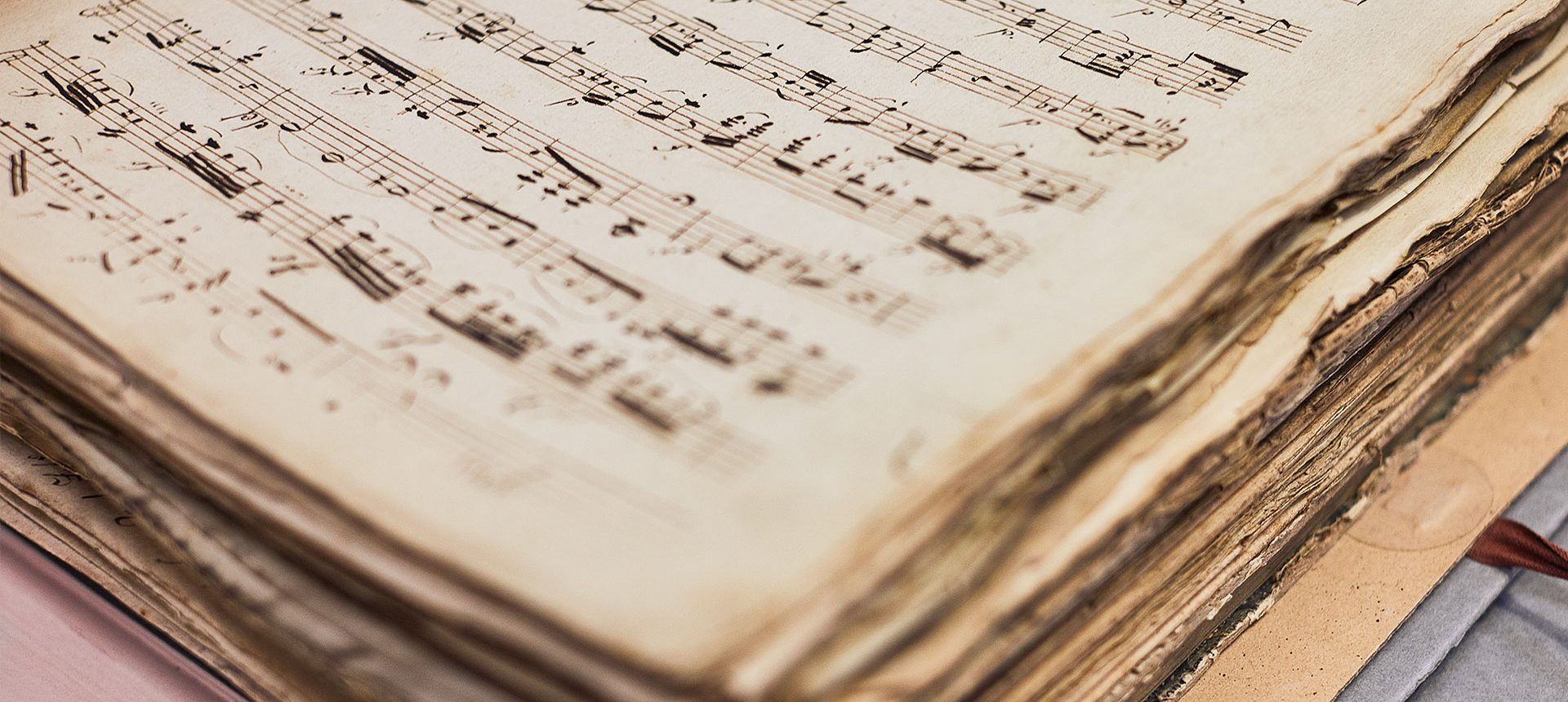
Here you can find almost anything about all the concerts Gothenburg Symphony has played over the years, both in the Concert Hall and on tour.
Search for conductors, soloists and other artists that has played together with us. Or search for composers and music that we have played. And filter on specific seasons. Guesting orchestras and ensembles are also included in the archive.
The result is presented by season.
The Gothenburg Symphony was formed in 1905 and today consists of 109 musicians. The orchestra's base is Gothenburg Concert Hall at Götaplatsen that has gathered music lovers since 1935. Since the 2019-2020 season, Barbara Hannigan is Principal guest conductor. We are also a proud partner of Barbara Hannigan's Equilibrium mentoring program focusing on young singers at the start of their careers. The title Principal Guest Conductor is shared by Pekka Kuusisto from 2025.
Wilhelm Stenhammar was the orchestra's chief conductor from 1907 to 1922. He gave the orchestra a strong Nordic profile and invited colleagues Carl Nielsen and Jean Sibelius to the orchestra. Under the direction of conductor Neeme Järvi from 1982-2004, the orchestra made a series of international tours as well as a hundred disc recordings and established themselves among Europe's leading orchestras. In 1996, the Swedish Riksdag appointed the Gothenburg Symphony as Sweden's National Orchestra.
In recent decades, the orchestra has had prominent chief conductors such as Santtu-Matias Rouvali, Mario Venzago and Gustavo Dudamel, following Kent Nagano as Principal Guest conductor. Anna-Karin Larsson is CEO and artistic director, Gustavo Dudamel honorary conductor and Neeme Järvi chief conductor emeritus. The orchestra's owner is the Västra Götaland Region.
The Gothenburg Symphony works regularly with conductors such as Herbert Blomstedt, Joana Carneiro, Jukka-Pekka Saraste, Christian Zacharias and Anja Bihlmaier.
The choir was founded in 1917 by cousins Elsa and Wilhelm Stenhammar. Elsa Stenhammar was one of the driving forces in turn-of-the-century choir life in Gothenburg and became the choir's first rehearser. On December 8, 1917, the choir debuted in Beethoven's Choir Fantasy with Wilhelm Stenhammar as soloist at the grand piano. As the country's oldest symphonic choir, they were able to celebrate their 100th anniversary in 2017 with a big celebratory concert where Mozart and Brahms as well as Stenhammar, Elfrida Andrée and Björn & Benny were on the program.
The Gothenburg Symphony Choir is a non-profit association that is linked to the Gothenburg Symphony. The choir participates in concerts and performances under both the orchestra's and its own auspices. The music is mixed and the repertoire extensive. The Gothenburg Symphony Choir has participated in concerts in, among other places, the Royal Albert Hall and Canterbury Cathedral in England, as well as participated with the Gothenburg Symphony in the annual music festival in the Canary Islands and on a tour to China.
1928-02-05 18:15 Lorensbergsteatern
Göteborgs Symfoniker
Programme
Felix Mendelssohn (1809-1847)
Symphony No. 4 in A, Op 90 "The Italian"
Allegro vivace
Andante con moto
Con moto moderato
Saltarello Presto
No other composer - Mozart not excluded - has written such magnificently gifted music already as a child. Between the ages of eleven and fifteen, Felix Mendelssohn composed thirteen string symphonies, four operas, five concertos and countless chamber music works, in addition to piano and organ pieces, solo songs and choirs. And a great deal of this is still in the standard repertoire worldwide. He was the son of the wealthy banker Abraham, in whose home artists and musicians were constant guests. On Sundays, the banker used to organize concerts at his home in Berlin. Court musicians and the siblings Felix and Fanny appeared as soloists, and in the audience you could not infrequently find the philosopher Hegel or the scientist Humboldt. So it is perhaps not surprising that the talented Felix made such progress already in his boyhood.
When he was fifteen years old, he began his first symphony for a full orchestra. He managed to write four more symphonies before his premature death at the age of only 38.
The Gothenburg Symphony was formed in 1905 and today consists of 109 musicians. The orchestra's base is Gothenburg Concert Hall at Götaplatsen that has gathered music lovers since 1935. Since the 2019-2020 season, Barbara Hannigan is Principal guest conductor. We are also a proud partner of Barbara Hannigan's Equilibrium mentoring program focusing on young singers at the start of their careers. The title Principal Guest Conductor is shared by Pekka Kuusisto from 2025.
Wilhelm Stenhammar was the orchestra's chief conductor from 1907 to 1922. He gave the orchestra a strong Nordic profile and invited colleagues Carl Nielsen and Jean Sibelius to the orchestra. Under the direction of conductor Neeme Järvi from 1982-2004, the orchestra made a series of international tours as well as a hundred disc recordings and established themselves among Europe's leading orchestras. In 1996, the Swedish Riksdag appointed the Gothenburg Symphony as Sweden's National Orchestra.
In recent decades, the orchestra has had prominent chief conductors such as Santtu-Matias Rouvali, Mario Venzago and Gustavo Dudamel, following Kent Nagano as Principal Guest conductor. Anna-Karin Larsson is CEO and artistic director, Gustavo Dudamel honorary conductor and Neeme Järvi chief conductor emeritus. The orchestra's owner is the Västra Götaland Region.
The Gothenburg Symphony works regularly with conductors such as Herbert Blomstedt, Joana Carneiro, Jukka-Pekka Saraste, Christian Zacharias and Anja Bihlmaier.
Richard Wagner’s last traditionally Romantic opera centers on the knight Lohengrin. The popular prelude to the first act—which the author Thomas Mann considered the “pinnacle of Romanticism”—is frequently performed as a standalone concert piece. Through various musical themes and motifs, we are drawn into the first act’s world of passion, mystery, and heroism. In Lohengrin’s Grail narrative, the myth of the holy vessel is said to symbolize human longing.
The Gothenburg Symphony was formed in 1905 and today consists of 109 musicians. The orchestra's base is Gothenburg Concert Hall at Götaplatsen that has gathered music lovers since 1935. Since the 2019-2020 season, Barbara Hannigan is Principal guest conductor. We are also a proud partner of Barbara Hannigan's Equilibrium mentoring program focusing on young singers at the start of their careers. The title Principal Guest Conductor is shared by Pekka Kuusisto from 2025.
Wilhelm Stenhammar was the orchestra's chief conductor from 1907 to 1922. He gave the orchestra a strong Nordic profile and invited colleagues Carl Nielsen and Jean Sibelius to the orchestra. Under the direction of conductor Neeme Järvi from 1982-2004, the orchestra made a series of international tours as well as a hundred disc recordings and established themselves among Europe's leading orchestras. In 1996, the Swedish Riksdag appointed the Gothenburg Symphony as Sweden's National Orchestra.
In recent decades, the orchestra has had prominent chief conductors such as Santtu-Matias Rouvali, Mario Venzago and Gustavo Dudamel, following Kent Nagano as Principal Guest conductor. Anna-Karin Larsson is CEO and artistic director, Gustavo Dudamel honorary conductor and Neeme Järvi chief conductor emeritus. The orchestra's owner is the Västra Götaland Region.
The Gothenburg Symphony works regularly with conductors such as Herbert Blomstedt, Joana Carneiro, Jukka-Pekka Saraste, Christian Zacharias and Anja Bihlmaier.
Ludwig van Beethoven's First Symphony, written in 1799-1800, is not a tentative attempt by some inexperienced and immature composer. No, Beethoven had long been known as one of the foremost pianists and improvisers of his time, and his compositions had already received considerable attention. He had managed to write two piano concertos, eleven piano sonatas and six string quartets - to name a few. But on the other hand, he was not as bold as he might have been in some of his chamber music works.
The critics nevertheless thought that the symphony was generally good and that it offered many novelties and "a whole world of ideas". "But too many wind instruments were used, so it sounded more like a brass band than an orchestra". 200 years later, we find the symphony both clear and concise, conventional and strongly related to the symphonies of Mozart and Haydn. But we also notice that there is something more here - a strong personal touch. The driving spirit is not borrowed, it is Beethoven's own signature.
The Gothenburg Symphony was formed in 1905 and today consists of 109 musicians. The orchestra's base is Gothenburg Concert Hall at Götaplatsen that has gathered music lovers since 1935. Since the 2019-2020 season, Barbara Hannigan is Principal guest conductor. We are also a proud partner of Barbara Hannigan's Equilibrium mentoring program focusing on young singers at the start of their careers. The title Principal Guest Conductor is shared by Pekka Kuusisto from 2025.
Wilhelm Stenhammar was the orchestra's chief conductor from 1907 to 1922. He gave the orchestra a strong Nordic profile and invited colleagues Carl Nielsen and Jean Sibelius to the orchestra. Under the direction of conductor Neeme Järvi from 1982-2004, the orchestra made a series of international tours as well as a hundred disc recordings and established themselves among Europe's leading orchestras. In 1996, the Swedish Riksdag appointed the Gothenburg Symphony as Sweden's National Orchestra.
In recent decades, the orchestra has had prominent chief conductors such as Santtu-Matias Rouvali, Mario Venzago and Gustavo Dudamel, following Kent Nagano as Principal Guest conductor. Anna-Karin Larsson is CEO and artistic director, Gustavo Dudamel honorary conductor and Neeme Järvi chief conductor emeritus. The orchestra's owner is the Västra Götaland Region.
The Gothenburg Symphony works regularly with conductors such as Herbert Blomstedt, Joana Carneiro, Jukka-Pekka Saraste, Christian Zacharias and Anja Bihlmaier.
The choir was founded in 1917 by cousins Elsa and Wilhelm Stenhammar. Elsa Stenhammar was one of the driving forces in turn-of-the-century choir life in Gothenburg and became the choir's first rehearser. On December 8, 1917, the choir debuted in Beethoven's Choir Fantasy with Wilhelm Stenhammar as soloist at the grand piano. As the country's oldest symphonic choir, they were able to celebrate their 100th anniversary in 2017 with a big celebratory concert where Mozart and Brahms as well as Stenhammar, Elfrida Andrée and Björn & Benny were on the program.
The Gothenburg Symphony Choir is a non-profit association that is linked to the Gothenburg Symphony. The choir participates in concerts and performances under both the orchestra's and its own auspices. The music is mixed and the repertoire extensive. The Gothenburg Symphony Choir has participated in concerts in, among other places, the Royal Albert Hall and Canterbury Cathedral in England, as well as participated with the Gothenburg Symphony in the annual music festival in the Canary Islands and on a tour to China.
1. Selig sind, die da Leid tragen
2. Denn alles Fleisch, es ist wie Gras
3. Herr, lehre doch mich
4. Wie lieblich sind deine Wohnungen
5. Ihr habt nun Traurigkeit
6. Denn wir haben hier keine bleibende Statt
7. Selig sind die Toten
A requiem is typically a musical setting of the traditional Latin text of the Catholic Mass for the Dead. Johannes Brahms, however, broke with these conventions, drawing inspiration from various sources. He had contemplated the work for some time before beginning to write his Mass for the Dead in 1860; the first two movements were completed the following year. The funeral march in the main section of the second movement—which bears a resemblance to a sarabande—originated in a lost sonata in D minor for two pianos that he had been working on as early as 1854. Brahms might well have been content with just these two movements, but when his mother died on February 2, 1865, at the age of 76, he felt compelled to add more music. Consequently, during the spring and summer of 1865, he completed no fewer than four additional movements—those designated as numbers 3, 4, 6, and 7 in the finished work.
The first two movements premiered in Vienna on December 1, 1867, but the predominantly Catholic audience failed to grasp the work. On Good Friday (April 10), 1868, all the movements composed up to that point were performed at Bremen Cathedral to such acclaim that the performance was repeated a few weeks later. Both Brahms’s father and Robert Schumann’s widow, Clara, were in attendance. Brahms conducted the performance in Bremen himself, yet he remained highly critical of the work; a month later, he added the slow soprano aria that now constitutes the fifth movement. Thus, his most extensive composition was finally completed, and its extremely self-critical creator was reasonably satisfied.
In February 1869, the complete work was premiered in Leipzig by Carl Reinecke, in the form we know today. Before the year was out, it had already been performed in some twenty cities across Germany and Switzerland. It was the first time Brahms had written a major work for soloists, choir, and orchestra. This piece paved the way for a long series of similar works. The fact that Brahms did not use the standard Latin text for the Requiem—or even a translation of it—stems from his background as a Protestant and the fact that he was not particularly religious. The work is based on biblical texts from both the Old and New Testaments—using Luther’s German translation—as well as the Apocrypha; the composer selected these passages with great care, thereby infusing the work with a personal process of mourning that possesses universal human significance. It became a monumental work, yet at the same time one that was deeply personal and heartfelt.
Participants
The Gothenburg Symphony was formed in 1905 and today consists of 109 musicians. The orchestra's base is Gothenburg Concert Hall at Götaplatsen that has gathered music lovers since 1935. Since the 2019-2020 season, Barbara Hannigan is Principal guest conductor. We are also a proud partner of Barbara Hannigan's Equilibrium mentoring program focusing on young singers at the start of their careers. The title Principal Guest Conductor is shared by Pekka Kuusisto from 2025.
Wilhelm Stenhammar was the orchestra's chief conductor from 1907 to 1922. He gave the orchestra a strong Nordic profile and invited colleagues Carl Nielsen and Jean Sibelius to the orchestra. Under the direction of conductor Neeme Järvi from 1982-2004, the orchestra made a series of international tours as well as a hundred disc recordings and established themselves among Europe's leading orchestras. In 1996, the Swedish Riksdag appointed the Gothenburg Symphony as Sweden's National Orchestra.
In recent decades, the orchestra has had prominent chief conductors such as Santtu-Matias Rouvali, Mario Venzago and Gustavo Dudamel, following Kent Nagano as Principal Guest conductor. Anna-Karin Larsson is CEO and artistic director, Gustavo Dudamel honorary conductor and Neeme Järvi chief conductor emeritus. The orchestra's owner is the Västra Götaland Region.
The Gothenburg Symphony works regularly with conductors such as Herbert Blomstedt, Joana Carneiro, Jukka-Pekka Saraste, Christian Zacharias and Anja Bihlmaier.