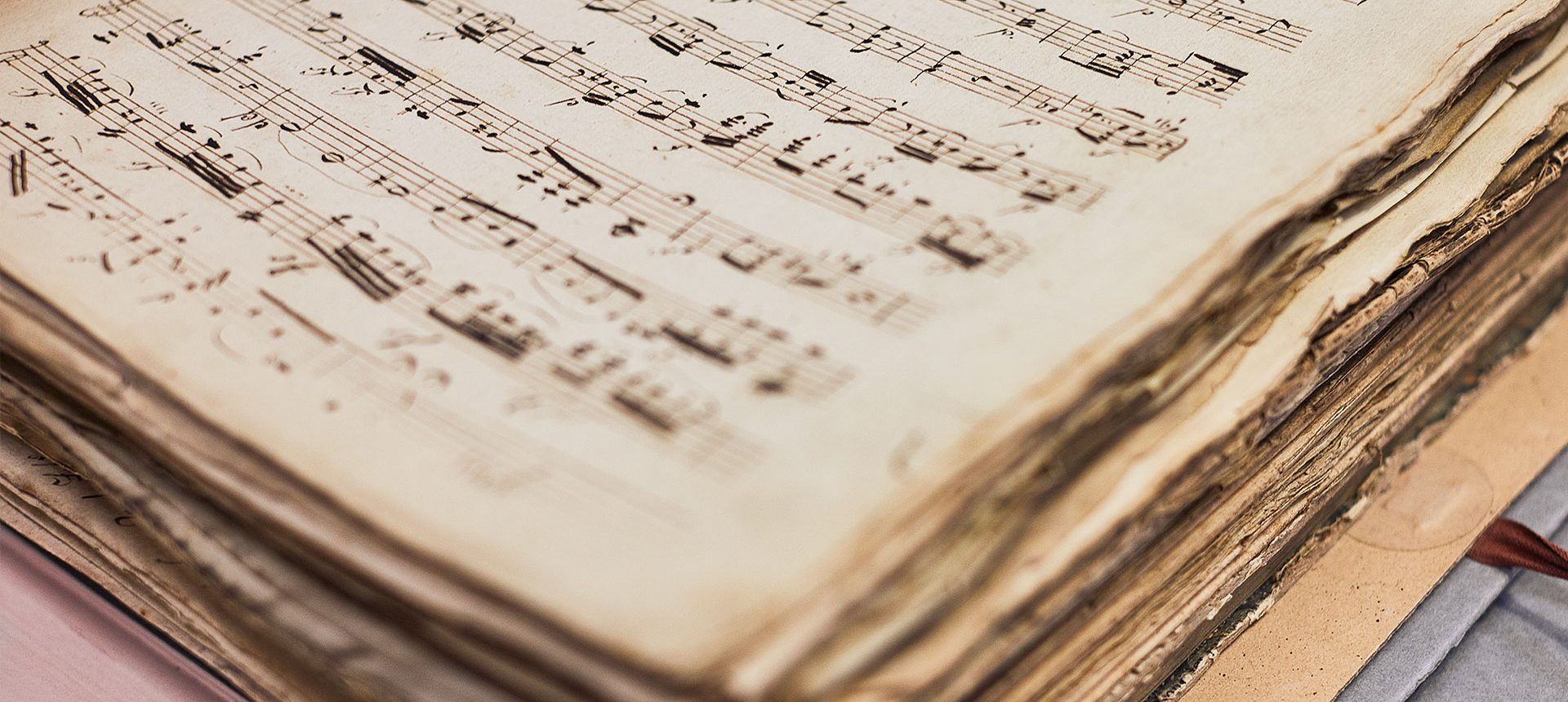
Here you can find almost anything about all the concerts Gothenburg Symphony has played over the years, both in the Concert Hall and on tour.
Search for conductors, soloists and other artists that has played together with us. Or search for composers and music that we have played. And filter on specific seasons. Guesting orchestras and ensembles are also included in the archive.
The result is presented by season.
The Gothenburg Symphony was formed in 1905 and today consists of 109 musicians. The orchestra's base is Gothenburg Concert Hall at Götaplatsen that has gathered music lovers since 1935. Since the 2019-2020 season, Barbara Hannigan is Principal guest conductor. We are also a proud partner of Barbara Hannigan's Equilibrium mentoring program focusing on young singers at the start of their careers. The title Principal Guest Conductor is shared by Pekka Kuusisto from 2025.
Wilhelm Stenhammar was the orchestra's chief conductor from 1907 to 1922. He gave the orchestra a strong Nordic profile and invited colleagues Carl Nielsen and Jean Sibelius to the orchestra. Under the direction of conductor Neeme Järvi from 1982-2004, the orchestra made a series of international tours as well as a hundred disc recordings and established themselves among Europe's leading orchestras. In 1996, the Swedish Riksdag appointed the Gothenburg Symphony as Sweden's National Orchestra.
In recent decades, the orchestra has had prominent chief conductors such as Santtu-Matias Rouvali, Mario Venzago and Gustavo Dudamel, following Kent Nagano as Principal Guest conductor. Anna-Karin Larsson is CEO and artistic director, Gustavo Dudamel honorary conductor and Neeme Järvi chief conductor emeritus. The orchestra's owner is the Västra Götaland Region.
The Gothenburg Symphony works regularly with conductors such as Herbert Blomstedt, Joana Carneiro, Jukka-Pekka Saraste, Christian Zacharias and Anja Bihlmaier.
In 1874, a major memorial exhibition of works by the artist and architect Victor Hartmann was held in St. Petersburg. The composer Mussorgsky, one of his closest friends, was so deeply moved by the paintings that he went home and composed his piano suite Pictures at an Exhibition. Unfortunately, the music was not published until five years after the composer's death, and it did not achieve true popularity until Ravel orchestrated it in 1922.
The suite consists, in effect, of musical depictions of paintings—some of which still survive today. It begins with a "Promenade," a melody that recurs in various forms between the movements, guiding the viewer from one painting to the next. The Promenade has been interpreted as a portrait of the portly composer himself, waddling through the exhibition. "Gnomus" depicts a nutcracker—a toy figure that cracks nuts with its jaws. *The Old Castle* portrays a medieval Italian castle with a singing troubadour standing before it. In Tuileries, we encounter children and their nannies playing in the Parisian park. "Bydlo" is an old Polish cart with enormous wheels, drawn by oxen.
"Ballet of the Unhatched Chicks" is a small sketch for a ballet; *Samuel Goldenberg and Schmuyle* depicts two Polish Jews—one rich, the other poor. In the marketplace at Limoges, we encounter French women passionately trying to haggle. In *Catacombs*, the artist himself is depicted holding a lantern at the entrance to the Paris catacombs. Baba Yaga was a witch from Russian folklore who lived in a hut—here rendered as a table clock. The finale is *The Great Gate of Kiev*, an unrealized architectural project for a triumphal arch. The music builds into a monumental tribute to the deceased friend.
Hearing this grandiose music, one might easily get the impression that the artworks themselves were masterpieces. In reality, however, they consist of rather simple sketches and small paintings. It was memories and emotions that inspired Mussorgsky—he likely even had one of Hartmann’s paintings hanging on his own wall.
Stig Jacobsson
Maurice Ravel (1875-1937)
Piano Concerto G Major
Allegramente - Adagio assai - Presto
After a long tour of the United States in 1928, Ravel wrote his last three major works the following year: the super hit Bolero and two piano concertos. The journey can be felt above all in the Piano Concerto in G major, which was influenced by the blues, the freedom of jazz and the rhythms of New York nightclubs. On the trip, Ravel also met George Gershwin. The American composer knew what the pulse of a big city and modernity should sound like. Ravel was inspired by the style. Despite the presence of jazz, the work is elaborated with Ravel's meticulous precision and French elegance – the orchestral sounds of the wind, every drum beat and syncopation, every bluesy piano chord and glissando have their exact place.
The two outer movements of the work crackle with energy, rhythmic precision and virtuosity, but it is in the slow middle movement that Ravel opens his most intimate space. The movement’s opening three-minute solo on the piano, which hovers silently, is reminiscent of Erik Satie. The keys speak with deep humanity and the simple, almost pastoral melody slowly unfolds in an endless line. When the clarinet and flute then respond to the piano in a languid dialogue, it is as if time has stood still.
The Piano Concerto in G major is the last major work in which Ravel was in full artistic control – a shimmering farewell from one of the most refined musical poets of the 20th century.
Participants
The Gothenburg Symphony was formed in 1905 and today consists of 109 musicians. The orchestra's base is Gothenburg Concert Hall at Götaplatsen that has gathered music lovers since 1935. Since the 2019-2020 season, Barbara Hannigan is Principal guest conductor. We are also a proud partner of Barbara Hannigan's Equilibrium mentoring program focusing on young singers at the start of their careers. The title Principal Guest Conductor is shared by Pekka Kuusisto from 2025.
Wilhelm Stenhammar was the orchestra's chief conductor from 1907 to 1922. He gave the orchestra a strong Nordic profile and invited colleagues Carl Nielsen and Jean Sibelius to the orchestra. Under the direction of conductor Neeme Järvi from 1982-2004, the orchestra made a series of international tours as well as a hundred disc recordings and established themselves among Europe's leading orchestras. In 1996, the Swedish Riksdag appointed the Gothenburg Symphony as Sweden's National Orchestra.
In recent decades, the orchestra has had prominent chief conductors such as Santtu-Matias Rouvali, Mario Venzago and Gustavo Dudamel, following Kent Nagano as Principal Guest conductor. Anna-Karin Larsson is CEO and artistic director, Gustavo Dudamel honorary conductor and Neeme Järvi chief conductor emeritus. The orchestra's owner is the Västra Götaland Region.
The Gothenburg Symphony works regularly with conductors such as Herbert Blomstedt, Joana Carneiro, Jukka-Pekka Saraste, Christian Zacharias and Anja Bihlmaier.
Allegro
Larghetto
Allegretto
At the beginning of 1786, Mozart worked most intensively on the opera buffa The Marriage of Figaro. But as always, the work was interrupted now and then by other commissions and by other works that were begging to be written down. Mozart himself probably premiered his 24th piano concerto on April 7 at the Burgtheater in Vienna. After this very personal and open-hearted music, he was able to return to the comedy in Figaro and complete the opera without further interruptions.
The main theme in the first movement is presented in unison in the orchestra and is allowed to play the role of a kind of chorus throughout the movement. When the piano enters, it takes up another theme, which nevertheless shows a certain kinship. Mozart had only used this method once before, and that was in the Piano Concerto in D minor, No. 20. He did not write any more concertos in minor! This first movement is more symphonic than concertante, and the orchestra is the largest that Mozart prescribed in both concerto and symphony contexts. To this challenge, the easy larghetto stands out as a bright contrast, even if the attentive listener notices the tears behind the smile.
The Gothenburg Symphony was formed in 1905 and today consists of 109 musicians. The orchestra's base is Gothenburg Concert Hall at Götaplatsen that has gathered music lovers since 1935. Since the 2019-2020 season, Barbara Hannigan is Principal guest conductor. We are also a proud partner of Barbara Hannigan's Equilibrium mentoring program focusing on young singers at the start of their careers. The title Principal Guest Conductor is shared by Pekka Kuusisto from 2025.
Wilhelm Stenhammar was the orchestra's chief conductor from 1907 to 1922. He gave the orchestra a strong Nordic profile and invited colleagues Carl Nielsen and Jean Sibelius to the orchestra. Under the direction of conductor Neeme Järvi from 1982-2004, the orchestra made a series of international tours as well as a hundred disc recordings and established themselves among Europe's leading orchestras. In 1996, the Swedish Riksdag appointed the Gothenburg Symphony as Sweden's National Orchestra.
In recent decades, the orchestra has had prominent chief conductors such as Santtu-Matias Rouvali, Mario Venzago and Gustavo Dudamel, following Kent Nagano as Principal Guest conductor. Anna-Karin Larsson is CEO and artistic director, Gustavo Dudamel honorary conductor and Neeme Järvi chief conductor emeritus. The orchestra's owner is the Västra Götaland Region.
The Gothenburg Symphony works regularly with conductors such as Herbert Blomstedt, Joana Carneiro, Jukka-Pekka Saraste, Christian Zacharias and Anja Bihlmaier.
The story of Robert Schumann and the piano unfolded over the course of his entire life—initially with passion and joy, and later, amidst depression and physical (as well as psychological) challenges, pushing him to the breaking point. In a famous essay from 1839, he muses on the future direction of the piano concerto as a genre. Schumann asks himself which genius will succeed in transforming the interaction between piano and orchestra from a mere circus act into a true symbiosis of sonic splendor.
From the very first notes, it is as if we are hearing the blueprint for what the piano concerto would become in the century to follow. After the orchestra’s opening unison, the piano descends in cascading runs—framed by the orchestra—before the music settles into the theme’s sweet phrasing, passed between oboe and bassoon to the piano, and then carried forward by the strings into the second theme. Schumann’s great achievement with this concerto is the way he unites orchestra and piano; they become part of a shared, unified sound. The premiere of the complete concerto took place in Dresden in 1845, with his wife, Clara Schumann, as the soloist.
Johannes Brahms (1833-1897)
Akademische Festouvertüre Op 80
At age 60, Brahms was widely considered the greatest living composer. He became an honorary citizen of the city of his birth, Hamburg, and was honored with a commemorative medal from the Gesellschaft der Musikfreunde in Vienna. He was called to Cambridge to receive an honorary doctorate from the university, but Brahms was not keen on for these kinds of honors, so he declined. It was easier for him to accept a similar offer from the somewhat more anonymous Breslau, and as a thank you he wrote the Academic Festival Overture, based on famous German student songs. It all starts in mournful C minor and then follows the songs "Wir hatten gebaut ein stattliches Haus", "Landesvaters", "Fuchslieder" and finally (the well-known among students) "Gaudeamus igitur". Brahms has hardly been known as a jubilant composer, and nowhere in his output is one to find more exuberant C major tuning than in this overture's glittering final bars.
STIG JACOBSSON
Participants
The Gothenburg Symphony was formed in 1905 and today consists of 109 musicians. The orchestra's base is Gothenburg Concert Hall at Götaplatsen that has gathered music lovers since 1935. Since the 2019-2020 season, Barbara Hannigan is Principal guest conductor. We are also a proud partner of Barbara Hannigan's Equilibrium mentoring program focusing on young singers at the start of their careers. The title Principal Guest Conductor is shared by Pekka Kuusisto from 2025.
Wilhelm Stenhammar was the orchestra's chief conductor from 1907 to 1922. He gave the orchestra a strong Nordic profile and invited colleagues Carl Nielsen and Jean Sibelius to the orchestra. Under the direction of conductor Neeme Järvi from 1982-2004, the orchestra made a series of international tours as well as a hundred disc recordings and established themselves among Europe's leading orchestras. In 1996, the Swedish Riksdag appointed the Gothenburg Symphony as Sweden's National Orchestra.
In recent decades, the orchestra has had prominent chief conductors such as Santtu-Matias Rouvali, Mario Venzago and Gustavo Dudamel, following Kent Nagano as Principal Guest conductor. Anna-Karin Larsson is CEO and artistic director, Gustavo Dudamel honorary conductor and Neeme Järvi chief conductor emeritus. The orchestra's owner is the Västra Götaland Region.
The Gothenburg Symphony works regularly with conductors such as Herbert Blomstedt, Joana Carneiro, Jukka-Pekka Saraste, Christian Zacharias and Anja Bihlmaier.
Maurice Ravel (1875-1937)
Suite No 2 from Daphnis et Chloé
It is difficult to capture this orchestral suite in a few words, which after more than 100 years strikes an audience with enormous richness of color and virtuosity. A music that is only remarkable at the time of its creation. 1913 is the year that Stravinsky's Rite of Spring is played for the first time, and Anton Webern's 6 orchestral works are performed in Vienna. Two concerts whose musical revolution was for a long time overshadowed by the scuffles that arose during the concerts.
Ravel's suite was already embraced during the composer's lifetime, but its musical revolution in harmony and orchestration is no lesser. This suite, which is part of a ballet set to the Greek tale of Daphnis and Chloé, to which Diaghilev's famous dance company danced, bears all the characteristics that made Ravel's music immortal.
The examples are countless, but the level of subtle genius is present already in the opening of the work, when the sun rises in the impressionistic orchestral scree. Not least listen to how this is embodied in the string section. The timbre, which is like a fund for the moving wind motifs, is in fact the sunrise's most sonorous transformation; how the strings in a slow procession during the opening bars raise the chords, from desk to desk, from section to section, and in that way - sifted through the sound of the strings - sweetly let the overtones from the strings go from the dark to the clear.
Esaias Järnegard
Participants
The Gothenburg Symphony was formed in 1905 and today consists of 109 musicians. The orchestra's base is Gothenburg Concert Hall at Götaplatsen that has gathered music lovers since 1935. Since the 2019-2020 season, Barbara Hannigan is Principal guest conductor. We are also a proud partner of Barbara Hannigan's Equilibrium mentoring program focusing on young singers at the start of their careers. The title Principal Guest Conductor is shared by Pekka Kuusisto from 2025.
Wilhelm Stenhammar was the orchestra's chief conductor from 1907 to 1922. He gave the orchestra a strong Nordic profile and invited colleagues Carl Nielsen and Jean Sibelius to the orchestra. Under the direction of conductor Neeme Järvi from 1982-2004, the orchestra made a series of international tours as well as a hundred disc recordings and established themselves among Europe's leading orchestras. In 1996, the Swedish Riksdag appointed the Gothenburg Symphony as Sweden's National Orchestra.
In recent decades, the orchestra has had prominent chief conductors such as Santtu-Matias Rouvali, Mario Venzago and Gustavo Dudamel, following Kent Nagano as Principal Guest conductor. Anna-Karin Larsson is CEO and artistic director, Gustavo Dudamel honorary conductor and Neeme Järvi chief conductor emeritus. The orchestra's owner is the Västra Götaland Region.
The Gothenburg Symphony works regularly with conductors such as Herbert Blomstedt, Joana Carneiro, Jukka-Pekka Saraste, Christian Zacharias and Anja Bihlmaier.
The Gothenburg Symphony was formed in 1905 and today consists of 109 musicians. The orchestra's base is Gothenburg Concert Hall at Götaplatsen that has gathered music lovers since 1935. Since the 2019-2020 season, Barbara Hannigan is Principal guest conductor. We are also a proud partner of Barbara Hannigan's Equilibrium mentoring program focusing on young singers at the start of their careers. The title Principal Guest Conductor is shared by Pekka Kuusisto from 2025.
Wilhelm Stenhammar was the orchestra's chief conductor from 1907 to 1922. He gave the orchestra a strong Nordic profile and invited colleagues Carl Nielsen and Jean Sibelius to the orchestra. Under the direction of conductor Neeme Järvi from 1982-2004, the orchestra made a series of international tours as well as a hundred disc recordings and established themselves among Europe's leading orchestras. In 1996, the Swedish Riksdag appointed the Gothenburg Symphony as Sweden's National Orchestra.
In recent decades, the orchestra has had prominent chief conductors such as Santtu-Matias Rouvali, Mario Venzago and Gustavo Dudamel, following Kent Nagano as Principal Guest conductor. Anna-Karin Larsson is CEO and artistic director, Gustavo Dudamel honorary conductor and Neeme Järvi chief conductor emeritus. The orchestra's owner is the Västra Götaland Region.
The Gothenburg Symphony works regularly with conductors such as Herbert Blomstedt, Joana Carneiro, Jukka-Pekka Saraste, Christian Zacharias and Anja Bihlmaier.
Richard Strauss’s symphonic poem Till Eulenspiegels lustige Streiche is one of the great masterpieces of the orchestral repertoire. Until this point the composer had been known as a scholarly and rather serious young master, but after the premiere of Till in Cologne on 5 November 1895, it became clear that he also possessed a sparkling sense of humour.
Formally the work resembles a rondo, inviting us to follow the various escapades of the title character. Till Eulenspiegel, a famous trickster who had appeared in literature since the Middle Ages, is introduced in unmistakably fairy-tale fashion: the violins begin the piece with a dreamy phrase that seems to sing, “Once upon a time...”.
We then encounter Till as an itinerant preacher, see him fall in love, watch as he is brought to trial and sentenced to death, and finally witness his hanging. No name was inscribed on his gravestone, but an image of an owl and a mirror got to illustrate an old proverb: “Man sees his own faults as little as an owl recognizes his ugliness in looking into a mirror.” Hence the name Eulenspiegel (The Owl’s Mirror).
Participants
The Gothenburg Symphony was formed in 1905 and today consists of 109 musicians. The orchestra's base is Gothenburg Concert Hall at Götaplatsen that has gathered music lovers since 1935. Since the 2019-2020 season, Barbara Hannigan is Principal guest conductor. We are also a proud partner of Barbara Hannigan's Equilibrium mentoring program focusing on young singers at the start of their careers. The title Principal Guest Conductor is shared by Pekka Kuusisto from 2025.
Wilhelm Stenhammar was the orchestra's chief conductor from 1907 to 1922. He gave the orchestra a strong Nordic profile and invited colleagues Carl Nielsen and Jean Sibelius to the orchestra. Under the direction of conductor Neeme Järvi from 1982-2004, the orchestra made a series of international tours as well as a hundred disc recordings and established themselves among Europe's leading orchestras. In 1996, the Swedish Riksdag appointed the Gothenburg Symphony as Sweden's National Orchestra.
In recent decades, the orchestra has had prominent chief conductors such as Santtu-Matias Rouvali, Mario Venzago and Gustavo Dudamel, following Kent Nagano as Principal Guest conductor. Anna-Karin Larsson is CEO and artistic director, Gustavo Dudamel honorary conductor and Neeme Järvi chief conductor emeritus. The orchestra's owner is the Västra Götaland Region.
The Gothenburg Symphony works regularly with conductors such as Herbert Blomstedt, Joana Carneiro, Jukka-Pekka Saraste, Christian Zacharias and Anja Bihlmaier.
The Gothenburg Symphony was formed in 1905 and today consists of 109 musicians. The orchestra's base is Gothenburg Concert Hall at Götaplatsen that has gathered music lovers since 1935. Since the 2019-2020 season, Barbara Hannigan is Principal guest conductor. We are also a proud partner of Barbara Hannigan's Equilibrium mentoring program focusing on young singers at the start of their careers. The title Principal Guest Conductor is shared by Pekka Kuusisto from 2025.
Wilhelm Stenhammar was the orchestra's chief conductor from 1907 to 1922. He gave the orchestra a strong Nordic profile and invited colleagues Carl Nielsen and Jean Sibelius to the orchestra. Under the direction of conductor Neeme Järvi from 1982-2004, the orchestra made a series of international tours as well as a hundred disc recordings and established themselves among Europe's leading orchestras. In 1996, the Swedish Riksdag appointed the Gothenburg Symphony as Sweden's National Orchestra.
In recent decades, the orchestra has had prominent chief conductors such as Santtu-Matias Rouvali, Mario Venzago and Gustavo Dudamel, following Kent Nagano as Principal Guest conductor. Anna-Karin Larsson is CEO and artistic director, Gustavo Dudamel honorary conductor and Neeme Järvi chief conductor emeritus. The orchestra's owner is the Västra Götaland Region.
The Gothenburg Symphony works regularly with conductors such as Herbert Blomstedt, Joana Carneiro, Jukka-Pekka Saraste, Christian Zacharias and Anja Bihlmaier.
The Gothenburg Symphony was formed in 1905 and today consists of 109 musicians. The orchestra's base is Gothenburg Concert Hall at Götaplatsen that has gathered music lovers since 1935. Since the 2019-2020 season, Barbara Hannigan is Principal guest conductor. We are also a proud partner of Barbara Hannigan's Equilibrium mentoring program focusing on young singers at the start of their careers. The title Principal Guest Conductor is shared by Pekka Kuusisto from 2025.
Wilhelm Stenhammar was the orchestra's chief conductor from 1907 to 1922. He gave the orchestra a strong Nordic profile and invited colleagues Carl Nielsen and Jean Sibelius to the orchestra. Under the direction of conductor Neeme Järvi from 1982-2004, the orchestra made a series of international tours as well as a hundred disc recordings and established themselves among Europe's leading orchestras. In 1996, the Swedish Riksdag appointed the Gothenburg Symphony as Sweden's National Orchestra.
In recent decades, the orchestra has had prominent chief conductors such as Santtu-Matias Rouvali, Mario Venzago and Gustavo Dudamel, following Kent Nagano as Principal Guest conductor. Anna-Karin Larsson is CEO and artistic director, Gustavo Dudamel honorary conductor and Neeme Järvi chief conductor emeritus. The orchestra's owner is the Västra Götaland Region.
The Gothenburg Symphony works regularly with conductors such as Herbert Blomstedt, Joana Carneiro, Jukka-Pekka Saraste, Christian Zacharias and Anja Bihlmaier.
The Gothenburg Symphony was formed in 1905 and today consists of 109 musicians. The orchestra's base is Gothenburg Concert Hall at Götaplatsen that has gathered music lovers since 1935. Since the 2019-2020 season, Barbara Hannigan is Principal guest conductor. We are also a proud partner of Barbara Hannigan's Equilibrium mentoring program focusing on young singers at the start of their careers. The title Principal Guest Conductor is shared by Pekka Kuusisto from 2025.
Wilhelm Stenhammar was the orchestra's chief conductor from 1907 to 1922. He gave the orchestra a strong Nordic profile and invited colleagues Carl Nielsen and Jean Sibelius to the orchestra. Under the direction of conductor Neeme Järvi from 1982-2004, the orchestra made a series of international tours as well as a hundred disc recordings and established themselves among Europe's leading orchestras. In 1996, the Swedish Riksdag appointed the Gothenburg Symphony as Sweden's National Orchestra.
In recent decades, the orchestra has had prominent chief conductors such as Santtu-Matias Rouvali, Mario Venzago and Gustavo Dudamel, following Kent Nagano as Principal Guest conductor. Anna-Karin Larsson is CEO and artistic director, Gustavo Dudamel honorary conductor and Neeme Järvi chief conductor emeritus. The orchestra's owner is the Västra Götaland Region.
The Gothenburg Symphony works regularly with conductors such as Herbert Blomstedt, Joana Carneiro, Jukka-Pekka Saraste, Christian Zacharias and Anja Bihlmaier.
The Gothenburg Symphony was formed in 1905 and today consists of 109 musicians. The orchestra's base is Gothenburg Concert Hall at Götaplatsen that has gathered music lovers since 1935. Since the 2019-2020 season, Barbara Hannigan is Principal guest conductor. We are also a proud partner of Barbara Hannigan's Equilibrium mentoring program focusing on young singers at the start of their careers. The title Principal Guest Conductor is shared by Pekka Kuusisto from 2025.
Wilhelm Stenhammar was the orchestra's chief conductor from 1907 to 1922. He gave the orchestra a strong Nordic profile and invited colleagues Carl Nielsen and Jean Sibelius to the orchestra. Under the direction of conductor Neeme Järvi from 1982-2004, the orchestra made a series of international tours as well as a hundred disc recordings and established themselves among Europe's leading orchestras. In 1996, the Swedish Riksdag appointed the Gothenburg Symphony as Sweden's National Orchestra.
In recent decades, the orchestra has had prominent chief conductors such as Santtu-Matias Rouvali, Mario Venzago and Gustavo Dudamel, following Kent Nagano as Principal Guest conductor. Anna-Karin Larsson is CEO and artistic director, Gustavo Dudamel honorary conductor and Neeme Järvi chief conductor emeritus. The orchestra's owner is the Västra Götaland Region.
The Gothenburg Symphony works regularly with conductors such as Herbert Blomstedt, Joana Carneiro, Jukka-Pekka Saraste, Christian Zacharias and Anja Bihlmaier.
The Gothenburg Symphony was formed in 1905 and today consists of 109 musicians. The orchestra's base is Gothenburg Concert Hall at Götaplatsen that has gathered music lovers since 1935. Since the 2019-2020 season, Barbara Hannigan is Principal guest conductor. We are also a proud partner of Barbara Hannigan's Equilibrium mentoring program focusing on young singers at the start of their careers. The title Principal Guest Conductor is shared by Pekka Kuusisto from 2025.
Wilhelm Stenhammar was the orchestra's chief conductor from 1907 to 1922. He gave the orchestra a strong Nordic profile and invited colleagues Carl Nielsen and Jean Sibelius to the orchestra. Under the direction of conductor Neeme Järvi from 1982-2004, the orchestra made a series of international tours as well as a hundred disc recordings and established themselves among Europe's leading orchestras. In 1996, the Swedish Riksdag appointed the Gothenburg Symphony as Sweden's National Orchestra.
In recent decades, the orchestra has had prominent chief conductors such as Santtu-Matias Rouvali, Mario Venzago and Gustavo Dudamel, following Kent Nagano as Principal Guest conductor. Anna-Karin Larsson is CEO and artistic director, Gustavo Dudamel honorary conductor and Neeme Järvi chief conductor emeritus. The orchestra's owner is the Västra Götaland Region.
The Gothenburg Symphony works regularly with conductors such as Herbert Blomstedt, Joana Carneiro, Jukka-Pekka Saraste, Christian Zacharias and Anja Bihlmaier.