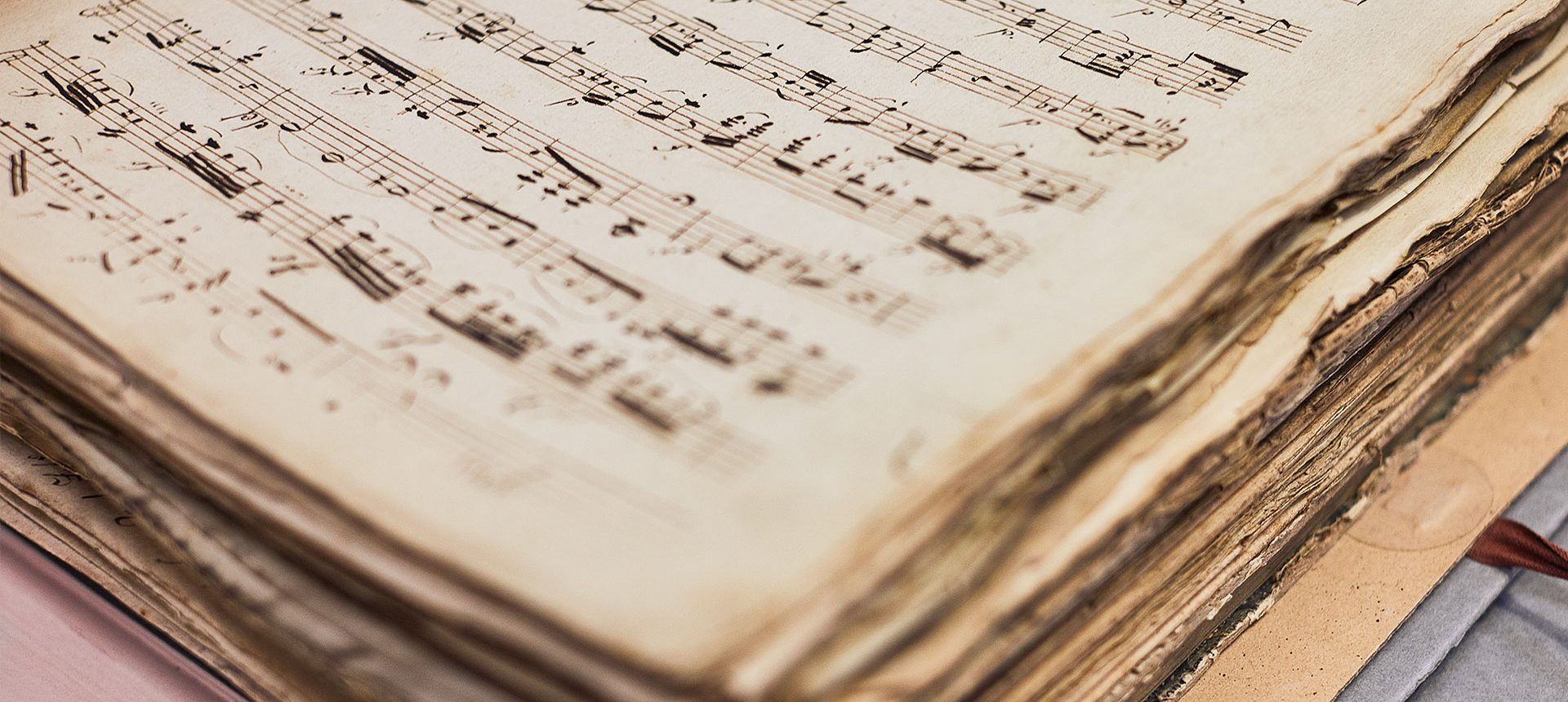
Here you can find almost anything about all the concerts Gothenburg Symphony has played over the years, both in the Concert Hall and on tour.
Search for conductors, soloists and other artists that has played together with us. Or search for composers and music that we have played. And filter on specific seasons. Guesting orchestras and ensembles are also included in the archive.
The result is presented by season.
The Gothenburg Symphony was formed in 1905 and today consists of 109 musicians. The orchestra's base is Gothenburg Concert Hall at Götaplatsen that has gathered music lovers since 1935. Since the 2019-2020 season, Barbara Hannigan is Principal guest conductor. We are also a proud partner of Barbara Hannigan's Equilibrium mentoring program focusing on young singers at the start of their careers. The title Principal Guest Conductor is shared by Pekka Kuusisto from 2025.
Wilhelm Stenhammar was the orchestra's chief conductor from 1907 to 1922. He gave the orchestra a strong Nordic profile and invited colleagues Carl Nielsen and Jean Sibelius to the orchestra. Under the direction of conductor Neeme Järvi from 1982-2004, the orchestra made a series of international tours as well as a hundred disc recordings and established themselves among Europe's leading orchestras. In 1996, the Swedish Riksdag appointed the Gothenburg Symphony as Sweden's National Orchestra.
In recent decades, the orchestra has had prominent chief conductors such as Santtu-Matias Rouvali, Mario Venzago and Gustavo Dudamel, following Kent Nagano as Principal Guest conductor. Anna-Karin Larsson is CEO and artistic director, Gustavo Dudamel honorary conductor and Neeme Järvi chief conductor emeritus. The orchestra's owner is the Västra Götaland Region.
The Gothenburg Symphony works regularly with conductors such as Herbert Blomstedt, Joana Carneiro, Jukka-Pekka Saraste, Christian Zacharias and Anja Bihlmaier.
Peter Jablonski has performed, collaborated and recorded with the world's leading orchestras and conductors. He is among the leading pianists of his generation and is a member of the Royal Swedish Academy of Music. He was signed to Decca record label when he was 17 years old.
In 2026, he performs at the Seoul Arts Centre, at concert halls in Hamamatsu and Yokohama City in Japan, and with the Warsaw Philharmonic Orchestra. In recent seasons, he has guested with the Finnish Radio Symphony Orchestra with Nicholas Collon, the Royal Swedish Philharmonic with Jukka-Pekka Saraste, the Tokyo Symphony Orchestra with Jonathan Nott, the Swedish Radio Symphony Orchestra with Gemma New, the Polish Radio Symphony Orchestra with Lukasz Borowicz, and performed at Wigmore Hall in London.
Peter Jablonski records exclusively for Ondine, and his recording of piano works by Ronald Stevenson was awarded a Swedish Grammis in 2025. Recent releases include music by Grazyna Bacewicz, the complete mazurkas by Frederic Chopin, and piano concertos by André Tchaikowsky. He most recently guested with the Gothenburg Symphony Orchestra in 2023, playing the Bacewicz piano concerto.
Beethoven really had to struggle with his music. He worked meticulously on every detail, and the work is still extant in his sketchbooks. Even the seemingly obvious opening of the Fifth Symphony, the knocking on the door of fate that immediately seizes the listener and which seems to be such an unshakable thought, undergoes a series of transformations in the sketches that are difficult to understand in retrospect.
The energetic scherzo transition in the finale has undergone countless phases of development. The sketches also show that Beethoven originally did not at all envision a finale in a triumphant major, but in a minor key. Beethoven's Fifth is certainly worthy of all the admiring attention it receives. It is the result of the tribulations of a hard-working genius.
Participants
The Gothenburg Symphony was formed in 1905 and today consists of 109 musicians. The orchestra's base is Gothenburg Concert Hall at Götaplatsen that has gathered music lovers since 1935. Since the 2019-2020 season, Barbara Hannigan is Principal guest conductor. We are also a proud partner of Barbara Hannigan's Equilibrium mentoring program focusing on young singers at the start of their careers. The title Principal Guest Conductor is shared by Pekka Kuusisto from 2025.
Wilhelm Stenhammar was the orchestra's chief conductor from 1907 to 1922. He gave the orchestra a strong Nordic profile and invited colleagues Carl Nielsen and Jean Sibelius to the orchestra. Under the direction of conductor Neeme Järvi from 1982-2004, the orchestra made a series of international tours as well as a hundred disc recordings and established themselves among Europe's leading orchestras. In 1996, the Swedish Riksdag appointed the Gothenburg Symphony as Sweden's National Orchestra.
In recent decades, the orchestra has had prominent chief conductors such as Santtu-Matias Rouvali, Mario Venzago and Gustavo Dudamel, following Kent Nagano as Principal Guest conductor. Anna-Karin Larsson is CEO and artistic director, Gustavo Dudamel honorary conductor and Neeme Järvi chief conductor emeritus. The orchestra's owner is the Västra Götaland Region.
The Gothenburg Symphony works regularly with conductors such as Herbert Blomstedt, Joana Carneiro, Jukka-Pekka Saraste, Christian Zacharias and Anja Bihlmaier.
Allegro
Larghetto
Allegretto
At the beginning of 1786, Mozart worked most intensively on the opera buffa The Marriage of Figaro. But as always, the work was interrupted now and then by other commissions and by other works that were begging to be written down. Mozart himself probably premiered his 24th piano concerto on April 7 at the Burgtheater in Vienna. After this very personal and open-hearted music, he was able to return to the comedy in Figaro and complete the opera without further interruptions.
The main theme in the first movement is presented in unison in the orchestra and is allowed to play the role of a kind of chorus throughout the movement. When the piano enters, it takes up another theme, which nevertheless shows a certain kinship. Mozart had only used this method once before, and that was in the Piano Concerto in D minor, No. 20. He did not write any more concertos in minor! This first movement is more symphonic than concertante, and the orchestra is the largest that Mozart prescribed in both concerto and symphony contexts. To this challenge, the easy larghetto stands out as a bright contrast, even if the attentive listener notices the tears behind the smile.
Participants
The Gothenburg Symphony was formed in 1905 and today consists of 109 musicians. The orchestra's base is Gothenburg Concert Hall at Götaplatsen that has gathered music lovers since 1935. Since the 2019-2020 season, Barbara Hannigan is Principal guest conductor. We are also a proud partner of Barbara Hannigan's Equilibrium mentoring program focusing on young singers at the start of their careers. The title Principal Guest Conductor is shared by Pekka Kuusisto from 2025.
Wilhelm Stenhammar was the orchestra's chief conductor from 1907 to 1922. He gave the orchestra a strong Nordic profile and invited colleagues Carl Nielsen and Jean Sibelius to the orchestra. Under the direction of conductor Neeme Järvi from 1982-2004, the orchestra made a series of international tours as well as a hundred disc recordings and established themselves among Europe's leading orchestras. In 1996, the Swedish Riksdag appointed the Gothenburg Symphony as Sweden's National Orchestra.
In recent decades, the orchestra has had prominent chief conductors such as Santtu-Matias Rouvali, Mario Venzago and Gustavo Dudamel, following Kent Nagano as Principal Guest conductor. Anna-Karin Larsson is CEO and artistic director, Gustavo Dudamel honorary conductor and Neeme Järvi chief conductor emeritus. The orchestra's owner is the Västra Götaland Region.
The Gothenburg Symphony works regularly with conductors such as Herbert Blomstedt, Joana Carneiro, Jukka-Pekka Saraste, Christian Zacharias and Anja Bihlmaier.
Beethoven composed over 700 works during his 45-year career. One of the most beloved is his only violin concerto—a work with an unusually dramatic backstory. Legend has it that the concerto was not completed until just before its premiere in Vienna on December 23, 1806. Consequently, the soloist Franz Clement—to whom the work is dedicated—reportedly had to play parts of the music directly from the manuscript. At the premiere, he even inserted an improvised cadenza of his own, which he is said to have played with his violin held upside down.
For its time, the concerto was bold in several respects: it was unusually long, featured a larger orchestra than previous concertos, and included a virtuosic, demanding solo part. It is perhaps not surprising that it took fifty years for the work to become a staple of the concert repertoire.
Musically, Beethoven blends the Classical style with something new and Romantic. The lengthy orchestral introduction presents and develops the musical material before the violin enters. Soloist and orchestra then interact and evolve together throughout the concerto; they share themes, respond to one another, and take turns leading and following.
The violin concerto is cherished by many because it is not merely a display of virtuosity, but a living musical dialogue.
The Gothenburg Symphony was formed in 1905 and today consists of 109 musicians. The orchestra's base is Gothenburg Concert Hall at Götaplatsen that has gathered music lovers since 1935. Since the 2019-2020 season, Barbara Hannigan is Principal guest conductor. We are also a proud partner of Barbara Hannigan's Equilibrium mentoring program focusing on young singers at the start of their careers. The title Principal Guest Conductor is shared by Pekka Kuusisto from 2025.
Wilhelm Stenhammar was the orchestra's chief conductor from 1907 to 1922. He gave the orchestra a strong Nordic profile and invited colleagues Carl Nielsen and Jean Sibelius to the orchestra. Under the direction of conductor Neeme Järvi from 1982-2004, the orchestra made a series of international tours as well as a hundred disc recordings and established themselves among Europe's leading orchestras. In 1996, the Swedish Riksdag appointed the Gothenburg Symphony as Sweden's National Orchestra.
In recent decades, the orchestra has had prominent chief conductors such as Santtu-Matias Rouvali, Mario Venzago and Gustavo Dudamel, following Kent Nagano as Principal Guest conductor. Anna-Karin Larsson is CEO and artistic director, Gustavo Dudamel honorary conductor and Neeme Järvi chief conductor emeritus. The orchestra's owner is the Västra Götaland Region.
The Gothenburg Symphony works regularly with conductors such as Herbert Blomstedt, Joana Carneiro, Jukka-Pekka Saraste, Christian Zacharias and Anja Bihlmaier.
Richard Wagner’s last traditionally Romantic opera centers on the knight Lohengrin. The popular prelude to the first act—which the author Thomas Mann considered the “pinnacle of Romanticism”—is frequently performed as a standalone concert piece. Through various musical themes and motifs, we are drawn into the first act’s world of passion, mystery, and heroism. In Lohengrin’s Grail narrative, the myth of the holy vessel is said to symbolize human longing.
George Bizet (1838-1875)
L'Arlésienne Suite No. 1
Preludium
Menuett
Adagietto
Carillon
Author Alphonse Daudet depicted the countryside and people of exotic Provence. One of his most beloved short stories he called The Girl from Arles, which he expanded into a drama in five acts. The play eventually became an opera by Francesco Cilea (1897), but the stage music composed by Georges Bizet was most appreciated. In total, he contributed 27 short vignettes for a small chamber orchestra of 26 musicians, the Théatre de Vaudeville could not afford more. Bizet himself contributed free piano playing. A few movements were written for choir.
The first performance on 1 October 1872 was a complete flop, and the play was closed after 21 performances for half a salon. The author exclaimed: "It was a dazzling fiasco with the most charming music in the world, costumes of silk and velvet, and Opéra-Comique scenery. I left the theater dejected, and with the same laughter that pierced the tragic scenes still in my ears, I resolved to write no more plays." But Bizet believed in his music and was eager to save it, so he immediately compiled four of the pieces into an orchestral suite, while arranging them for large symphony orchestra, retaining the important saxophone part; an exciting, new instrument that until now has been mostly used for experiments. This first suite was premiered six weeks after the stage premiere, and was an immediate success. He did not keep the chronology of the drama, it was more important that the movements create a unity.
The plot is very simple but told with psychological depth in a dreamy and poetic way. "His name was Jan. He only had eyes for one - a little girl from Arles, dressed in velvet and lace, whom he had once met in the market place in Arles. At his house - to begin with - the party was not looked upon kindly. It was said that the girl was coquettish and her parents were not from the area, but Jan wanted his girl from Arles at all costs. He said: I will die if I don't get her." These few words capture and summarize the whole story. Everything revolves around her, but the girl from Arles never appears on stage, and he takes his own life when it becomes clear to him that she has another lover.
Those who know their Christmas music recognize the Kings' March in the opening movement.
Participants
The Gothenburg Symphony was formed in 1905 and today consists of 109 musicians. The orchestra's base is Gothenburg Concert Hall at Götaplatsen that has gathered music lovers since 1935. Since the 2019-2020 season, Barbara Hannigan is Principal guest conductor. We are also a proud partner of Barbara Hannigan's Equilibrium mentoring program focusing on young singers at the start of their careers. The title Principal Guest Conductor is shared by Pekka Kuusisto from 2025.
Wilhelm Stenhammar was the orchestra's chief conductor from 1907 to 1922. He gave the orchestra a strong Nordic profile and invited colleagues Carl Nielsen and Jean Sibelius to the orchestra. Under the direction of conductor Neeme Järvi from 1982-2004, the orchestra made a series of international tours as well as a hundred disc recordings and established themselves among Europe's leading orchestras. In 1996, the Swedish Riksdag appointed the Gothenburg Symphony as Sweden's National Orchestra.
In recent decades, the orchestra has had prominent chief conductors such as Santtu-Matias Rouvali, Mario Venzago and Gustavo Dudamel, following Kent Nagano as Principal Guest conductor. Anna-Karin Larsson is CEO and artistic director, Gustavo Dudamel honorary conductor and Neeme Järvi chief conductor emeritus. The orchestra's owner is the Västra Götaland Region.
The Gothenburg Symphony works regularly with conductors such as Herbert Blomstedt, Joana Carneiro, Jukka-Pekka Saraste, Christian Zacharias and Anja Bihlmaier.