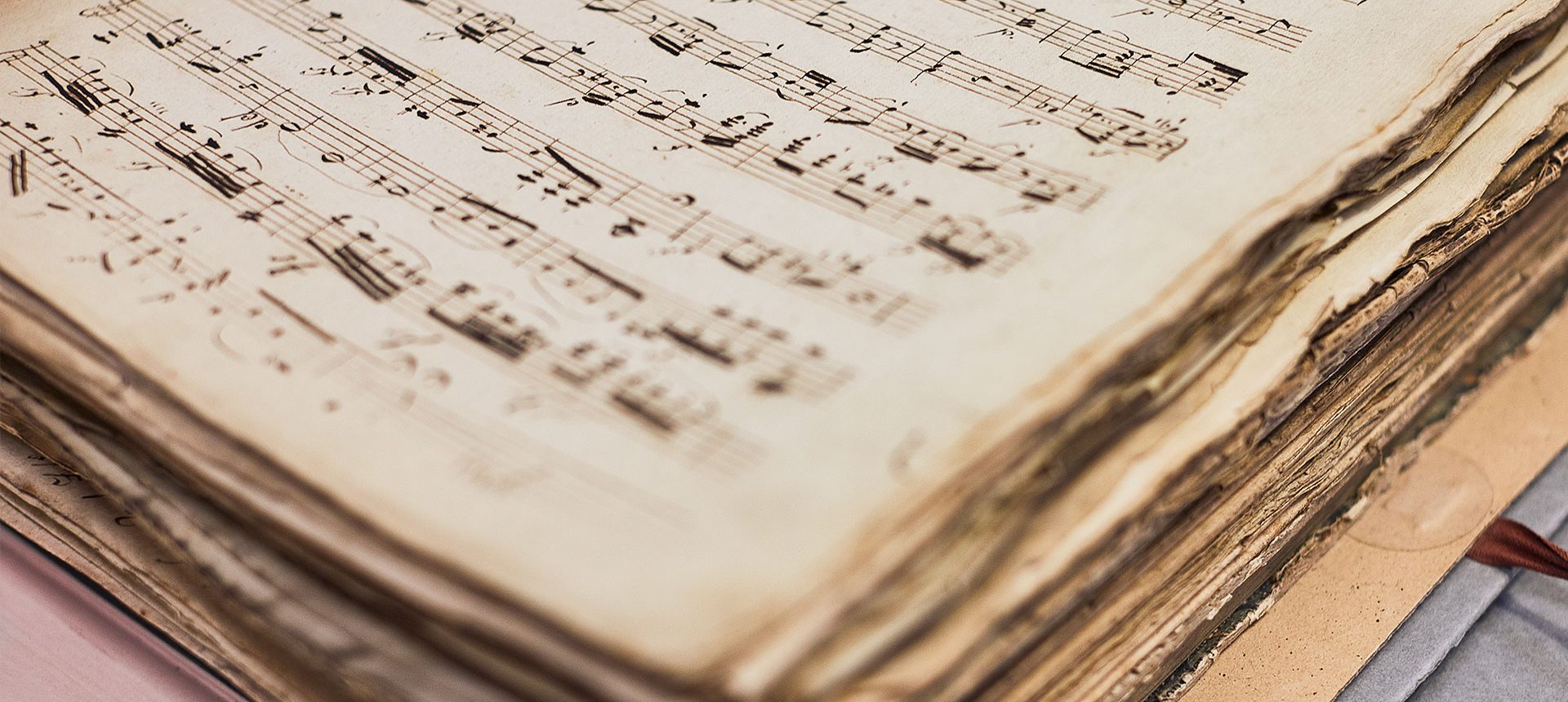
Here you can find almost anything about all the concerts Gothenburg Symphony has played over the years, both in the Concert Hall and on tour.
Search for conductors, soloists and other artists that has played together with us. Or search for composers and music that we have played. And filter on specific seasons. Guesting orchestras and ensembles are also included in the archive.
The result is presented by season.
The Gothenburg Symphony was formed in 1905 and today consists of 109 musicians. The orchestra's base is Gothenburg Concert Hall at Götaplatsen that has gathered music lovers since 1935. Since the 2019-2020 season, Barbara Hannigan is Principal guest conductor. We are also a proud partner of Barbara Hannigan's Equilibrium mentoring program focusing on young singers at the start of their careers. The title Principal Guest Conductor is shared by Pekka Kuusisto from 2025.
Wilhelm Stenhammar was the orchestra's chief conductor from 1907 to 1922. He gave the orchestra a strong Nordic profile and invited colleagues Carl Nielsen and Jean Sibelius to the orchestra. Under the direction of conductor Neeme Järvi from 1982-2004, the orchestra made a series of international tours as well as a hundred disc recordings and established themselves among Europe's leading orchestras. In 1996, the Swedish Riksdag appointed the Gothenburg Symphony as Sweden's National Orchestra.
In recent decades, the orchestra has had prominent chief conductors such as Santtu-Matias Rouvali, Mario Venzago and Gustavo Dudamel, following Kent Nagano as Principal Guest conductor. Anna-Karin Larsson is CEO and artistic director, Gustavo Dudamel honorary conductor and Neeme Järvi chief conductor emeritus. The orchestra's owner is the Västra Götaland Region.
The Gothenburg Symphony works regularly with conductors such as Herbert Blomstedt, Joana Carneiro, Jukka-Pekka Saraste, Christian Zacharias and Anja Bihlmaier.
The Gothenburg Symphony was formed in 1905 and today consists of 109 musicians. The orchestra's base is Gothenburg Concert Hall at Götaplatsen that has gathered music lovers since 1935. Since the 2019-2020 season, Barbara Hannigan is Principal guest conductor. We are also a proud partner of Barbara Hannigan's Equilibrium mentoring program focusing on young singers at the start of their careers. The title Principal Guest Conductor is shared by Pekka Kuusisto from 2025.
Wilhelm Stenhammar was the orchestra's chief conductor from 1907 to 1922. He gave the orchestra a strong Nordic profile and invited colleagues Carl Nielsen and Jean Sibelius to the orchestra. Under the direction of conductor Neeme Järvi from 1982-2004, the orchestra made a series of international tours as well as a hundred disc recordings and established themselves among Europe's leading orchestras. In 1996, the Swedish Riksdag appointed the Gothenburg Symphony as Sweden's National Orchestra.
In recent decades, the orchestra has had prominent chief conductors such as Santtu-Matias Rouvali, Mario Venzago and Gustavo Dudamel, following Kent Nagano as Principal Guest conductor. Anna-Karin Larsson is CEO and artistic director, Gustavo Dudamel honorary conductor and Neeme Järvi chief conductor emeritus. The orchestra's owner is the Västra Götaland Region.
The Gothenburg Symphony works regularly with conductors such as Herbert Blomstedt, Joana Carneiro, Jukka-Pekka Saraste, Christian Zacharias and Anja Bihlmaier.
The Gothenburg Symphony was formed in 1905 and today consists of 109 musicians. The orchestra's base is Gothenburg Concert Hall at Götaplatsen that has gathered music lovers since 1935. Since the 2019-2020 season, Barbara Hannigan is Principal guest conductor. We are also a proud partner of Barbara Hannigan's Equilibrium mentoring program focusing on young singers at the start of their careers. The title Principal Guest Conductor is shared by Pekka Kuusisto from 2025.
Wilhelm Stenhammar was the orchestra's chief conductor from 1907 to 1922. He gave the orchestra a strong Nordic profile and invited colleagues Carl Nielsen and Jean Sibelius to the orchestra. Under the direction of conductor Neeme Järvi from 1982-2004, the orchestra made a series of international tours as well as a hundred disc recordings and established themselves among Europe's leading orchestras. In 1996, the Swedish Riksdag appointed the Gothenburg Symphony as Sweden's National Orchestra.
In recent decades, the orchestra has had prominent chief conductors such as Santtu-Matias Rouvali, Mario Venzago and Gustavo Dudamel, following Kent Nagano as Principal Guest conductor. Anna-Karin Larsson is CEO and artistic director, Gustavo Dudamel honorary conductor and Neeme Järvi chief conductor emeritus. The orchestra's owner is the Västra Götaland Region.
The Gothenburg Symphony works regularly with conductors such as Herbert Blomstedt, Joana Carneiro, Jukka-Pekka Saraste, Christian Zacharias and Anja Bihlmaier.
Carl Orff (1895-1982)
Carmina Burana
Fortuna imperatrix mundi - Primo vere - In taberna´- Cour d'amours - Blanziflor et Helena - Fortuna imperatrix mundi
During the 1930s, Carl Orff was one of the most noted composers in Germany. Much of his fame came with Carmina burana which was composed in 1935-1936. Its subtitle reads "secular songs for soli and choir accompanied by orchestra and with magical images" - a scenography of a medieval kind where evocative paintings and decorations in concert with the large choir create an overwhelming impression. Carmina burana was first performed in Frankfurt am Main in 1937, given at La Scala in 1942 and shortly afterwards also in Vienna, but despite this Orff only became more widely known as a composer after the war.
The music was not like anything else, it felt original and stood outside contemporary trends and schools. His musical inspiration can be said to have its roots in the dramatic imagery, with Greek tragedy and Italian baroque opera as two major sources of inspiration. Musically, there is a closer influence: Stravinsky's dramatic cantata Oedipus Rex and above all Les noces - rhythmically marked music of a deliberately simple style with a sparse orchestral movement (lots of percussion) and the choir as basic elements.
Orff's work often grew out of a combined vision of the scenic and the musical - everything he created reveals a lush, visible imagination. Most of what he produced is intended for the stage, including Carmina burana. But the piece has shown its strength even without stage arrangements and is just as often performed in the concert hall with great success.
Participants
The Gothenburg Symphony was formed in 1905 and today consists of 109 musicians. The orchestra's base is Gothenburg Concert Hall at Götaplatsen that has gathered music lovers since 1935. Since the 2019-2020 season, Barbara Hannigan is Principal guest conductor. We are also a proud partner of Barbara Hannigan's Equilibrium mentoring program focusing on young singers at the start of their careers. The title Principal Guest Conductor is shared by Pekka Kuusisto from 2025.
Wilhelm Stenhammar was the orchestra's chief conductor from 1907 to 1922. He gave the orchestra a strong Nordic profile and invited colleagues Carl Nielsen and Jean Sibelius to the orchestra. Under the direction of conductor Neeme Järvi from 1982-2004, the orchestra made a series of international tours as well as a hundred disc recordings and established themselves among Europe's leading orchestras. In 1996, the Swedish Riksdag appointed the Gothenburg Symphony as Sweden's National Orchestra.
In recent decades, the orchestra has had prominent chief conductors such as Santtu-Matias Rouvali, Mario Venzago and Gustavo Dudamel, following Kent Nagano as Principal Guest conductor. Anna-Karin Larsson is CEO and artistic director, Gustavo Dudamel honorary conductor and Neeme Järvi chief conductor emeritus. The orchestra's owner is the Västra Götaland Region.
The Gothenburg Symphony works regularly with conductors such as Herbert Blomstedt, Joana Carneiro, Jukka-Pekka Saraste, Christian Zacharias and Anja Bihlmaier.
The Gothenburg Symphony was formed in 1905 and today consists of 109 musicians. The orchestra's base is Gothenburg Concert Hall at Götaplatsen that has gathered music lovers since 1935. Since the 2019-2020 season, Barbara Hannigan is Principal guest conductor. We are also a proud partner of Barbara Hannigan's Equilibrium mentoring program focusing on young singers at the start of their careers. The title Principal Guest Conductor is shared by Pekka Kuusisto from 2025.
Wilhelm Stenhammar was the orchestra's chief conductor from 1907 to 1922. He gave the orchestra a strong Nordic profile and invited colleagues Carl Nielsen and Jean Sibelius to the orchestra. Under the direction of conductor Neeme Järvi from 1982-2004, the orchestra made a series of international tours as well as a hundred disc recordings and established themselves among Europe's leading orchestras. In 1996, the Swedish Riksdag appointed the Gothenburg Symphony as Sweden's National Orchestra.
In recent decades, the orchestra has had prominent chief conductors such as Santtu-Matias Rouvali, Mario Venzago and Gustavo Dudamel, following Kent Nagano as Principal Guest conductor. Anna-Karin Larsson is CEO and artistic director, Gustavo Dudamel honorary conductor and Neeme Järvi chief conductor emeritus. The orchestra's owner is the Västra Götaland Region.
The Gothenburg Symphony works regularly with conductors such as Herbert Blomstedt, Joana Carneiro, Jukka-Pekka Saraste, Christian Zacharias and Anja Bihlmaier.
The Gothenburg Symphony was formed in 1905 and today consists of 109 musicians. The orchestra's base is Gothenburg Concert Hall at Götaplatsen that has gathered music lovers since 1935. Since the 2019-2020 season, Barbara Hannigan is Principal guest conductor. We are also a proud partner of Barbara Hannigan's Equilibrium mentoring program focusing on young singers at the start of their careers. The title Principal Guest Conductor is shared by Pekka Kuusisto from 2025.
Wilhelm Stenhammar was the orchestra's chief conductor from 1907 to 1922. He gave the orchestra a strong Nordic profile and invited colleagues Carl Nielsen and Jean Sibelius to the orchestra. Under the direction of conductor Neeme Järvi from 1982-2004, the orchestra made a series of international tours as well as a hundred disc recordings and established themselves among Europe's leading orchestras. In 1996, the Swedish Riksdag appointed the Gothenburg Symphony as Sweden's National Orchestra.
In recent decades, the orchestra has had prominent chief conductors such as Santtu-Matias Rouvali, Mario Venzago and Gustavo Dudamel, following Kent Nagano as Principal Guest conductor. Anna-Karin Larsson is CEO and artistic director, Gustavo Dudamel honorary conductor and Neeme Järvi chief conductor emeritus. The orchestra's owner is the Västra Götaland Region.
The Gothenburg Symphony works regularly with conductors such as Herbert Blomstedt, Joana Carneiro, Jukka-Pekka Saraste, Christian Zacharias and Anja Bihlmaier.
Wilhelm Stenhammar was a brilliant pianist who played Beethoven and Mozart's concertos as a soloist, and he toured the whole country with piano recitals or as a chamber musician. He was also one of the foremost Swedish conductors of the time and as such director of the Gothenburg Symphony Orchestra for many years. In addition, he was a romantic composer with a classical and clear musical language. His two symphonies and piano concertos, the serenade for orchestra, choral works, string quartets, songs and piano pieces are among the most beloved Swedish standard repertoire. He was very self-critical, and after listening to his colleague and friend Jean Sibelius's second symphony, he no longer wanted to hear about his own first - and he waited decades before he dared to write his second.
The piece Reverenza has a peculiar background. "I want to write as beautifully about the South as only a Northerner can," Stenhammar wrote in a letter. He wants to write about "flutes and oboes that quintillate like thrushes," about "long, sucking string phrases," about "something at the same time sensual and spiritual, about the strong scent of flowers in pure, sunny air." He was in Florence when he began thinking about Serenade for orchestra in March 1907, which was completed in 1914. A brilliant movement of its own came to live a life of its own under the name Reverenza. It is now often played as a standalone piece, a kind of minuet pastiche, unless one chooses to let it ring in its original place during performances of the Serenade.
The Gothenburg Symphony was formed in 1905 and today consists of 109 musicians. The orchestra's base is Gothenburg Concert Hall at Götaplatsen that has gathered music lovers since 1935. Since the 2019-2020 season, Barbara Hannigan is Principal guest conductor. We are also a proud partner of Barbara Hannigan's Equilibrium mentoring program focusing on young singers at the start of their careers. The title Principal Guest Conductor is shared by Pekka Kuusisto from 2025.
Wilhelm Stenhammar was the orchestra's chief conductor from 1907 to 1922. He gave the orchestra a strong Nordic profile and invited colleagues Carl Nielsen and Jean Sibelius to the orchestra. Under the direction of conductor Neeme Järvi from 1982-2004, the orchestra made a series of international tours as well as a hundred disc recordings and established themselves among Europe's leading orchestras. In 1996, the Swedish Riksdag appointed the Gothenburg Symphony as Sweden's National Orchestra.
In recent decades, the orchestra has had prominent chief conductors such as Santtu-Matias Rouvali, Mario Venzago and Gustavo Dudamel, following Kent Nagano as Principal Guest conductor. Anna-Karin Larsson is CEO and artistic director, Gustavo Dudamel honorary conductor and Neeme Järvi chief conductor emeritus. The orchestra's owner is the Västra Götaland Region.
The Gothenburg Symphony works regularly with conductors such as Herbert Blomstedt, Joana Carneiro, Jukka-Pekka Saraste, Christian Zacharias and Anja Bihlmaier.
The Gothenburg Symphony was formed in 1905 and today consists of 109 musicians. The orchestra's base is Gothenburg Concert Hall at Götaplatsen that has gathered music lovers since 1935. Since the 2019-2020 season, Barbara Hannigan is Principal guest conductor. We are also a proud partner of Barbara Hannigan's Equilibrium mentoring program focusing on young singers at the start of their careers. The title Principal Guest Conductor is shared by Pekka Kuusisto from 2025.
Wilhelm Stenhammar was the orchestra's chief conductor from 1907 to 1922. He gave the orchestra a strong Nordic profile and invited colleagues Carl Nielsen and Jean Sibelius to the orchestra. Under the direction of conductor Neeme Järvi from 1982-2004, the orchestra made a series of international tours as well as a hundred disc recordings and established themselves among Europe's leading orchestras. In 1996, the Swedish Riksdag appointed the Gothenburg Symphony as Sweden's National Orchestra.
In recent decades, the orchestra has had prominent chief conductors such as Santtu-Matias Rouvali, Mario Venzago and Gustavo Dudamel, following Kent Nagano as Principal Guest conductor. Anna-Karin Larsson is CEO and artistic director, Gustavo Dudamel honorary conductor and Neeme Järvi chief conductor emeritus. The orchestra's owner is the Västra Götaland Region.
The Gothenburg Symphony works regularly with conductors such as Herbert Blomstedt, Joana Carneiro, Jukka-Pekka Saraste, Christian Zacharias and Anja Bihlmaier.
The choir was founded in 1917 by cousins Elsa and Wilhelm Stenhammar. Elsa Stenhammar was one of the driving forces in turn-of-the-century choir life in Gothenburg and became the choir's first rehearser. On December 8, 1917, the choir debuted in Beethoven's Choir Fantasy with Wilhelm Stenhammar as soloist at the grand piano. As the country's oldest symphonic choir, they were able to celebrate their 100th anniversary in 2017 with a big celebratory concert where Mozart and Brahms as well as Stenhammar, Elfrida Andrée and Björn & Benny were on the program.
The Gothenburg Symphony Choir is a non-profit association that is linked to the Gothenburg Symphony. The choir participates in concerts and performances under both the orchestra's and its own auspices. The music is mixed and the repertoire extensive. The Gothenburg Symphony Choir has participated in concerts in, among other places, the Royal Albert Hall and Canterbury Cathedral in England, as well as participated with the Gothenburg Symphony in the annual music festival in the Canary Islands and on a tour to China.
The Gothenburg Symphony was formed in 1905 and today consists of 109 musicians. The orchestra's base is Gothenburg Concert Hall at Götaplatsen that has gathered music lovers since 1935. Since the 2019-2020 season, Barbara Hannigan is Principal guest conductor. We are also a proud partner of Barbara Hannigan's Equilibrium mentoring program focusing on young singers at the start of their careers. The title Principal Guest Conductor is shared by Pekka Kuusisto from 2025.
Wilhelm Stenhammar was the orchestra's chief conductor from 1907 to 1922. He gave the orchestra a strong Nordic profile and invited colleagues Carl Nielsen and Jean Sibelius to the orchestra. Under the direction of conductor Neeme Järvi from 1982-2004, the orchestra made a series of international tours as well as a hundred disc recordings and established themselves among Europe's leading orchestras. In 1996, the Swedish Riksdag appointed the Gothenburg Symphony as Sweden's National Orchestra.
In recent decades, the orchestra has had prominent chief conductors such as Santtu-Matias Rouvali, Mario Venzago and Gustavo Dudamel, following Kent Nagano as Principal Guest conductor. Anna-Karin Larsson is CEO and artistic director, Gustavo Dudamel honorary conductor and Neeme Järvi chief conductor emeritus. The orchestra's owner is the Västra Götaland Region.
The Gothenburg Symphony works regularly with conductors such as Herbert Blomstedt, Joana Carneiro, Jukka-Pekka Saraste, Christian Zacharias and Anja Bihlmaier.
The choir was founded in 1917 by cousins Elsa and Wilhelm Stenhammar. Elsa Stenhammar was one of the driving forces in turn-of-the-century choir life in Gothenburg and became the choir's first rehearser. On December 8, 1917, the choir debuted in Beethoven's Choir Fantasy with Wilhelm Stenhammar as soloist at the grand piano. As the country's oldest symphonic choir, they were able to celebrate their 100th anniversary in 2017 with a big celebratory concert where Mozart and Brahms as well as Stenhammar, Elfrida Andrée and Björn & Benny were on the program.
The Gothenburg Symphony Choir is a non-profit association that is linked to the Gothenburg Symphony. The choir participates in concerts and performances under both the orchestra's and its own auspices. The music is mixed and the repertoire extensive. The Gothenburg Symphony Choir has participated in concerts in, among other places, the Royal Albert Hall and Canterbury Cathedral in England, as well as participated with the Gothenburg Symphony in the annual music festival in the Canary Islands and on a tour to China.
The Gothenburg Symphony was formed in 1905 and today consists of 109 musicians. The orchestra's base is Gothenburg Concert Hall at Götaplatsen that has gathered music lovers since 1935. Since the 2019-2020 season, Barbara Hannigan is Principal guest conductor. We are also a proud partner of Barbara Hannigan's Equilibrium mentoring program focusing on young singers at the start of their careers. The title Principal Guest Conductor is shared by Pekka Kuusisto from 2025.
Wilhelm Stenhammar was the orchestra's chief conductor from 1907 to 1922. He gave the orchestra a strong Nordic profile and invited colleagues Carl Nielsen and Jean Sibelius to the orchestra. Under the direction of conductor Neeme Järvi from 1982-2004, the orchestra made a series of international tours as well as a hundred disc recordings and established themselves among Europe's leading orchestras. In 1996, the Swedish Riksdag appointed the Gothenburg Symphony as Sweden's National Orchestra.
In recent decades, the orchestra has had prominent chief conductors such as Santtu-Matias Rouvali, Mario Venzago and Gustavo Dudamel, following Kent Nagano as Principal Guest conductor. Anna-Karin Larsson is CEO and artistic director, Gustavo Dudamel honorary conductor and Neeme Järvi chief conductor emeritus. The orchestra's owner is the Västra Götaland Region.
The Gothenburg Symphony works regularly with conductors such as Herbert Blomstedt, Joana Carneiro, Jukka-Pekka Saraste, Christian Zacharias and Anja Bihlmaier.
The choir was founded in 1917 by cousins Elsa and Wilhelm Stenhammar. Elsa Stenhammar was one of the driving forces in turn-of-the-century choir life in Gothenburg and became the choir's first rehearser. On December 8, 1917, the choir debuted in Beethoven's Choir Fantasy with Wilhelm Stenhammar as soloist at the grand piano. As the country's oldest symphonic choir, they were able to celebrate their 100th anniversary in 2017 with a big celebratory concert where Mozart and Brahms as well as Stenhammar, Elfrida Andrée and Björn & Benny were on the program.
The Gothenburg Symphony Choir is a non-profit association that is linked to the Gothenburg Symphony. The choir participates in concerts and performances under both the orchestra's and its own auspices. The music is mixed and the repertoire extensive. The Gothenburg Symphony Choir has participated in concerts in, among other places, the Royal Albert Hall and Canterbury Cathedral in England, as well as participated with the Gothenburg Symphony in the annual music festival in the Canary Islands and on a tour to China.
The Gothenburg Symphony was formed in 1905 and today consists of 109 musicians. The orchestra's base is Gothenburg Concert Hall at Götaplatsen that has gathered music lovers since 1935. Since the 2019-2020 season, Barbara Hannigan is Principal guest conductor. We are also a proud partner of Barbara Hannigan's Equilibrium mentoring program focusing on young singers at the start of their careers. The title Principal Guest Conductor is shared by Pekka Kuusisto from 2025.
Wilhelm Stenhammar was the orchestra's chief conductor from 1907 to 1922. He gave the orchestra a strong Nordic profile and invited colleagues Carl Nielsen and Jean Sibelius to the orchestra. Under the direction of conductor Neeme Järvi from 1982-2004, the orchestra made a series of international tours as well as a hundred disc recordings and established themselves among Europe's leading orchestras. In 1996, the Swedish Riksdag appointed the Gothenburg Symphony as Sweden's National Orchestra.
In recent decades, the orchestra has had prominent chief conductors such as Santtu-Matias Rouvali, Mario Venzago and Gustavo Dudamel, following Kent Nagano as Principal Guest conductor. Anna-Karin Larsson is CEO and artistic director, Gustavo Dudamel honorary conductor and Neeme Järvi chief conductor emeritus. The orchestra's owner is the Västra Götaland Region.
The Gothenburg Symphony works regularly with conductors such as Herbert Blomstedt, Joana Carneiro, Jukka-Pekka Saraste, Christian Zacharias and Anja Bihlmaier.
The choir was founded in 1917 by cousins Elsa and Wilhelm Stenhammar. Elsa Stenhammar was one of the driving forces in turn-of-the-century choir life in Gothenburg and became the choir's first rehearser. On December 8, 1917, the choir debuted in Beethoven's Choir Fantasy with Wilhelm Stenhammar as soloist at the grand piano. As the country's oldest symphonic choir, they were able to celebrate their 100th anniversary in 2017 with a big celebratory concert where Mozart and Brahms as well as Stenhammar, Elfrida Andrée and Björn & Benny were on the program.
The Gothenburg Symphony Choir is a non-profit association that is linked to the Gothenburg Symphony. The choir participates in concerts and performances under both the orchestra's and its own auspices. The music is mixed and the repertoire extensive. The Gothenburg Symphony Choir has participated in concerts in, among other places, the Royal Albert Hall and Canterbury Cathedral in England, as well as participated with the Gothenburg Symphony in the annual music festival in the Canary Islands and on a tour to China.
1967-04-10 20:00 Stora salen
Göteborgs Symfoniker
Programme
Franz Schubert (1797-1828)
Symphony No. 5 D. 485
No great composer received as little international attention during his lifetime as Schubert. When he died, aged 31, he was practically unknown outside Vienna, and in Vienna he was best known for his songs. Schubert's vocal singing style is also found in his instrumental compositions.
Franz Schubert's Fifth Symphony, without trumpets and timpani, is a youthful masterpiece – written when he was 19. The work carries a lightness, elegance and luminosity. Mozart had been dead for 25 years and his music was more popular than ever. For a young composer, Mozart was the model to emulate. Symphony No. 5 is a chamber symphonic gem in which every instrument is allowed to breathe. Parts of the melody echo in the lower instruments as accompaniment, a technique that can be heard throughout the symphony's four movements. The opening Allegro movement bubbles with energy, and the finale after the minuet sparkles with playful brilliance. The slow second movement is perhaps the most original. The singable melodies (cantilenas) carry an operatic calm. The duet between violins and woodwinds has a dreamy sharpness.
A couple of months before the work was completed (1816), Schubert wrote in his diary: "O Mozart, immortal Mozart! What countless impressions, of a brighter and better life, you have stamped on our souls."
The Gothenburg Symphony was formed in 1905 and today consists of 109 musicians. The orchestra's base is Gothenburg Concert Hall at Götaplatsen that has gathered music lovers since 1935. Since the 2019-2020 season, Barbara Hannigan is Principal guest conductor. We are also a proud partner of Barbara Hannigan's Equilibrium mentoring program focusing on young singers at the start of their careers. The title Principal Guest Conductor is shared by Pekka Kuusisto from 2025.
Wilhelm Stenhammar was the orchestra's chief conductor from 1907 to 1922. He gave the orchestra a strong Nordic profile and invited colleagues Carl Nielsen and Jean Sibelius to the orchestra. Under the direction of conductor Neeme Järvi from 1982-2004, the orchestra made a series of international tours as well as a hundred disc recordings and established themselves among Europe's leading orchestras. In 1996, the Swedish Riksdag appointed the Gothenburg Symphony as Sweden's National Orchestra.
In recent decades, the orchestra has had prominent chief conductors such as Santtu-Matias Rouvali, Mario Venzago and Gustavo Dudamel, following Kent Nagano as Principal Guest conductor. Anna-Karin Larsson is CEO and artistic director, Gustavo Dudamel honorary conductor and Neeme Järvi chief conductor emeritus. The orchestra's owner is the Västra Götaland Region.
The Gothenburg Symphony works regularly with conductors such as Herbert Blomstedt, Joana Carneiro, Jukka-Pekka Saraste, Christian Zacharias and Anja Bihlmaier.
Compared to the Fourth Symphony, Sibelius's Fifth Symphony is colorful and vibrant, heroic and accessible. But equally it required more work than the brooding and introverted four. No other work caused him so much trouble.
"Walked in the cold spring sun. Had a violent impression of Symphony No. 5. The new one!" "Saw today (April 21, 1915) ten before eleven 16 swans. One of the greatest impressions of my life! ... The sound of the same woodwind type as the cranes, but without tremolo. The swans are closer to the trumpet although the sarrusophone sound is clear. Nature mystery and life's woe! The fifth symphony's final theme."
The first movement consists of two parts. The first of these begins with a true pastoral idyll, with signal horn motifs and responding woodwinds. Throughout this part the experience of nature is strong, but in the second part of the movement the music takes on a more scherzo-like character. In the slow movement, the idyllic returns, this time with a graceful, almost rococo elegance. "In the background wander the ever-changing cloud formations of the clarinets, bassoons and horns." The finale's main theme shines through an impressionistic shimmer of strings, which contrasts with the swan theme of the trumpets. And then the doomed, severely isolated chords that end this architectural masterpiece.
STIG JACOBSSON
Participants
The Gothenburg Symphony was formed in 1905 and today consists of 109 musicians. The orchestra's base is Gothenburg Concert Hall at Götaplatsen that has gathered music lovers since 1935. Since the 2019-2020 season, Barbara Hannigan is Principal guest conductor. We are also a proud partner of Barbara Hannigan's Equilibrium mentoring program focusing on young singers at the start of their careers. The title Principal Guest Conductor is shared by Pekka Kuusisto from 2025.
Wilhelm Stenhammar was the orchestra's chief conductor from 1907 to 1922. He gave the orchestra a strong Nordic profile and invited colleagues Carl Nielsen and Jean Sibelius to the orchestra. Under the direction of conductor Neeme Järvi from 1982-2004, the orchestra made a series of international tours as well as a hundred disc recordings and established themselves among Europe's leading orchestras. In 1996, the Swedish Riksdag appointed the Gothenburg Symphony as Sweden's National Orchestra.
In recent decades, the orchestra has had prominent chief conductors such as Santtu-Matias Rouvali, Mario Venzago and Gustavo Dudamel, following Kent Nagano as Principal Guest conductor. Anna-Karin Larsson is CEO and artistic director, Gustavo Dudamel honorary conductor and Neeme Järvi chief conductor emeritus. The orchestra's owner is the Västra Götaland Region.
The Gothenburg Symphony works regularly with conductors such as Herbert Blomstedt, Joana Carneiro, Jukka-Pekka Saraste, Christian Zacharias and Anja Bihlmaier.
Samson and Delilah is a French opera by the Frenchman Camille Saint-Saëns, first premiered in 1877. It is set in biblical times where Samson leads a rebellion against the Philistines. But he is seduced by Delilah who persuades him to cut off his hair, where his strength lies. The music we hear is a wild party, a bacchanal, while dancing in the temple.
The Gothenburg Symphony was formed in 1905 and today consists of 109 musicians. The orchestra's base is Gothenburg Concert Hall at Götaplatsen that has gathered music lovers since 1935. Since the 2019-2020 season, Barbara Hannigan is Principal guest conductor. We are also a proud partner of Barbara Hannigan's Equilibrium mentoring program focusing on young singers at the start of their careers. The title Principal Guest Conductor is shared by Pekka Kuusisto from 2025.
Wilhelm Stenhammar was the orchestra's chief conductor from 1907 to 1922. He gave the orchestra a strong Nordic profile and invited colleagues Carl Nielsen and Jean Sibelius to the orchestra. Under the direction of conductor Neeme Järvi from 1982-2004, the orchestra made a series of international tours as well as a hundred disc recordings and established themselves among Europe's leading orchestras. In 1996, the Swedish Riksdag appointed the Gothenburg Symphony as Sweden's National Orchestra.
In recent decades, the orchestra has had prominent chief conductors such as Santtu-Matias Rouvali, Mario Venzago and Gustavo Dudamel, following Kent Nagano as Principal Guest conductor. Anna-Karin Larsson is CEO and artistic director, Gustavo Dudamel honorary conductor and Neeme Järvi chief conductor emeritus. The orchestra's owner is the Västra Götaland Region.
The Gothenburg Symphony works regularly with conductors such as Herbert Blomstedt, Joana Carneiro, Jukka-Pekka Saraste, Christian Zacharias and Anja Bihlmaier.
The Gothenburg Symphony was formed in 1905 and today consists of 109 musicians. The orchestra's base is Gothenburg Concert Hall at Götaplatsen that has gathered music lovers since 1935. Since the 2019-2020 season, Barbara Hannigan is Principal guest conductor. We are also a proud partner of Barbara Hannigan's Equilibrium mentoring program focusing on young singers at the start of their careers. The title Principal Guest Conductor is shared by Pekka Kuusisto from 2025.
Wilhelm Stenhammar was the orchestra's chief conductor from 1907 to 1922. He gave the orchestra a strong Nordic profile and invited colleagues Carl Nielsen and Jean Sibelius to the orchestra. Under the direction of conductor Neeme Järvi from 1982-2004, the orchestra made a series of international tours as well as a hundred disc recordings and established themselves among Europe's leading orchestras. In 1996, the Swedish Riksdag appointed the Gothenburg Symphony as Sweden's National Orchestra.
In recent decades, the orchestra has had prominent chief conductors such as Santtu-Matias Rouvali, Mario Venzago and Gustavo Dudamel, following Kent Nagano as Principal Guest conductor. Anna-Karin Larsson is CEO and artistic director, Gustavo Dudamel honorary conductor and Neeme Järvi chief conductor emeritus. The orchestra's owner is the Västra Götaland Region.
The Gothenburg Symphony works regularly with conductors such as Herbert Blomstedt, Joana Carneiro, Jukka-Pekka Saraste, Christian Zacharias and Anja Bihlmaier.
The Gothenburg Symphony was formed in 1905 and today consists of 109 musicians. The orchestra's base is Gothenburg Concert Hall at Götaplatsen that has gathered music lovers since 1935. Since the 2019-2020 season, Barbara Hannigan is Principal guest conductor. We are also a proud partner of Barbara Hannigan's Equilibrium mentoring program focusing on young singers at the start of their careers. The title Principal Guest Conductor is shared by Pekka Kuusisto from 2025.
Wilhelm Stenhammar was the orchestra's chief conductor from 1907 to 1922. He gave the orchestra a strong Nordic profile and invited colleagues Carl Nielsen and Jean Sibelius to the orchestra. Under the direction of conductor Neeme Järvi from 1982-2004, the orchestra made a series of international tours as well as a hundred disc recordings and established themselves among Europe's leading orchestras. In 1996, the Swedish Riksdag appointed the Gothenburg Symphony as Sweden's National Orchestra.
In recent decades, the orchestra has had prominent chief conductors such as Santtu-Matias Rouvali, Mario Venzago and Gustavo Dudamel, following Kent Nagano as Principal Guest conductor. Anna-Karin Larsson is CEO and artistic director, Gustavo Dudamel honorary conductor and Neeme Järvi chief conductor emeritus. The orchestra's owner is the Västra Götaland Region.
The Gothenburg Symphony works regularly with conductors such as Herbert Blomstedt, Joana Carneiro, Jukka-Pekka Saraste, Christian Zacharias and Anja Bihlmaier.
The choir was founded in 1917 by cousins Elsa and Wilhelm Stenhammar. Elsa Stenhammar was one of the driving forces in turn-of-the-century choir life in Gothenburg and became the choir's first rehearser. On December 8, 1917, the choir debuted in Beethoven's Choir Fantasy with Wilhelm Stenhammar as soloist at the grand piano. As the country's oldest symphonic choir, they were able to celebrate their 100th anniversary in 2017 with a big celebratory concert where Mozart and Brahms as well as Stenhammar, Elfrida Andrée and Björn & Benny were on the program.
The Gothenburg Symphony Choir is a non-profit association that is linked to the Gothenburg Symphony. The choir participates in concerts and performances under both the orchestra's and its own auspices. The music is mixed and the repertoire extensive. The Gothenburg Symphony Choir has participated in concerts in, among other places, the Royal Albert Hall and Canterbury Cathedral in England, as well as participated with the Gothenburg Symphony in the annual music festival in the Canary Islands and on a tour to China.
The Gothenburg Symphony was formed in 1905 and today consists of 109 musicians. The orchestra's base is Gothenburg Concert Hall at Götaplatsen that has gathered music lovers since 1935. Since the 2019-2020 season, Barbara Hannigan is Principal guest conductor. We are also a proud partner of Barbara Hannigan's Equilibrium mentoring program focusing on young singers at the start of their careers. The title Principal Guest Conductor is shared by Pekka Kuusisto from 2025.
Wilhelm Stenhammar was the orchestra's chief conductor from 1907 to 1922. He gave the orchestra a strong Nordic profile and invited colleagues Carl Nielsen and Jean Sibelius to the orchestra. Under the direction of conductor Neeme Järvi from 1982-2004, the orchestra made a series of international tours as well as a hundred disc recordings and established themselves among Europe's leading orchestras. In 1996, the Swedish Riksdag appointed the Gothenburg Symphony as Sweden's National Orchestra.
In recent decades, the orchestra has had prominent chief conductors such as Santtu-Matias Rouvali, Mario Venzago and Gustavo Dudamel, following Kent Nagano as Principal Guest conductor. Anna-Karin Larsson is CEO and artistic director, Gustavo Dudamel honorary conductor and Neeme Järvi chief conductor emeritus. The orchestra's owner is the Västra Götaland Region.
The Gothenburg Symphony works regularly with conductors such as Herbert Blomstedt, Joana Carneiro, Jukka-Pekka Saraste, Christian Zacharias and Anja Bihlmaier.
The choir was founded in 1917 by cousins Elsa and Wilhelm Stenhammar. Elsa Stenhammar was one of the driving forces in turn-of-the-century choir life in Gothenburg and became the choir's first rehearser. On December 8, 1917, the choir debuted in Beethoven's Choir Fantasy with Wilhelm Stenhammar as soloist at the grand piano. As the country's oldest symphonic choir, they were able to celebrate their 100th anniversary in 2017 with a big celebratory concert where Mozart and Brahms as well as Stenhammar, Elfrida Andrée and Björn & Benny were on the program.
The Gothenburg Symphony Choir is a non-profit association that is linked to the Gothenburg Symphony. The choir participates in concerts and performances under both the orchestra's and its own auspices. The music is mixed and the repertoire extensive. The Gothenburg Symphony Choir has participated in concerts in, among other places, the Royal Albert Hall and Canterbury Cathedral in England, as well as participated with the Gothenburg Symphony in the annual music festival in the Canary Islands and on a tour to China.
The Gothenburg Symphony was formed in 1905 and today consists of 109 musicians. The orchestra's base is Gothenburg Concert Hall at Götaplatsen that has gathered music lovers since 1935. Since the 2019-2020 season, Barbara Hannigan is Principal guest conductor. We are also a proud partner of Barbara Hannigan's Equilibrium mentoring program focusing on young singers at the start of their careers. The title Principal Guest Conductor is shared by Pekka Kuusisto from 2025.
Wilhelm Stenhammar was the orchestra's chief conductor from 1907 to 1922. He gave the orchestra a strong Nordic profile and invited colleagues Carl Nielsen and Jean Sibelius to the orchestra. Under the direction of conductor Neeme Järvi from 1982-2004, the orchestra made a series of international tours as well as a hundred disc recordings and established themselves among Europe's leading orchestras. In 1996, the Swedish Riksdag appointed the Gothenburg Symphony as Sweden's National Orchestra.
In recent decades, the orchestra has had prominent chief conductors such as Santtu-Matias Rouvali, Mario Venzago and Gustavo Dudamel, following Kent Nagano as Principal Guest conductor. Anna-Karin Larsson is CEO and artistic director, Gustavo Dudamel honorary conductor and Neeme Järvi chief conductor emeritus. The orchestra's owner is the Västra Götaland Region.
The Gothenburg Symphony works regularly with conductors such as Herbert Blomstedt, Joana Carneiro, Jukka-Pekka Saraste, Christian Zacharias and Anja Bihlmaier.
The Gothenburg Symphony was formed in 1905 and today consists of 109 musicians. The orchestra's base is Gothenburg Concert Hall at Götaplatsen that has gathered music lovers since 1935. Since the 2019-2020 season, Barbara Hannigan is Principal guest conductor. We are also a proud partner of Barbara Hannigan's Equilibrium mentoring program focusing on young singers at the start of their careers. The title Principal Guest Conductor is shared by Pekka Kuusisto from 2025.
Wilhelm Stenhammar was the orchestra's chief conductor from 1907 to 1922. He gave the orchestra a strong Nordic profile and invited colleagues Carl Nielsen and Jean Sibelius to the orchestra. Under the direction of conductor Neeme Järvi from 1982-2004, the orchestra made a series of international tours as well as a hundred disc recordings and established themselves among Europe's leading orchestras. In 1996, the Swedish Riksdag appointed the Gothenburg Symphony as Sweden's National Orchestra.
In recent decades, the orchestra has had prominent chief conductors such as Santtu-Matias Rouvali, Mario Venzago and Gustavo Dudamel, following Kent Nagano as Principal Guest conductor. Anna-Karin Larsson is CEO and artistic director, Gustavo Dudamel honorary conductor and Neeme Järvi chief conductor emeritus. The orchestra's owner is the Västra Götaland Region.
The Gothenburg Symphony works regularly with conductors such as Herbert Blomstedt, Joana Carneiro, Jukka-Pekka Saraste, Christian Zacharias and Anja Bihlmaier.
The Gothenburg Symphony was formed in 1905 and today consists of 109 musicians. The orchestra's base is Gothenburg Concert Hall at Götaplatsen that has gathered music lovers since 1935. Since the 2019-2020 season, Barbara Hannigan is Principal guest conductor. We are also a proud partner of Barbara Hannigan's Equilibrium mentoring program focusing on young singers at the start of their careers. The title Principal Guest Conductor is shared by Pekka Kuusisto from 2025.
Wilhelm Stenhammar was the orchestra's chief conductor from 1907 to 1922. He gave the orchestra a strong Nordic profile and invited colleagues Carl Nielsen and Jean Sibelius to the orchestra. Under the direction of conductor Neeme Järvi from 1982-2004, the orchestra made a series of international tours as well as a hundred disc recordings and established themselves among Europe's leading orchestras. In 1996, the Swedish Riksdag appointed the Gothenburg Symphony as Sweden's National Orchestra.
In recent decades, the orchestra has had prominent chief conductors such as Santtu-Matias Rouvali, Mario Venzago and Gustavo Dudamel, following Kent Nagano as Principal Guest conductor. Anna-Karin Larsson is CEO and artistic director, Gustavo Dudamel honorary conductor and Neeme Järvi chief conductor emeritus. The orchestra's owner is the Västra Götaland Region.
The Gothenburg Symphony works regularly with conductors such as Herbert Blomstedt, Joana Carneiro, Jukka-Pekka Saraste, Christian Zacharias and Anja Bihlmaier.
The Gothenburg Symphony was formed in 1905 and today consists of 109 musicians. The orchestra's base is Gothenburg Concert Hall at Götaplatsen that has gathered music lovers since 1935. Since the 2019-2020 season, Barbara Hannigan is Principal guest conductor. We are also a proud partner of Barbara Hannigan's Equilibrium mentoring program focusing on young singers at the start of their careers. The title Principal Guest Conductor is shared by Pekka Kuusisto from 2025.
Wilhelm Stenhammar was the orchestra's chief conductor from 1907 to 1922. He gave the orchestra a strong Nordic profile and invited colleagues Carl Nielsen and Jean Sibelius to the orchestra. Under the direction of conductor Neeme Järvi from 1982-2004, the orchestra made a series of international tours as well as a hundred disc recordings and established themselves among Europe's leading orchestras. In 1996, the Swedish Riksdag appointed the Gothenburg Symphony as Sweden's National Orchestra.
In recent decades, the orchestra has had prominent chief conductors such as Santtu-Matias Rouvali, Mario Venzago and Gustavo Dudamel, following Kent Nagano as Principal Guest conductor. Anna-Karin Larsson is CEO and artistic director, Gustavo Dudamel honorary conductor and Neeme Järvi chief conductor emeritus. The orchestra's owner is the Västra Götaland Region.
The Gothenburg Symphony works regularly with conductors such as Herbert Blomstedt, Joana Carneiro, Jukka-Pekka Saraste, Christian Zacharias and Anja Bihlmaier.
The Gothenburg Symphony was formed in 1905 and today consists of 109 musicians. The orchestra's base is Gothenburg Concert Hall at Götaplatsen that has gathered music lovers since 1935. Since the 2019-2020 season, Barbara Hannigan is Principal guest conductor. We are also a proud partner of Barbara Hannigan's Equilibrium mentoring program focusing on young singers at the start of their careers. The title Principal Guest Conductor is shared by Pekka Kuusisto from 2025.
Wilhelm Stenhammar was the orchestra's chief conductor from 1907 to 1922. He gave the orchestra a strong Nordic profile and invited colleagues Carl Nielsen and Jean Sibelius to the orchestra. Under the direction of conductor Neeme Järvi from 1982-2004, the orchestra made a series of international tours as well as a hundred disc recordings and established themselves among Europe's leading orchestras. In 1996, the Swedish Riksdag appointed the Gothenburg Symphony as Sweden's National Orchestra.
In recent decades, the orchestra has had prominent chief conductors such as Santtu-Matias Rouvali, Mario Venzago and Gustavo Dudamel, following Kent Nagano as Principal Guest conductor. Anna-Karin Larsson is CEO and artistic director, Gustavo Dudamel honorary conductor and Neeme Järvi chief conductor emeritus. The orchestra's owner is the Västra Götaland Region.
The Gothenburg Symphony works regularly with conductors such as Herbert Blomstedt, Joana Carneiro, Jukka-Pekka Saraste, Christian Zacharias and Anja Bihlmaier.
The Gothenburg Symphony was formed in 1905 and today consists of 109 musicians. The orchestra's base is Gothenburg Concert Hall at Götaplatsen that has gathered music lovers since 1935. Since the 2019-2020 season, Barbara Hannigan is Principal guest conductor. We are also a proud partner of Barbara Hannigan's Equilibrium mentoring program focusing on young singers at the start of their careers. The title Principal Guest Conductor is shared by Pekka Kuusisto from 2025.
Wilhelm Stenhammar was the orchestra's chief conductor from 1907 to 1922. He gave the orchestra a strong Nordic profile and invited colleagues Carl Nielsen and Jean Sibelius to the orchestra. Under the direction of conductor Neeme Järvi from 1982-2004, the orchestra made a series of international tours as well as a hundred disc recordings and established themselves among Europe's leading orchestras. In 1996, the Swedish Riksdag appointed the Gothenburg Symphony as Sweden's National Orchestra.
In recent decades, the orchestra has had prominent chief conductors such as Santtu-Matias Rouvali, Mario Venzago and Gustavo Dudamel, following Kent Nagano as Principal Guest conductor. Anna-Karin Larsson is CEO and artistic director, Gustavo Dudamel honorary conductor and Neeme Järvi chief conductor emeritus. The orchestra's owner is the Västra Götaland Region.
The Gothenburg Symphony works regularly with conductors such as Herbert Blomstedt, Joana Carneiro, Jukka-Pekka Saraste, Christian Zacharias and Anja Bihlmaier.
The Gothenburg Symphony was formed in 1905 and today consists of 109 musicians. The orchestra's base is Gothenburg Concert Hall at Götaplatsen that has gathered music lovers since 1935. Since the 2019-2020 season, Barbara Hannigan is Principal guest conductor. We are also a proud partner of Barbara Hannigan's Equilibrium mentoring program focusing on young singers at the start of their careers. The title Principal Guest Conductor is shared by Pekka Kuusisto from 2025.
Wilhelm Stenhammar was the orchestra's chief conductor from 1907 to 1922. He gave the orchestra a strong Nordic profile and invited colleagues Carl Nielsen and Jean Sibelius to the orchestra. Under the direction of conductor Neeme Järvi from 1982-2004, the orchestra made a series of international tours as well as a hundred disc recordings and established themselves among Europe's leading orchestras. In 1996, the Swedish Riksdag appointed the Gothenburg Symphony as Sweden's National Orchestra.
In recent decades, the orchestra has had prominent chief conductors such as Santtu-Matias Rouvali, Mario Venzago and Gustavo Dudamel, following Kent Nagano as Principal Guest conductor. Anna-Karin Larsson is CEO and artistic director, Gustavo Dudamel honorary conductor and Neeme Järvi chief conductor emeritus. The orchestra's owner is the Västra Götaland Region.
The Gothenburg Symphony works regularly with conductors such as Herbert Blomstedt, Joana Carneiro, Jukka-Pekka Saraste, Christian Zacharias and Anja Bihlmaier.
The Gothenburg Symphony was formed in 1905 and today consists of 109 musicians. The orchestra's base is Gothenburg Concert Hall at Götaplatsen that has gathered music lovers since 1935. Since the 2019-2020 season, Barbara Hannigan is Principal guest conductor. We are also a proud partner of Barbara Hannigan's Equilibrium mentoring program focusing on young singers at the start of their careers. The title Principal Guest Conductor is shared by Pekka Kuusisto from 2025.
Wilhelm Stenhammar was the orchestra's chief conductor from 1907 to 1922. He gave the orchestra a strong Nordic profile and invited colleagues Carl Nielsen and Jean Sibelius to the orchestra. Under the direction of conductor Neeme Järvi from 1982-2004, the orchestra made a series of international tours as well as a hundred disc recordings and established themselves among Europe's leading orchestras. In 1996, the Swedish Riksdag appointed the Gothenburg Symphony as Sweden's National Orchestra.
In recent decades, the orchestra has had prominent chief conductors such as Santtu-Matias Rouvali, Mario Venzago and Gustavo Dudamel, following Kent Nagano as Principal Guest conductor. Anna-Karin Larsson is CEO and artistic director, Gustavo Dudamel honorary conductor and Neeme Järvi chief conductor emeritus. The orchestra's owner is the Västra Götaland Region.
The Gothenburg Symphony works regularly with conductors such as Herbert Blomstedt, Joana Carneiro, Jukka-Pekka Saraste, Christian Zacharias and Anja Bihlmaier.
The story of Robert Schumann and the piano unfolded over the course of his entire life—initially with passion and joy, and later, amidst depression and physical (as well as psychological) challenges, pushing him to the breaking point. In a famous essay from 1839, he muses on the future direction of the piano concerto as a genre. Schumann asks himself which genius will succeed in transforming the interaction between piano and orchestra from a mere circus act into a true symbiosis of sonic splendor.
From the very first notes, it is as if we are hearing the blueprint for what the piano concerto would become in the century to follow. After the orchestra’s opening unison, the piano descends in cascading runs—framed by the orchestra—before the music settles into the theme’s sweet phrasing, passed between oboe and bassoon to the piano, and then carried forward by the strings into the second theme. Schumann’s great achievement with this concerto is the way he unites orchestra and piano; they become part of a shared, unified sound. The premiere of the complete concerto took place in Dresden in 1845, with his wife, Clara Schumann, as the soloist.
The Gothenburg Symphony was formed in 1905 and today consists of 109 musicians. The orchestra's base is Gothenburg Concert Hall at Götaplatsen that has gathered music lovers since 1935. Since the 2019-2020 season, Barbara Hannigan is Principal guest conductor. We are also a proud partner of Barbara Hannigan's Equilibrium mentoring program focusing on young singers at the start of their careers. The title Principal Guest Conductor is shared by Pekka Kuusisto from 2025.
Wilhelm Stenhammar was the orchestra's chief conductor from 1907 to 1922. He gave the orchestra a strong Nordic profile and invited colleagues Carl Nielsen and Jean Sibelius to the orchestra. Under the direction of conductor Neeme Järvi from 1982-2004, the orchestra made a series of international tours as well as a hundred disc recordings and established themselves among Europe's leading orchestras. In 1996, the Swedish Riksdag appointed the Gothenburg Symphony as Sweden's National Orchestra.
In recent decades, the orchestra has had prominent chief conductors such as Santtu-Matias Rouvali, Mario Venzago and Gustavo Dudamel, following Kent Nagano as Principal Guest conductor. Anna-Karin Larsson is CEO and artistic director, Gustavo Dudamel honorary conductor and Neeme Järvi chief conductor emeritus. The orchestra's owner is the Västra Götaland Region.
The Gothenburg Symphony works regularly with conductors such as Herbert Blomstedt, Joana Carneiro, Jukka-Pekka Saraste, Christian Zacharias and Anja Bihlmaier.
The choir was founded in 1917 by cousins Elsa and Wilhelm Stenhammar. Elsa Stenhammar was one of the driving forces in turn-of-the-century choir life in Gothenburg and became the choir's first rehearser. On December 8, 1917, the choir debuted in Beethoven's Choir Fantasy with Wilhelm Stenhammar as soloist at the grand piano. As the country's oldest symphonic choir, they were able to celebrate their 100th anniversary in 2017 with a big celebratory concert where Mozart and Brahms as well as Stenhammar, Elfrida Andrée and Björn & Benny were on the program.
The Gothenburg Symphony Choir is a non-profit association that is linked to the Gothenburg Symphony. The choir participates in concerts and performances under both the orchestra's and its own auspices. The music is mixed and the repertoire extensive. The Gothenburg Symphony Choir has participated in concerts in, among other places, the Royal Albert Hall and Canterbury Cathedral in England, as well as participated with the Gothenburg Symphony in the annual music festival in the Canary Islands and on a tour to China.
Wolfgang Amadeus Mozart (1756-1791)
Eine kleine Nachtmusik
Allegro
Romanze: Andante
Menuetto e Trio
Rondo: Allegro
One might wonder if there is a more beautifully crafted and polished gem than Eine kleine Nachtmusik - so appealing, so perfect. Nachtmusik is German for "serenade", and when it was composed, Mozart had already composed twelve serenades. Compared to the earlier serenades, it truly lives up to its name - a little one. It becomes a miniature, a simple, classically pure and easily accessible trifle, in terms of scope. The earlier serenades could be 45 minutes long. A serenade should also be intended to be played outdoors, but that does not work at all with Eine kleine Nachtmusik with its lovely and intimate string music.
Mozart included Eine kleine Nachtmusik in his own catalogue of compositions in Vienna on August 10, 1787, and listed it as having five movements. There was another minuet - but this movement disappeared early in the work's history and has never been found. It has also not been possible to find out why Mozart wrote this lovely entertainment music. In any case, it does not seem to have been a commission, but that he wrote music out of his own interest.
It has been surprising that the mature master of cosmopolitan Vienna interrupted the demanding work of orchestrating the exciting nighttime moods of the opera Don Giovanni in favor of this delicacy. Was it the contrast he needed? Was the inspiration pressing?
The Gothenburg Symphony was formed in 1905 and today consists of 109 musicians. The orchestra's base is Gothenburg Concert Hall at Götaplatsen that has gathered music lovers since 1935. Since the 2019-2020 season, Barbara Hannigan is Principal guest conductor. We are also a proud partner of Barbara Hannigan's Equilibrium mentoring program focusing on young singers at the start of their careers. The title Principal Guest Conductor is shared by Pekka Kuusisto from 2025.
Wilhelm Stenhammar was the orchestra's chief conductor from 1907 to 1922. He gave the orchestra a strong Nordic profile and invited colleagues Carl Nielsen and Jean Sibelius to the orchestra. Under the direction of conductor Neeme Järvi from 1982-2004, the orchestra made a series of international tours as well as a hundred disc recordings and established themselves among Europe's leading orchestras. In 1996, the Swedish Riksdag appointed the Gothenburg Symphony as Sweden's National Orchestra.
In recent decades, the orchestra has had prominent chief conductors such as Santtu-Matias Rouvali, Mario Venzago and Gustavo Dudamel, following Kent Nagano as Principal Guest conductor. Anna-Karin Larsson is CEO and artistic director, Gustavo Dudamel honorary conductor and Neeme Järvi chief conductor emeritus. The orchestra's owner is the Västra Götaland Region.
The Gothenburg Symphony works regularly with conductors such as Herbert Blomstedt, Joana Carneiro, Jukka-Pekka Saraste, Christian Zacharias and Anja Bihlmaier.
The rhapsody was a perfect tool for provincial exploration - genuine or newly composed folk songs were arranged and assembled into a kind of more elaborate suite. Not even the elegant Ravel, known for clarity and refined orchestral effects, could resist the temptation. His favourite Chabrier had already composed the successful rhapsody Espana in 1883, and he himself had been attracted by Spanish tones in Habanera (1895) for two pianos - which was orchestrated and incorporated into Rapsodie espagnole - and Alborada del gracioso (1905). So the foundation was already laid when he wrote his first major orchestral work Rapsodie espagnole in 1908.
The work flows with sensual orchestral sounds, enchanting natural impressions and fiery dances. "Night Prelude" is followed by a malaguena, a dance from Malaga, and the mentioned habanera, which takes its name from the capital of Cuba. Ravel's mastery in painting with the orchestra is particularly prominent in the concluding Feria, "festival". Here the melody part plays virtuoso between strings and winds while cellos, basses and bassoons run a relay race, all the while percussion with triangle, tambourine and castanets deliver their hits with powerful support from the brass. A more effective orchestral finale is hard to find.
Participants
The Gothenburg Symphony was formed in 1905 and today consists of 109 musicians. The orchestra's base is Gothenburg Concert Hall at Götaplatsen that has gathered music lovers since 1935. Since the 2019-2020 season, Barbara Hannigan is Principal guest conductor. We are also a proud partner of Barbara Hannigan's Equilibrium mentoring program focusing on young singers at the start of their careers. The title Principal Guest Conductor is shared by Pekka Kuusisto from 2025.
Wilhelm Stenhammar was the orchestra's chief conductor from 1907 to 1922. He gave the orchestra a strong Nordic profile and invited colleagues Carl Nielsen and Jean Sibelius to the orchestra. Under the direction of conductor Neeme Järvi from 1982-2004, the orchestra made a series of international tours as well as a hundred disc recordings and established themselves among Europe's leading orchestras. In 1996, the Swedish Riksdag appointed the Gothenburg Symphony as Sweden's National Orchestra.
In recent decades, the orchestra has had prominent chief conductors such as Santtu-Matias Rouvali, Mario Venzago and Gustavo Dudamel, following Kent Nagano as Principal Guest conductor. Anna-Karin Larsson is CEO and artistic director, Gustavo Dudamel honorary conductor and Neeme Järvi chief conductor emeritus. The orchestra's owner is the Västra Götaland Region.
The Gothenburg Symphony works regularly with conductors such as Herbert Blomstedt, Joana Carneiro, Jukka-Pekka Saraste, Christian Zacharias and Anja Bihlmaier.
Wolfgang Amadeus Mozart (1756-1791)
Eine kleine Nachtmusik
Allegro
Romanze: Andante
Menuetto e Trio
Rondo: Allegro
One might wonder if there is a more beautifully crafted and polished gem than Eine kleine Nachtmusik - so appealing, so perfect. Nachtmusik is German for "serenade", and when it was composed, Mozart had already composed twelve serenades. Compared to the earlier serenades, it truly lives up to its name - a little one. It becomes a miniature, a simple, classically pure and easily accessible trifle, in terms of scope. The earlier serenades could be 45 minutes long. A serenade should also be intended to be played outdoors, but that does not work at all with Eine kleine Nachtmusik with its lovely and intimate string music.
Mozart included Eine kleine Nachtmusik in his own catalogue of compositions in Vienna on August 10, 1787, and listed it as having five movements. There was another minuet - but this movement disappeared early in the work's history and has never been found. It has also not been possible to find out why Mozart wrote this lovely entertainment music. In any case, it does not seem to have been a commission, but that he wrote music out of his own interest.
It has been surprising that the mature master of cosmopolitan Vienna interrupted the demanding work of orchestrating the exciting nighttime moods of the opera Don Giovanni in favor of this delicacy. Was it the contrast he needed? Was the inspiration pressing?
Initially, Sibelius believed this first symphony would be programmatic: a symphony telling of his homeland’s geology and the triumph of Christianity over paganism. But seven years after the success of his choral-orchestral work based Finnish folklore Kullervo, friends and critics were urging Sibelius to think in more rigorous symphonic terms. Finland, they argued, needed art that was more international than parochial – a symphony that stood its ground on musical terms alone. Such thinking would give the First Symphony its musical weight irrespective of political context.
In his student days in Vienna and Berlin, Sibelius’s teachers had stressed the importance of working through musical themes – lathing them continuously until they were fit for purpose. Ultimately, Sibelius took that advice to a level that couldn’t have been anticipated. Already in this symphony, the composer was handling his material in a distinctive way. Its misty opening on a solitary clarinet doesn’t just prepare us for the shock of the movement’s fast-paced Allegro; it infiltrates the work’s musical ideas like nutrients in their soil. The shape of the clarinet’s theme can be detected in numerous fragments right up to the final bars. The fourth movement launches with a transfigured version of it on thrusting strings.
That gesture speaks of another conceptual difference in Sibelius’s symphonic designs: his response to the colours and capabilities of instruments. In a departure from traditional Germanic symphonic argument (which would make sense on a piano), Sibelius allowed the particular colour of instruments and instrumental groups to shape the path of his music. The symphony’s opening clarinet solo presents one example. The long-held pedal notes in the slow Andante, and the pizzicatos of the Scherzo, two more. These led the critic Ernest Newman to conclude that ‘every page breathes of another manner of thought, another way of living, even another landscape.’
That ‘other way of living’ can be rationalized. The use of recitation – a note repeating itself, like something half-sung – has its roots in Finland’s runic singing tradition. Others have heard something distinctly Russian in the clarinet solo, in the fur-wrapped melancholy of the slow movement and in the feverish way in which the final Allegro molto erupts. It’s in this movement that we hear Sibelius at his most unique. The organic treatment of themes continues. But as part of that process, the movement appears to reconcile the symphony’s poles of energy and stasis in a way only Sibelius could have conceived: by tricking us into assuming the music is operating at one distinct velocity when it’s actually locked into another.
Andrew Mellor, from Sibelius: Symphony 1 & En Saga; Rouvali & Göteborgs Symfoniker (Alpha, 2019)
The Gothenburg Symphony was formed in 1905 and today consists of 109 musicians. The orchestra's base is Gothenburg Concert Hall at Götaplatsen that has gathered music lovers since 1935. Since the 2019-2020 season, Barbara Hannigan is Principal guest conductor. We are also a proud partner of Barbara Hannigan's Equilibrium mentoring program focusing on young singers at the start of their careers. The title Principal Guest Conductor is shared by Pekka Kuusisto from 2025.
Wilhelm Stenhammar was the orchestra's chief conductor from 1907 to 1922. He gave the orchestra a strong Nordic profile and invited colleagues Carl Nielsen and Jean Sibelius to the orchestra. Under the direction of conductor Neeme Järvi from 1982-2004, the orchestra made a series of international tours as well as a hundred disc recordings and established themselves among Europe's leading orchestras. In 1996, the Swedish Riksdag appointed the Gothenburg Symphony as Sweden's National Orchestra.
In recent decades, the orchestra has had prominent chief conductors such as Santtu-Matias Rouvali, Mario Venzago and Gustavo Dudamel, following Kent Nagano as Principal Guest conductor. Anna-Karin Larsson is CEO and artistic director, Gustavo Dudamel honorary conductor and Neeme Järvi chief conductor emeritus. The orchestra's owner is the Västra Götaland Region.
The Gothenburg Symphony works regularly with conductors such as Herbert Blomstedt, Joana Carneiro, Jukka-Pekka Saraste, Christian Zacharias and Anja Bihlmaier.